
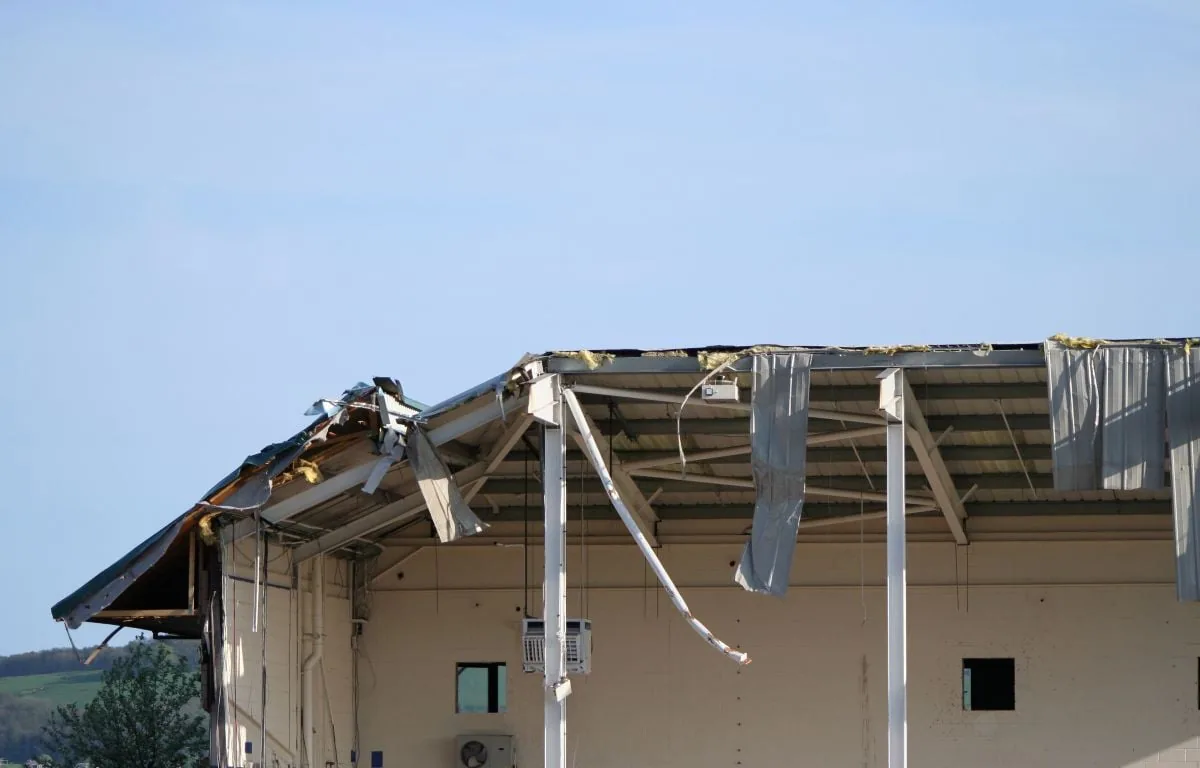
Four mounting feet set on a roof that has not been checked can pin a membrane in place, block a drain path and make the next repair three times as difficult. The array looks fine from the ground, and the trouble shows up two summers later as a stain beneath a row of panels where nobody can reach the seam. Solar-ready roofing starts with the roof beneath the array: its remaining service life, the substrate condition, the drainage and the places where attachment will touch the membrane. Commercial Roofing Cary reviews those conditions before an installer sets a single foot, and works around arrays that are already in place when a repair is needed beneath them.
The first question is how long the roof will last compared with how long the array is expected to stay. A membrane with a few years left under a system that will operate for decades means the panels must be lifted and reset for the reroof, and that detach-and-reset cost can be large. We estimate the remaining service life from probe results, seam condition and moisture findings, then give the property manager a plain comparison.
Sometimes the right order is to replace or restore the roof first, then install the array on a new surface. In other cases the roof is sound and a modest repair is enough. A commercial roof replacement done ahead of solar can include blocking, walkways and flashed supports built into the assembly, rather than added afterward.
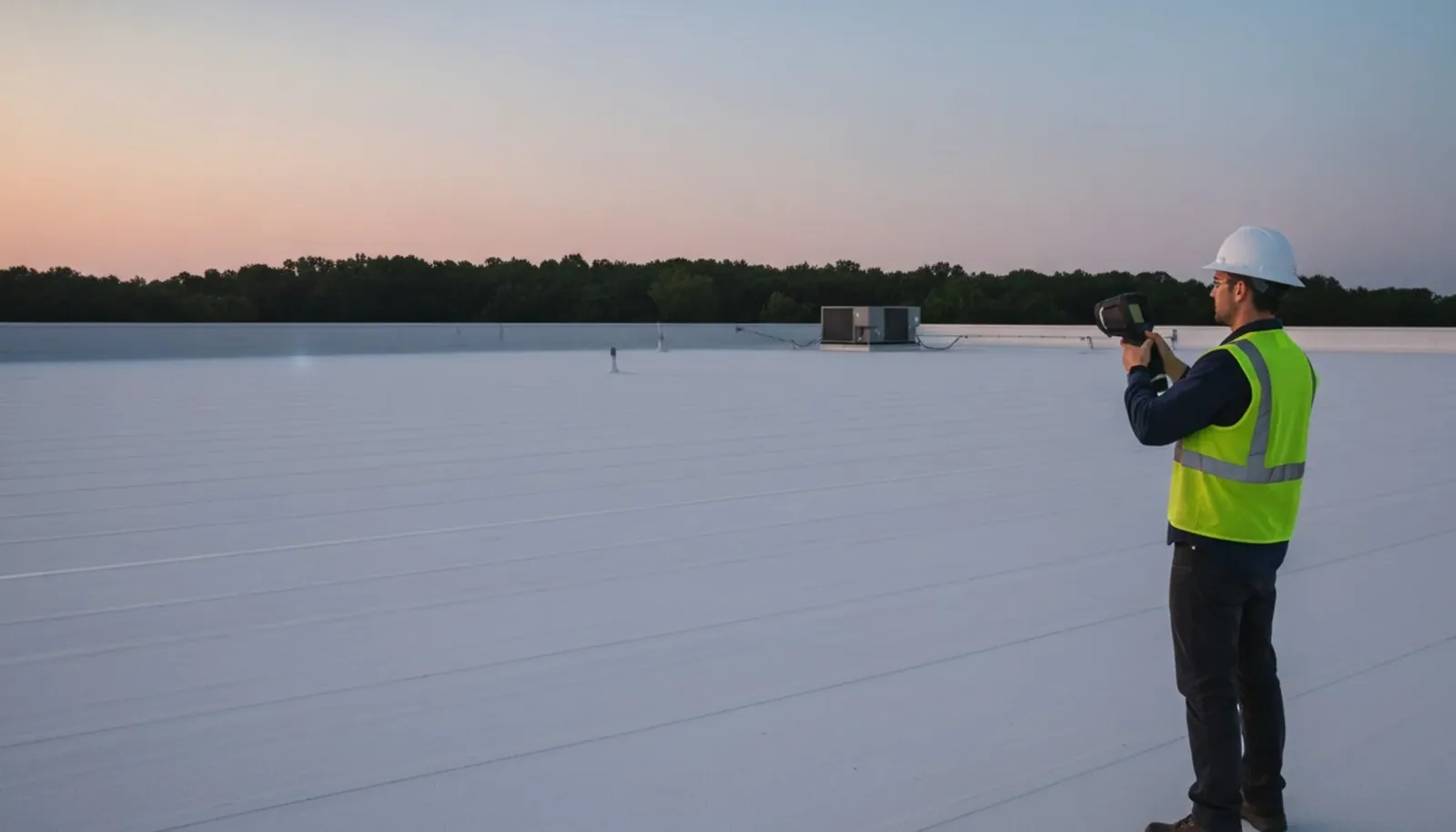
There are two broad approaches. Ballasted racks sit on the roof under their own weight and add load, so the deck and the drainage have to carry it. Attached racks fasten through the membrane into the structure, and every attachment is a penetration that needs a flashing. Either route changes how water moves across the roof.
We review each proposal against the roof type. On a TPO roof, supports need compatible flashings and walk pads, and on standing seam metal, clamps that grip the seam can avoid penetrations altogether. The installer's engineer sizes the structure, and our part is to see that the roof assembly is protected at every contact point and that the flashing details are sound.
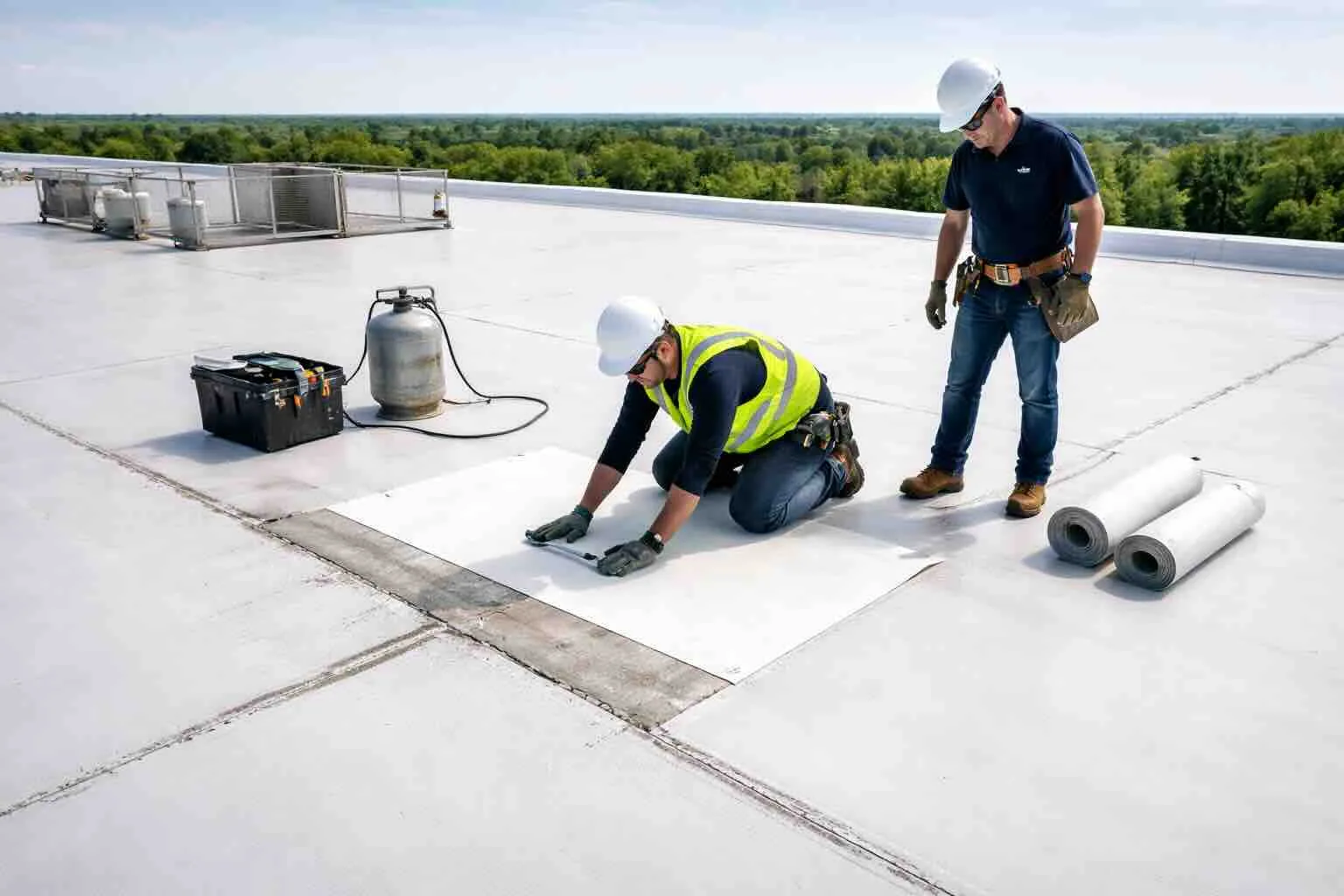
Rows of panels can interrupt the flow of water across a low-slope roof. A row laid across the slope can dam shallow water, and a ballast tray can sit in a low area and keep it wet. We mark the low points, the drain locations and the scupper outlets on the plan before the layout is fixed, and we ask that racks leave clear paths to every outlet.
Cary's station record shows 48.80 inches of precipitation in an average year, which gives the drainage plan real work to do. The numbers are not an estimate for any one roof, so we measure the roof itself. If ponding exists now, a tapered correction or an added outlet is cheaper before the racks go on than after. We also review the drains and scuppers for size and access, since debris collects around panels.
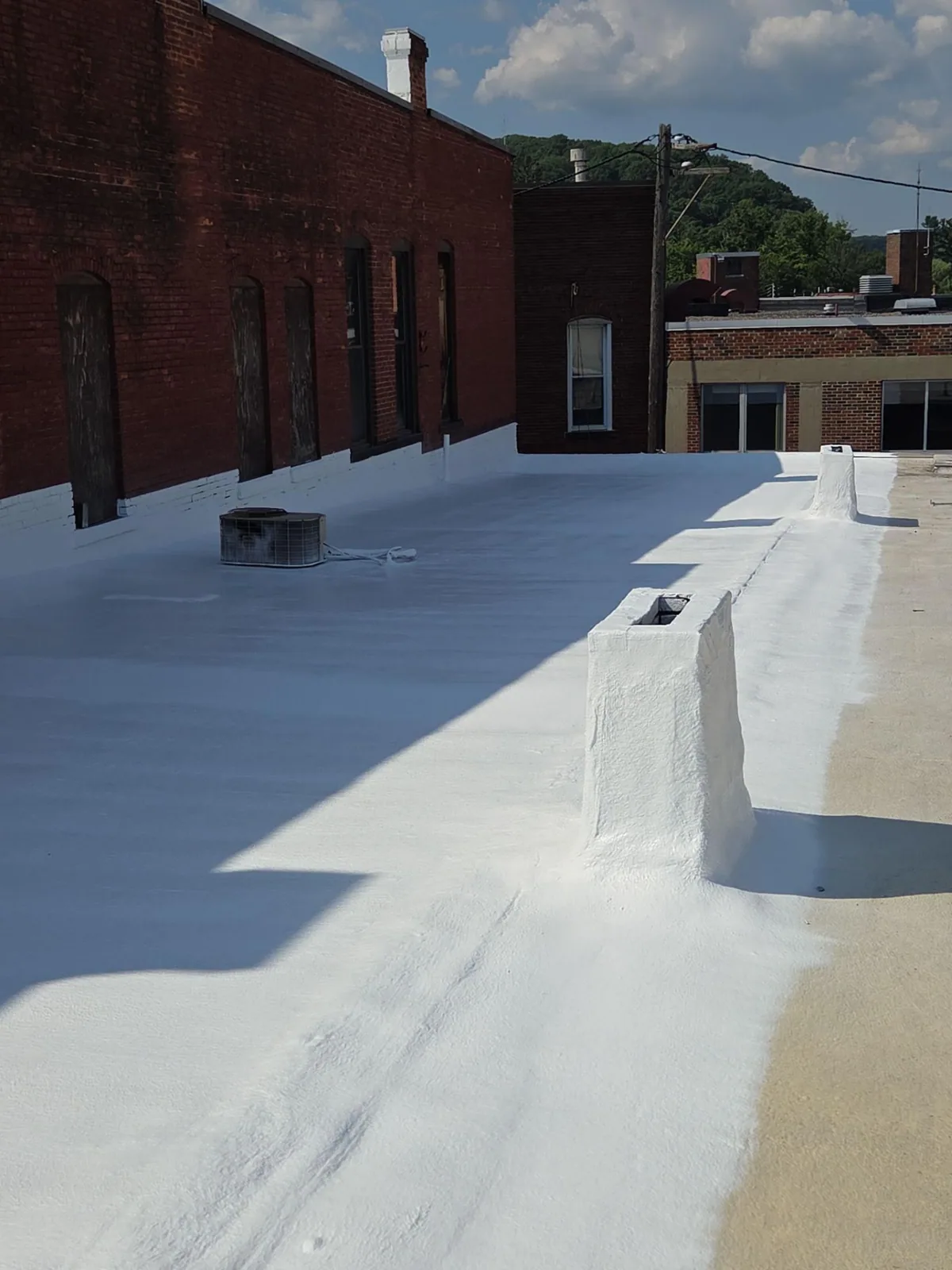
Panels bring more people onto the roof: installers, electricians, inspectors and cleaners. Each trip across bare membrane adds wear. We lay out walk pads or a protected path from the access point to the equipment and the array, and we keep them clear of seams and drains where we can. Clearance beneath and between rows should allow a technician to reach a seam or a flashing, because a roof that cannot be inspected cannot be maintained.
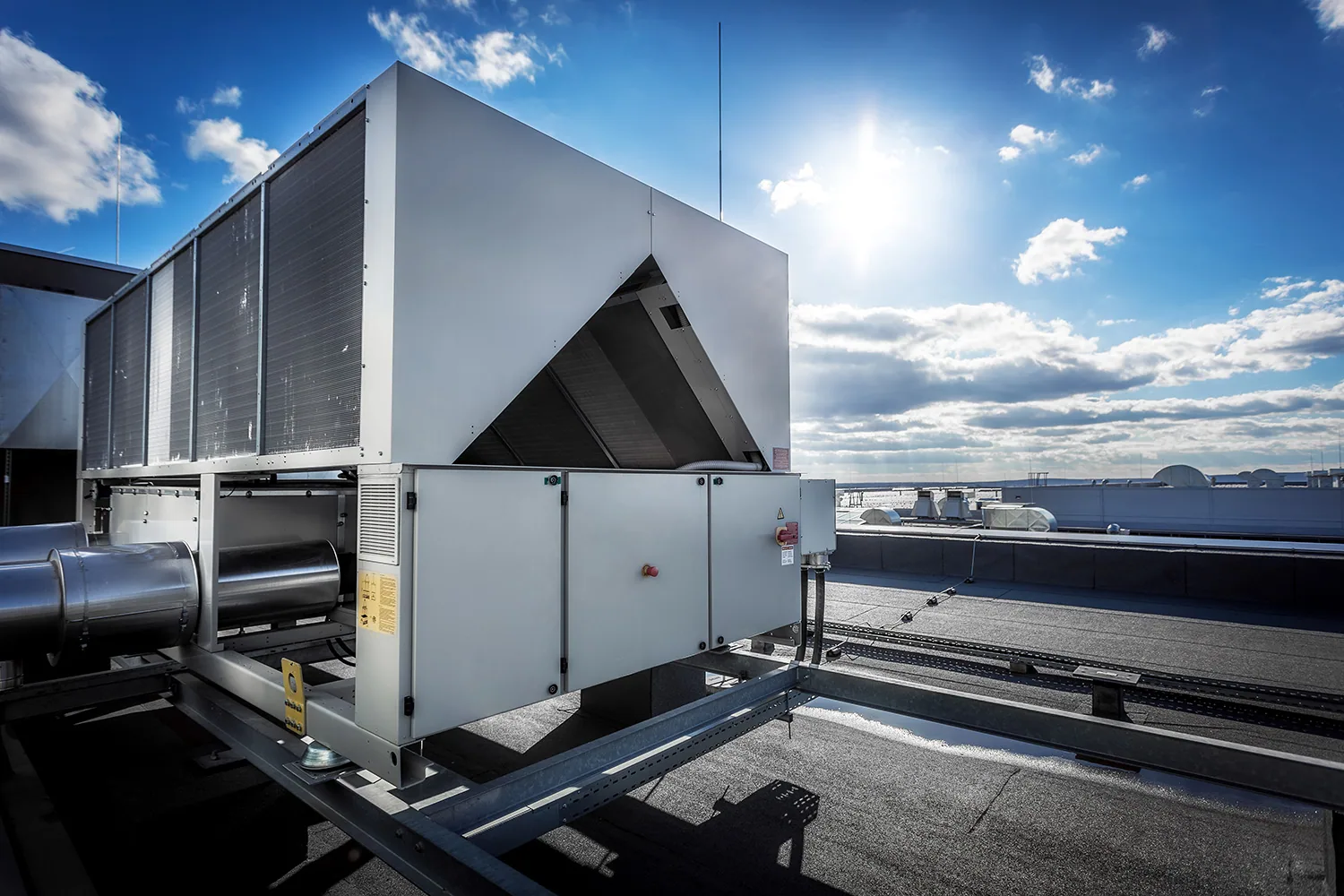
Rooftop equipment is part of the same layout. A panel row set too close to a unit can complicate service, and curbs and supports need the same room around them they had before. We record the layout so later contractors know where the protection lies.
Cary's parks range from offices and hotels to restaurants and flex or industrial buildings, so the question can arise on almost any building type. The seven Class A industrial buildings at Woodlake Industrial Center, the corporate corridor of Weston Parkway and the technology and advanced-manufacturing mix at Research Triangle Park each raise the solar question in a different way, and the roof beneath any one array still has to be measured.
NOAA normals for Cary list a July daily high averaging 88.2 degrees, and the solar exposure that makes arrays attractive also bakes the roof surface beneath and around them. Heat-aged sealants and seams show up first at penetrations, so we pay attention to them. Owners with buildings across several parks can bundle surveys through a multi-site roof program and sequence solar work by roof condition.
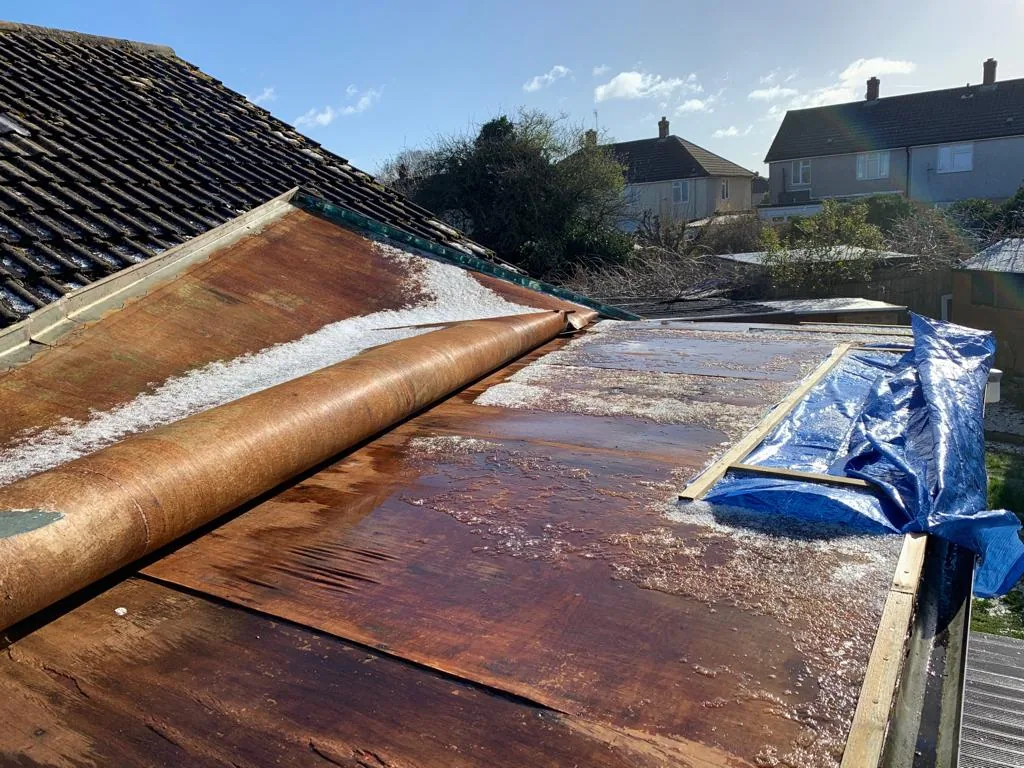
Many membrane warranties set conditions on penetrations and traffic. Before an array goes on, we review the warranty file, if one exists, and note any requirement for an approved flashing, a manufacturer inspection or a notice to the issuer. Skipping that step can leave a leak on a roof where neither the installer nor the roofer is clearly responsible.
We document the roof before the array, record every attachment point afterward and keep the photographs with the building's roof history. Handling it this way supports the roof warranty management process and gives the property manager a clean answer when a question arises years later about who touched what.
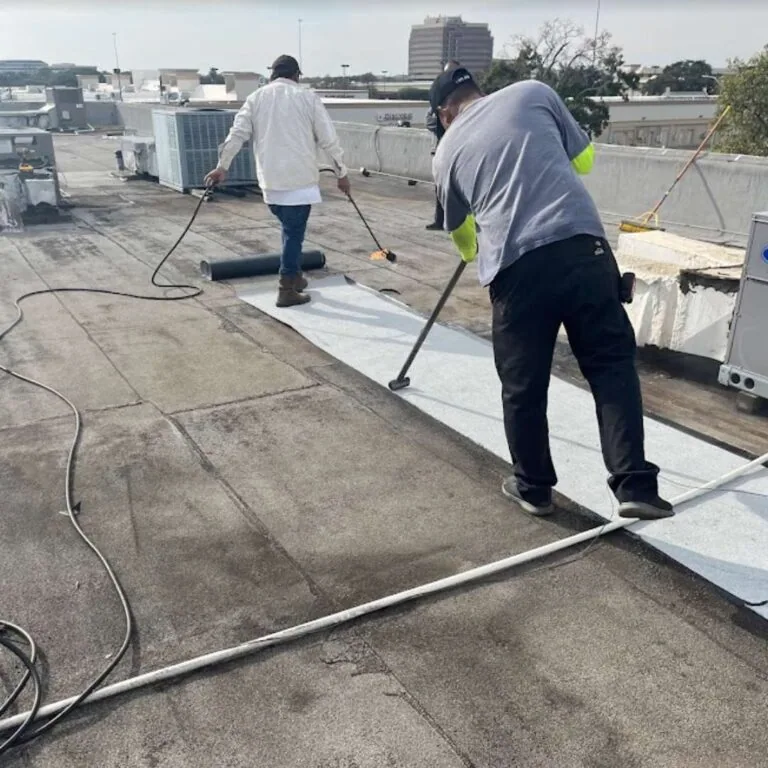
When a leak develops under panels, we trace it before touching anything. We look at the mounting points, the nearest seams and any drain. If the repair area is beneath a row, the installer may need to lift or shift panels, and we coordinate that window with the property manager. A temporary dry-in protects the area while the array is out of the way.
After the repair, we test the seam, restore the walk pads and photograph the detail. The repair boundary is recorded, so a later visit can find it. A leak repair under an array goes more smoothly when the earlier records exist.
Often, if the membrane has less service life than the array. Replacing it later means lifting every row. We estimate the remaining life from probes and moisture findings and give you the comparison before the installer commits to a layout.
They avoid fastening through the membrane, but they add weight and can hold debris and water. The deck must carry the load, and the membrane needs protective pads beneath each rack. We review both points on the plan.
The rack layout, attachment type, weights and any conduit routes across the roof. With those, we can mark drains, protect seams and flag conflicts early. Without them, conflicts surface when the crew is already on the roof.
Coating beneath a rack is difficult, since the surface must be cleaned and covered evenly. Usually the panels are lifted or the coating is applied first. We compare those options in the scope so the property manager can see the cost of each.
The records answer that. Photographs of the roof before and after installation show whether the flashing was sound and who last worked there. We keep those records so the question can be settled quickly and the repair is not delayed.
Contact Commercial Roofing Cary to arrange a roof walk. We will review service life, drainage and attachment points, then give you a scoped next step for the building.
Roof leaking now? Call for emergency roof repair.
Or email [email protected].