
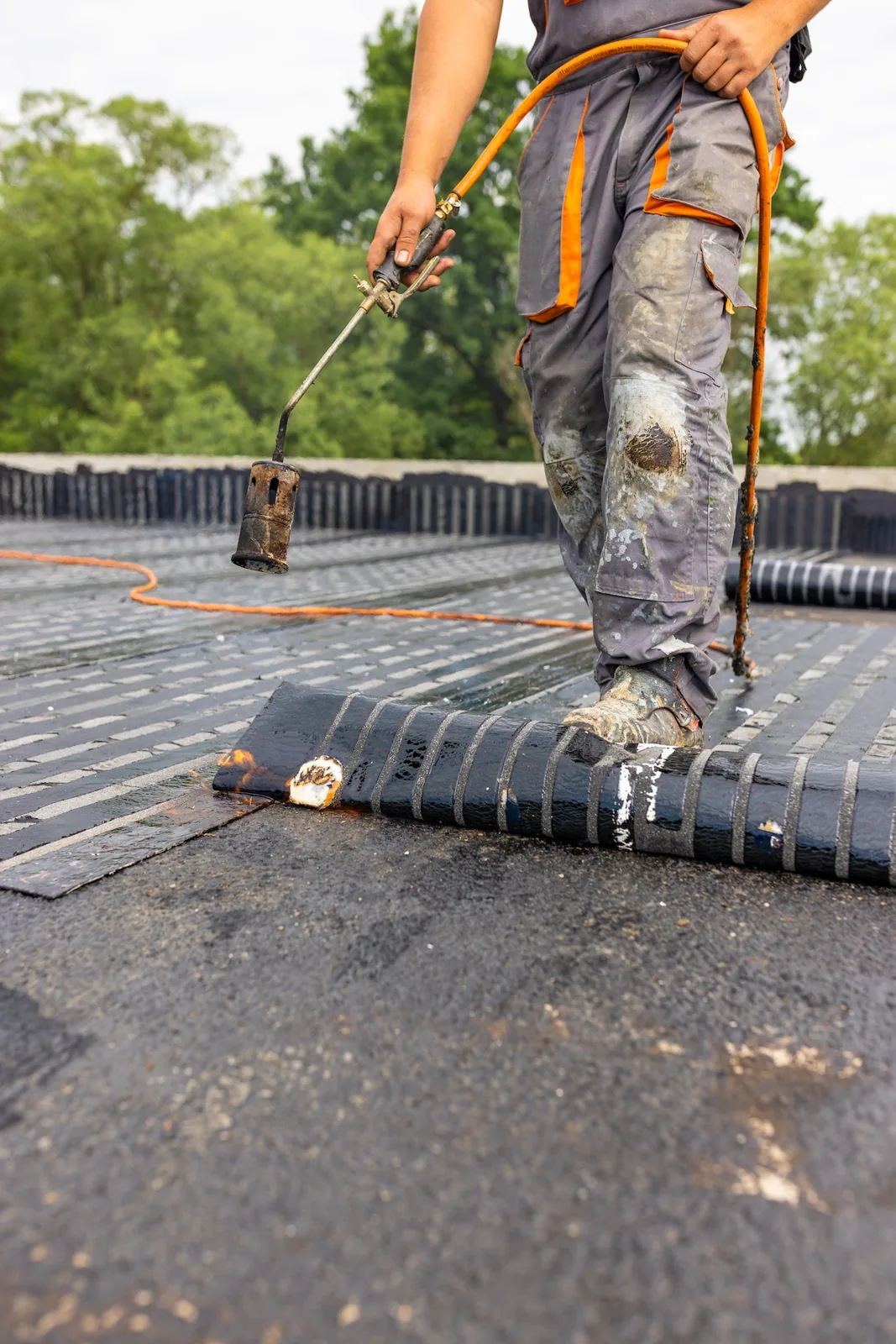
A blister the size of a dinner plate on a gravel-surfaced roof says that air or moisture is trapped between plies, and the next step is to learn how many plies lie beneath it before anyone cuts. A built-up roof is a layered system: alternating courses of reinforcing felt and hot or cold asphalt, finished with gravel, a cap sheet or a coating. On a Cary, NC roof we begin with a walk across the surface, then core or cut where the findings suggest, because the layers beneath the visible surface decide whether the answer is a repair, a recover or a tear-off.
Each surface sign points toward a cause. Ridges running across the roof often follow insulation joints, where thermal movement has telegraphed through the plies. Blisters rise where moisture or air has vaporized under the sheet during summer heat. Alligatoring, a crazed pattern in the asphalt, shows weathering of an unprotected flood coat. Bare spots appear where gravel has washed or been swept away, and they leave asphalt exposed to sun.
At edges and penetrations, we look at the flashing: base plies that have slipped, cap flashings that have split, and counterflashing that has pulled away from a masonry joint. Standing water adds weight to the roof and accelerates deterioration, so we measure ponds after rain. Photographs by roof zone and chalked marks on the surface give the next visit a clear starting point. Summer heat in Cary puts those expansion cycles to work on any weak edge.

The number and condition of plies determine what can be done. A cut sample, taken with a roof knife and patched the same day, shows the layers of felt, the thickness of asphalt between them, and whether moisture sits in the lower courses. A roof with three or four sound plies may accept a patch or even a coating over a restored surface. A roof with wet felt between layers may need the saturated plies removed so new work does not sit on a damp base.
We also check what lies beneath the plies: insulation type, deck material and attachment method. Fiberboard or perlite boards soak up water and lose strength, while polyisocyanurate may hold moisture at joints. Core results go on the roof plan with their locations, so any decision to recover or tear off rests on measured layers, not a guess about what the previous contractor installed.
Infrared scanning helps choose where to cut. On a clear evening, wet insulation holds heat longer than dry boards, and the scan outlines those areas for follow-up cores. We confirm each warm patch with a probe or a moisture meter before it goes into the repair boundary, since a warm area can also reflect a thicker section of roof.
A built-up replacement begins with tear-off in sections the crew can close in the same day. The deck is inspected as it is uncovered, damaged areas are repaired, and insulation is installed with staggered joints. A base sheet is laid, followed by the reinforcing plies, each mopped or adhered with asphalt in a continuous bed so no voids form between courses.
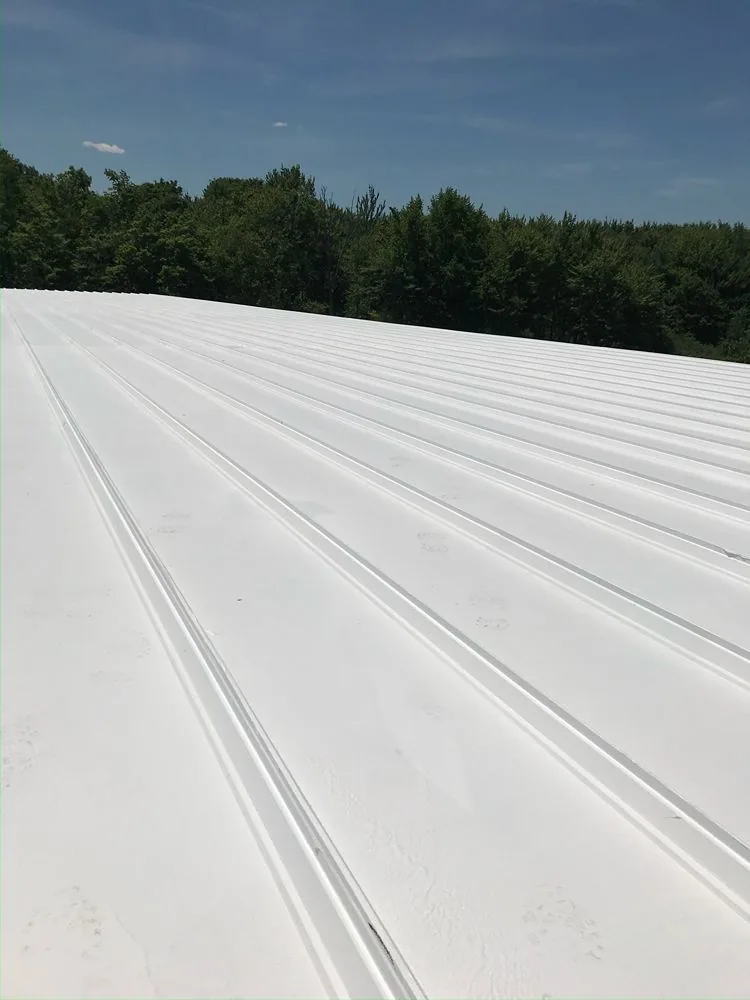
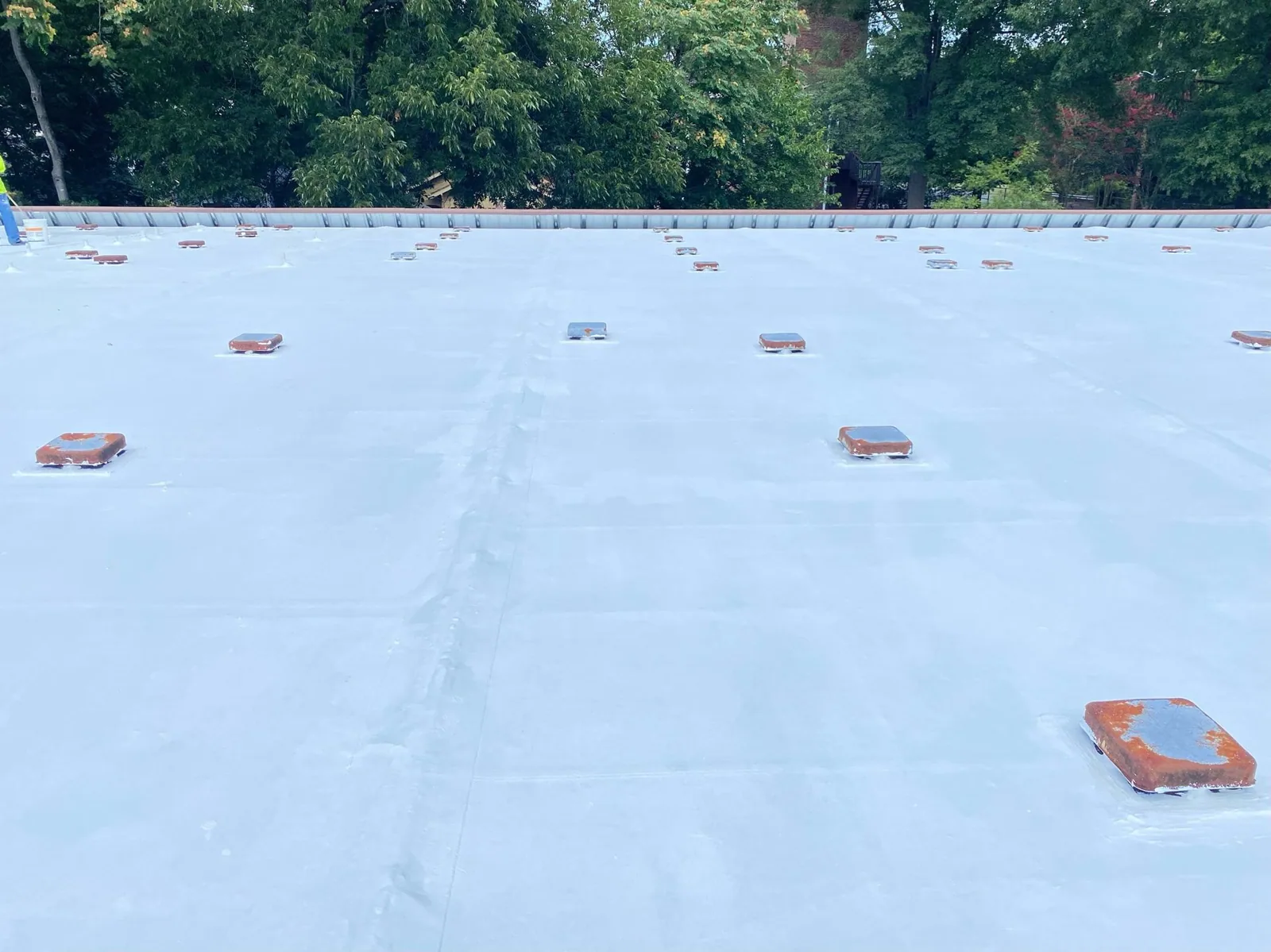
The surfacing is chosen for the exposure: a granulated cap sheet, gravel embedded in a flood coat, or a reflective coating over a smooth surface. Flashing plies are formed at every curb and wall with cants and reinforcing strips, and the edge metal is returned over the termination and sealed. Hot asphalt demands attention to fire safety, kettle placement and fume control, and we choose cold-applied adhesives when the building's use or neighbors make hot work a concern. Because Cary records 48.80 inches of annual precipitation, open plies are never left uncovered overnight.
Older and adaptively reused structures bring their own questions. The town's Carpenter community plan describes a rural village activity center with commercial and office opportunities and adaptive reuse in the historic district. Adaptive reuse of an older building can place a modern tenant under a roof that was laid for another purpose, so we check deck capacity, ceiling clearance and parapet condition before specifying anything. Which roof each building there carries is settled on site, so we treat Historic Carpenter as a place whose roofs are identified one at a time.
In Downtown Cary, with civic destinations and commercial frontage, tear-off dust and truck access must be planned with the tenants and the street, and hot asphalt is routed away from public sidewalks.
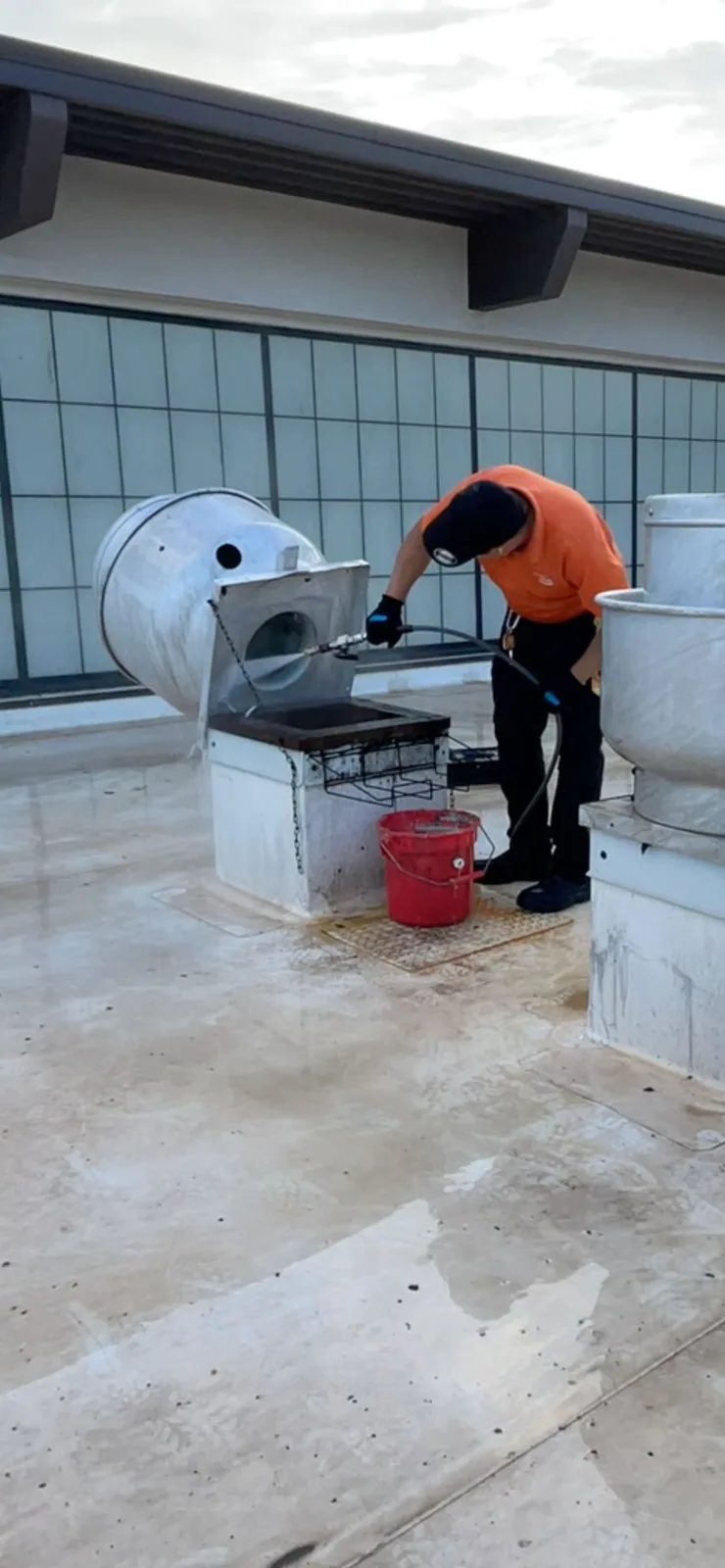
Hot work needs a plan that tenants can read. We mark the kettle location, the hose route and the fire-watch zone on a site sketch, confirm that air intakes are shielded, and keep a clear egress from every stair that opens onto the roof. Where asphalt fumes would reach occupied space, cold-applied plies or a single-ply replacement may be the practical alternative, and we price both so the choice is visible.
A dry roof with isolated blisters and open flashings is a repair candidate: blisters are cut, dried and re-plied, and flashings are rebuilt. A dry roof with a weathered surface may take a restoration coating once the laps and flashings are sound. When plies are wet, a replacement is more reliable, and we may choose modified bitumen as a lighter-weight alternative that keeps the multi-ply character. Recover is possible only when moisture surveys and cores show a dry base. We write all options with their requirements, and the owner chooses with the evidence in hand.
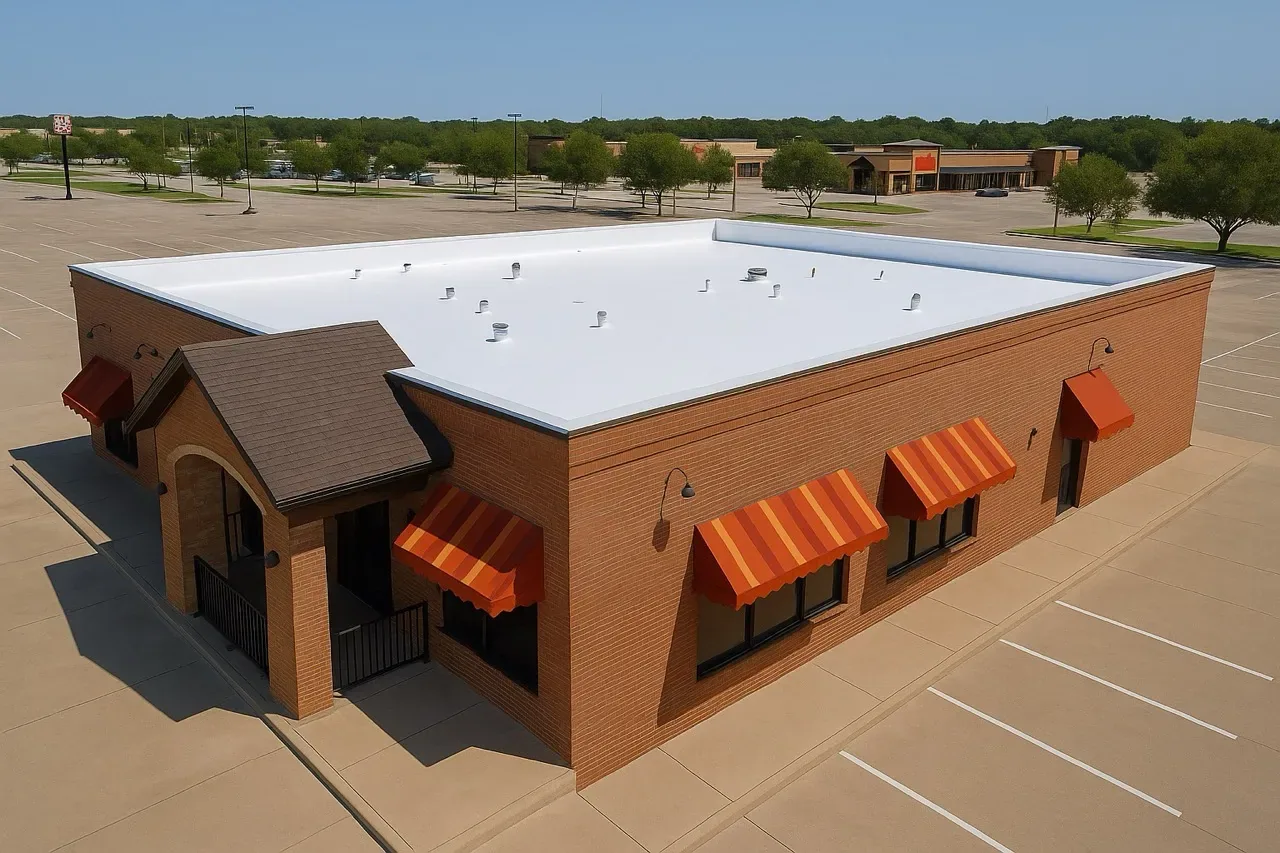
The record includes core locations, ply counts, repair diagrams and photographs. Drains, flashing bases and edge metal each have a closeout photograph, and any area left outside the scope is outlined so the next contractor can see where the work stopped. That makes the next budget discussion faster, since the owner can see which zones are sound and which still need attention. A maintenance plan then schedules a return visit after the first heavy rain. Any permitted work is checked against the state code with its North Carolina amendments before the first tear-off section opens.
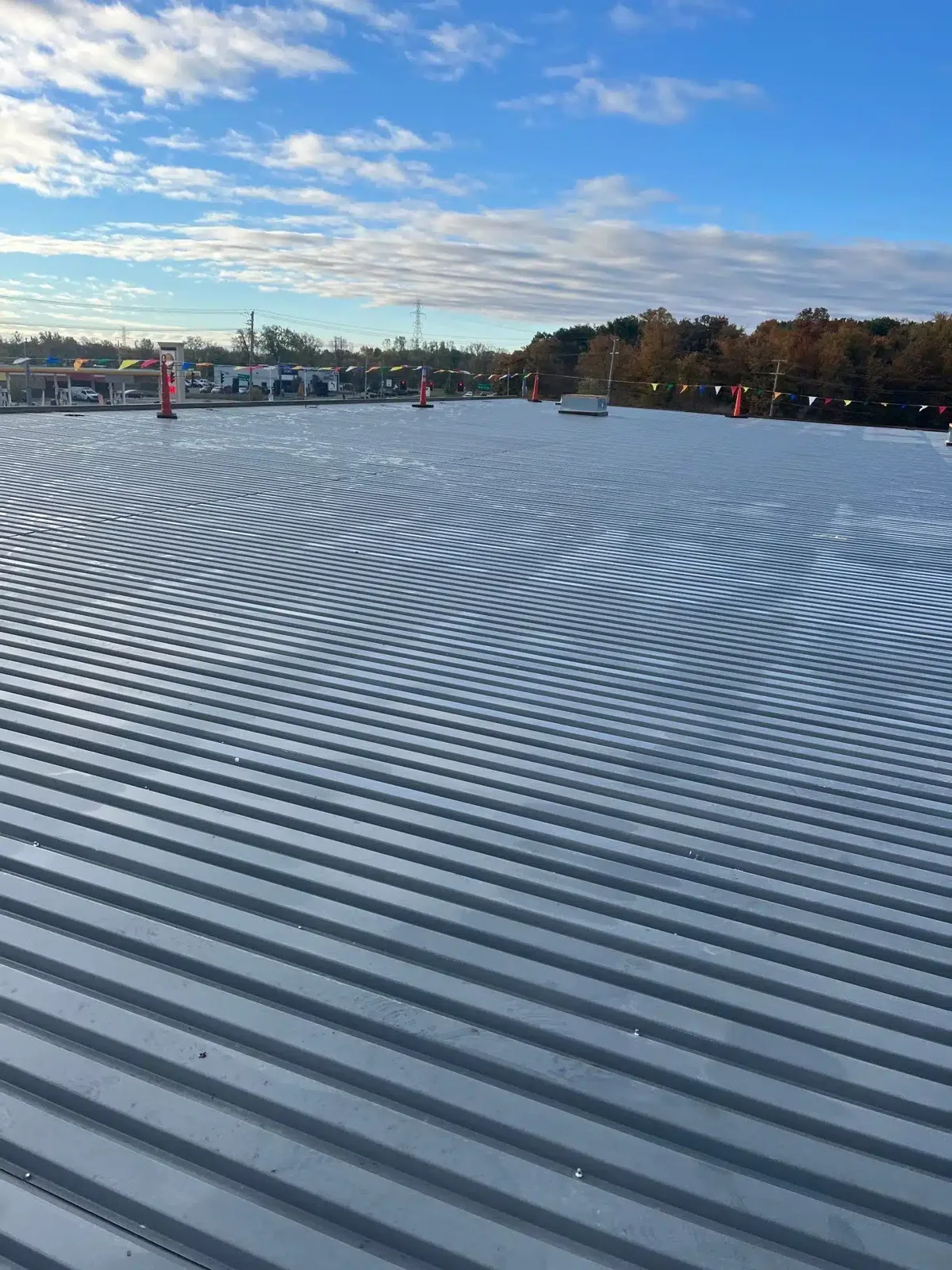
Yes, when the surrounding plies are dry and sound. We cut the blister, dry the opening, add new plies with staggered laps, and seal the surface. Multiple blisters across one area suggest a moisture source that needs a wider fix.
We take a core or cut a small test opening. The sample shows each ply, any wet felt, and the insulation beneath. The result goes on the roof plan, so every later decision rests on measured layers.
Gravel protects the asphalt from sun and foot traffic, and it adds weight and ballast. It also hides the surface, so inspections require sweeping. We weigh those tradeoffs against the cap sheet or coating alternatives.
Both are removed in sections, hauled off, and kept out of drains. Gravel is swept before the crew leaves each day, and debris chutes are placed away from entrances and tenant parking.
It can, if the deck and insulation are dry and sound. A tear-off is common, and a separation layer or cover board is used where a recover is practical. Our scope shows the removal and the new assembly layer by layer.
Call Commercial Roofing Cary to arrange a roof walk. We will review the surface, take cores where needed and send a scoped next step for the building.
Roof leaking now? Call for emergency roof repair.
Or email [email protected].