
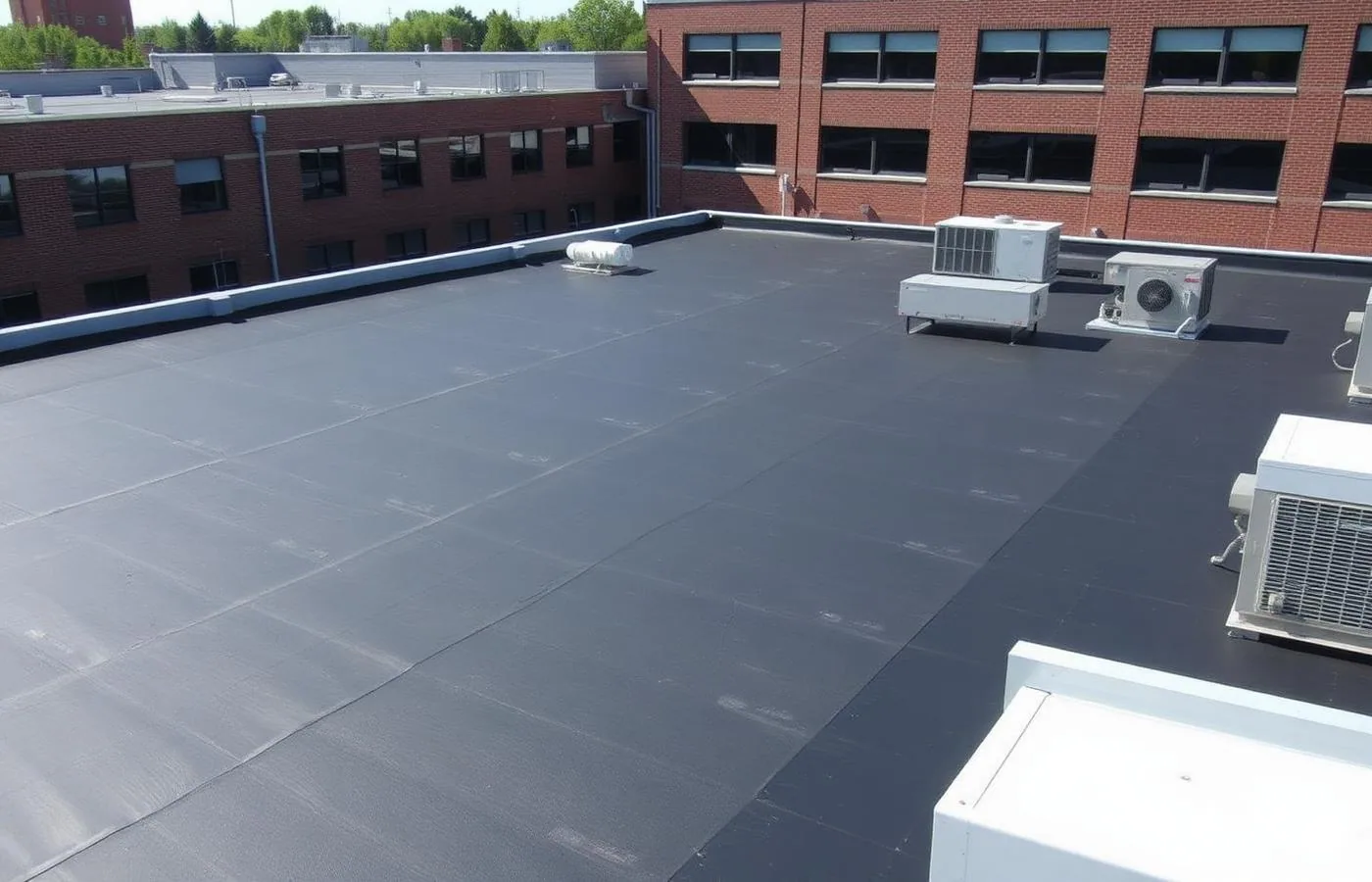
Where two courses of a granulated cap sheet overlap, a small bead of melted asphalt should squeeze out along the lap line, and its presence or absence tells a roofer more than the surface does. Modified bitumen is a reinforced asphalt membrane, modified with either SBS rubber or APP plastic, and installed in one to three plies over insulation. On a Cary, NC roof we begin at those laps, then move to the flashing base ply, the granule loss near drains and the edge metal return, since each shows how the sheet has weathered through summer heat and a year of 48.80 inches of rain.
The cap sheet speaks first. Granules wash toward drains and collect in the sump, leaving bare asphalt on the field that oxidizes and cracks sooner than a protected surface. Hail leaves bruises that look like faint circles on the granules, and a bruise that fractures the reinforcement is a leak waiting for a heavy rain. Because the region has a record of hail, tornado and damaging-wind reports, we look for these marks by hand after a severe event instead of assuming the surface is intact.
Laps are the second clue. Open edges, fish-mouths where the sheet curled back, and ridges where trapped moisture has blistered the plies all point to specific causes. At walls, a flashing that has slid down its base ply or a counterflashing that has pulled out of its reglet leaves a path behind the sheet. We chalk each finding, photograph it in position, and keep the record for the next visit.
Drains and scuppers deserve a close look on any asphalt roof, since ponding water speeds granule loss and softens the sheet. We measure the depth of standing water after a rain, note the footprint, and trace it back to the low point so a repair can address the cause and not only the stain.
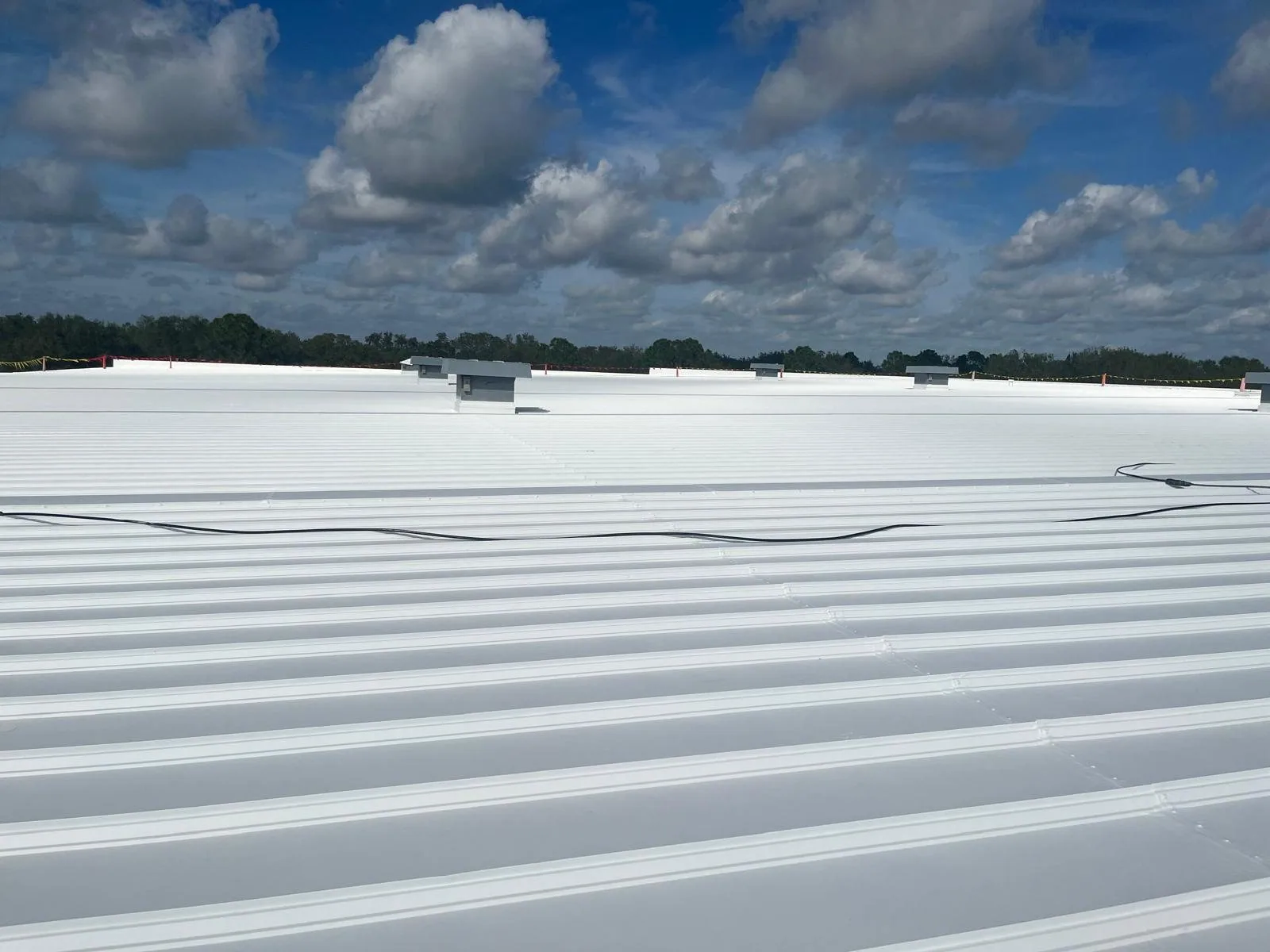
SBS sheets are modified with rubber, remain elastic across a wide temperature range, and are typically installed in hot asphalt, cold adhesive or by torch. APP sheets are modified with plastic, tend to be stiffer and more resistant to surface heat, and are usually torch-applied. The choice affects how the laps look, how repairs bond, and what fire-safety precautions the crew must observe.
On an existing roof we identify which type we are working on before choosing a repair method, since a patch that does not match the base sheet can lift. Cold-applied adhesives suit locations where an open flame is a concern, such as near combustible walls or fuel storage, and heat-welded laps suit open roofs with proper fire watch. Whichever method fits, the flashing is formed in stages, with a base ply and a cap ply lapped apart so the seams do not stack.
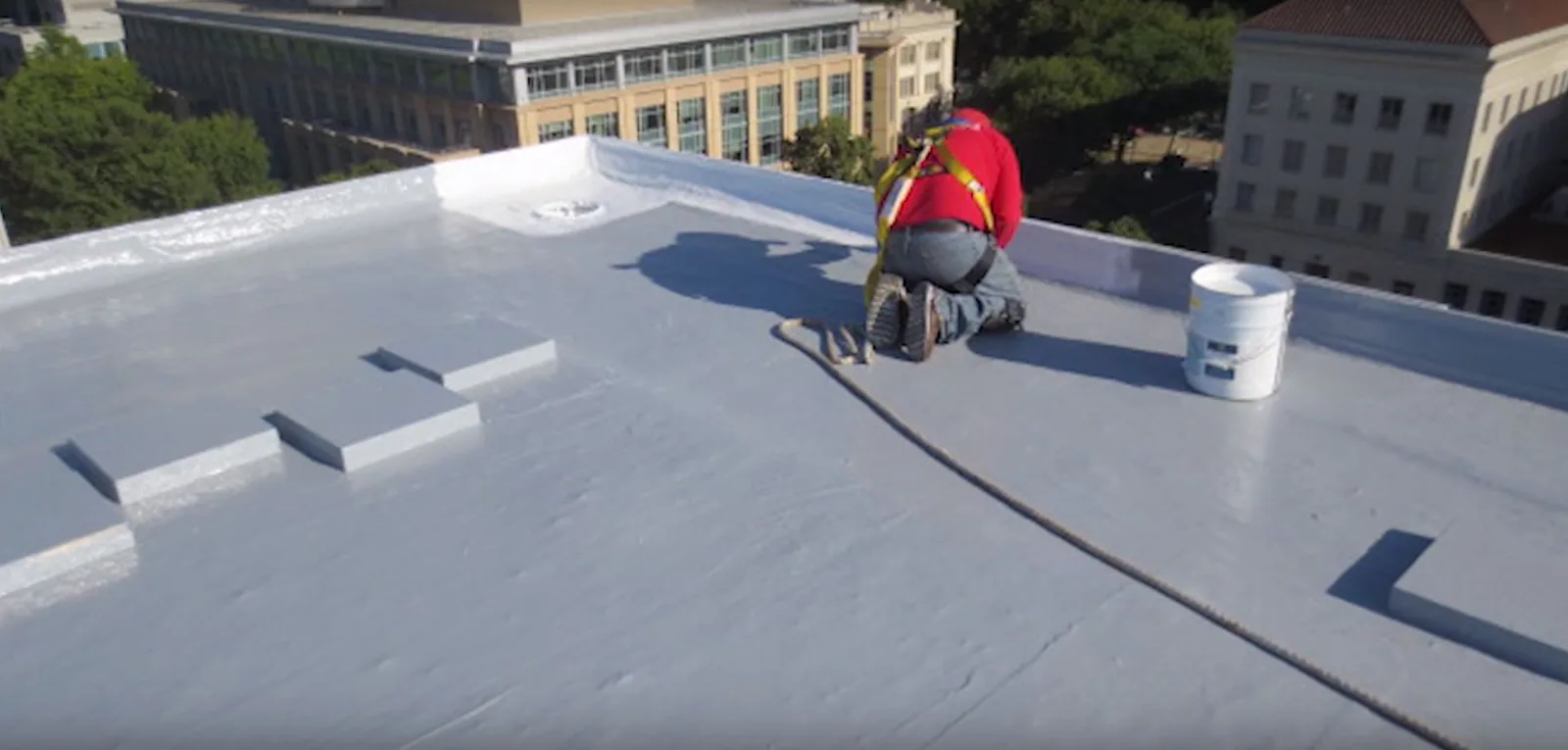
Work starts with the deck, then the insulation. We replace damaged panels, attach the boards to the fastening pattern the wind design calls for, and add a cover board where the roof will see traffic. The base sheet is fastened or adhered, followed by the cap sheet with its laps offset by half a sheet width, so no four courses meet at one point.
Every lap is checked for a continuous bleed-out of asphalt. At penetrations and curbs, flashing plies are cut and lapped around a reinforced corner. Granules are embedded into hot asphalt at the lap so the exposed edge is protected from sun. At the perimeter, the membrane turns onto the parapet or up under a drip edge, and edge metal is returned over the termination. A day's work is dried in before the crew leaves, because open asphalt plies do not tolerate rain. Torch work finishes early enough for a fire watch to stay on the roof after the last lap is set, and every area is checked for smoldering before the crew leaves.
The property type tells us what to check, but not what is up there. Aerial Center Executive Park in Morrisville is a multi-building office park near RDU, I-40 and I-540. A park of that kind may include several roof generations and repair histories, so we ask for prior records and walk each building separately.
In Eastern Cary Gateway, the roughly 800-acre planning area between downtown Cary and Raleigh includes two I-40 interchanges, and development there may bring buildings of many ages. Any given building could carry a bitumen sheet, a single-ply or a metal panel, so our scope depends on what we find on the roof, not on what the neighborhood suggests. Where a bitumen roof has a built-up base beneath a modified cap, the built-up layers are part of the diagnosis, since moisture often settles between the old plies.
Access around both areas follows the interstate approaches. Crews and rolls arrive by I-40, so we plan the haul path, the staging spot and the crane position with the property contact before the first delivery, and keep tenant parking clear.
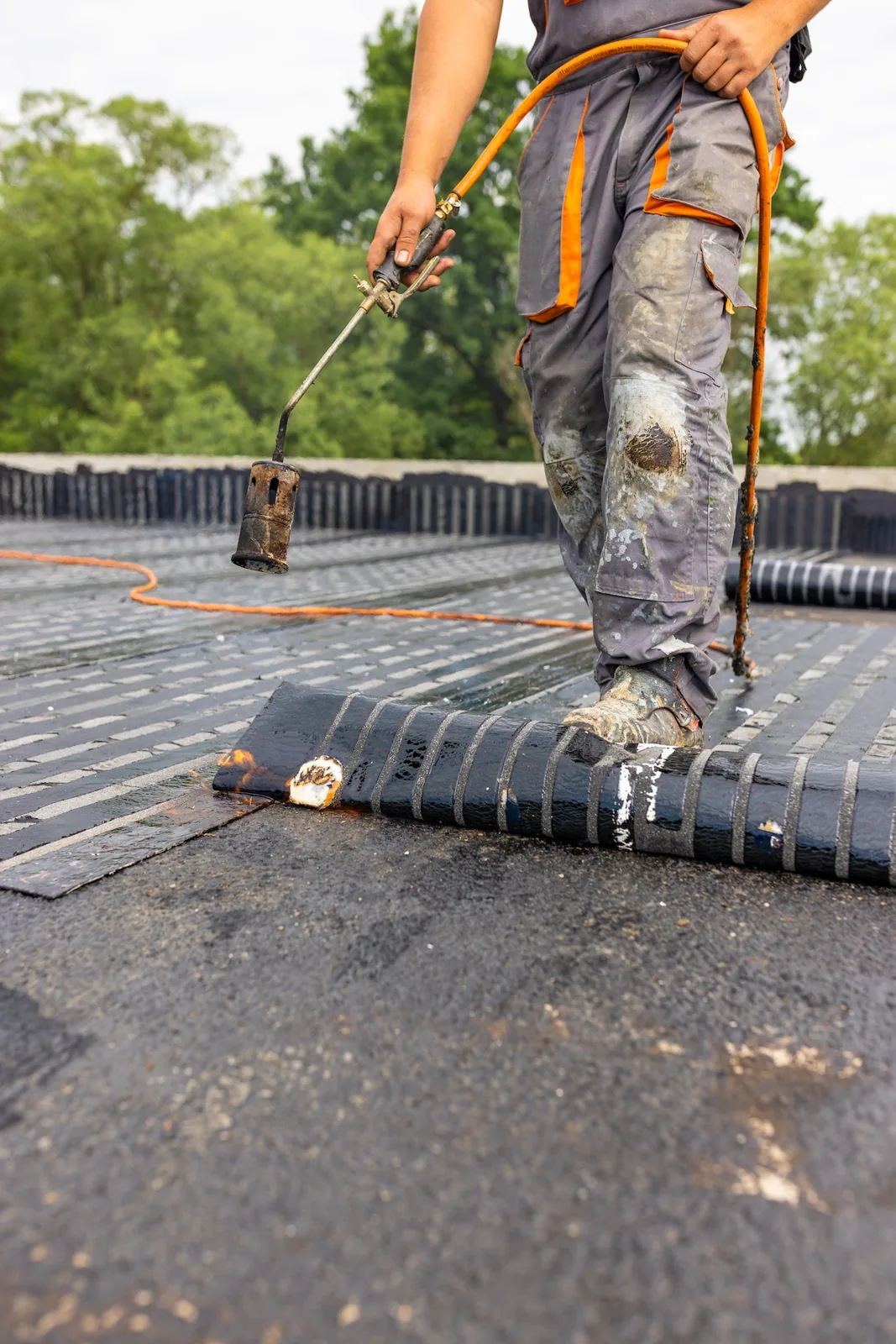
Isolated open laps and cracked flashing are a repair, and we cut back to sound material, prime, and set a new sheet with an offset lap. If infrared shows moisture across an area, a moisture survey and a few test openings tell us how much insulation to remove. A roof with two or more layers and wet insulation often points to a replacement instead of another patch. Where the cap sheet has lost granules but the plies are intact, a reflective acrylic coating may restore the surface, provided adhesion tests pass and the laps are sealed. We write each option with its dependencies, so the owner can weigh the choice against the building's plans.
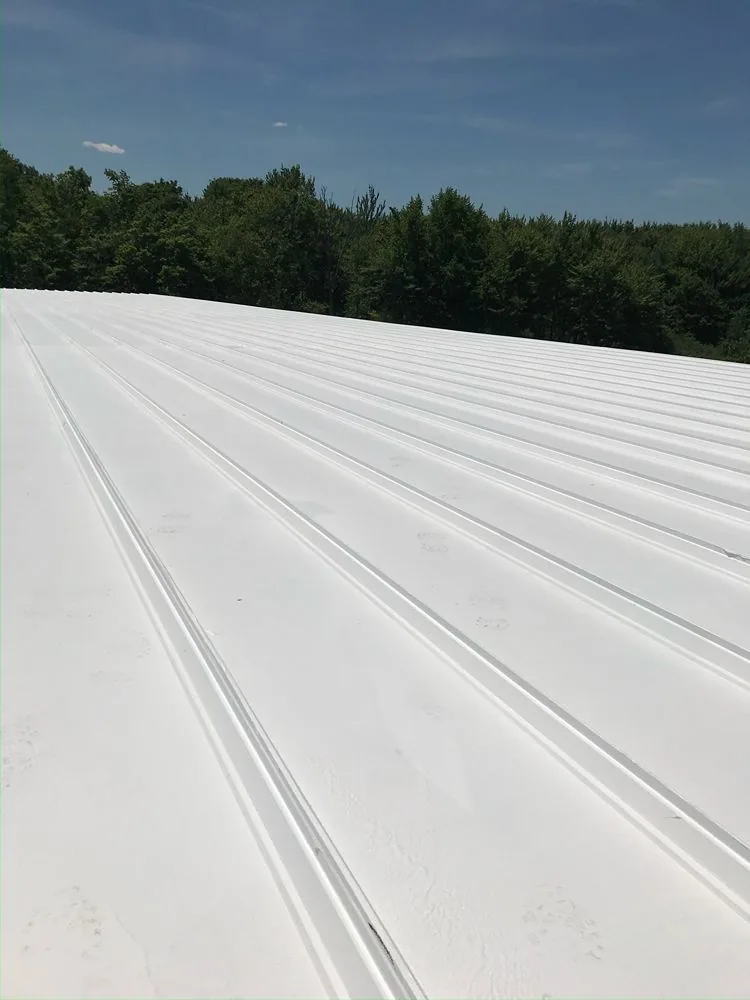
The closeout packet includes photographs by roof zone, a diagram of repairs and a note on which materials went where. Flashing bases, drain sumps and edge metal are each photographed after completion. This baseline supports preventive roof maintenance, where a technician returns to clear granule buildup from drains and recheck the laps. Any permit for this work is read against the International Codes as North Carolina amends them, with the local office asked first.
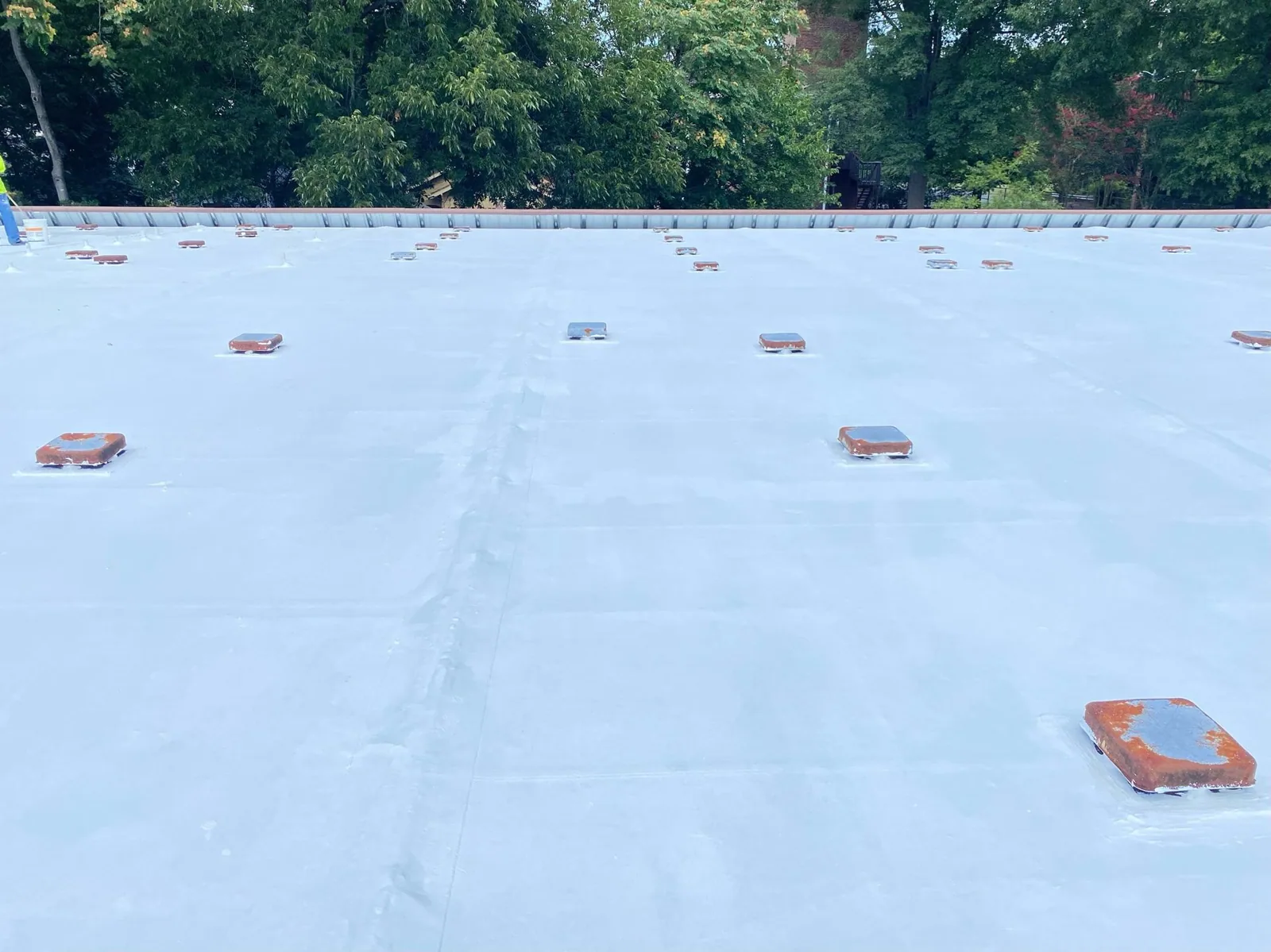
Granules shield the asphalt from ultraviolet exposure. Once bare patches appear, the asphalt oxidizes, shrinks and cracks faster, and the exposed reinforcement can wick water. We map where granules have worn through and decide whether a coating or a cap replacement protects the field.
It can be, with a fire watch, protected combustibles and a cold-applied or heat-welded alternative where flame is a concern. We review the roof edges, the parapet material and any fuel or gas lines before choosing the application method.
Hail leaves round, localized bruises with fractured granules or exposed fabric, while ordinary wear spreads across the field. We test suspect spots by hand and photograph them with a scale, so any later claim review has clear evidence.
Trapped moisture, a cold-applied adhesive that never cured, or movement at a structural joint. We find the cause before resealing, because a repair that ignores the movement will fail again at the same line.
Often, if the old roof is dry and flat and a separation layer is used. We test the existing plies for moisture, check the attachment, and choose the cover board and membrane to suit the deck and drainage.
Contact Commercial Roofing Cary to arrange a roof walk. We will check the laps, flashing and granule surface, then send a scoped next step for the building.
Roof leaking now? Call for emergency roof repair.
Or email [email protected].