
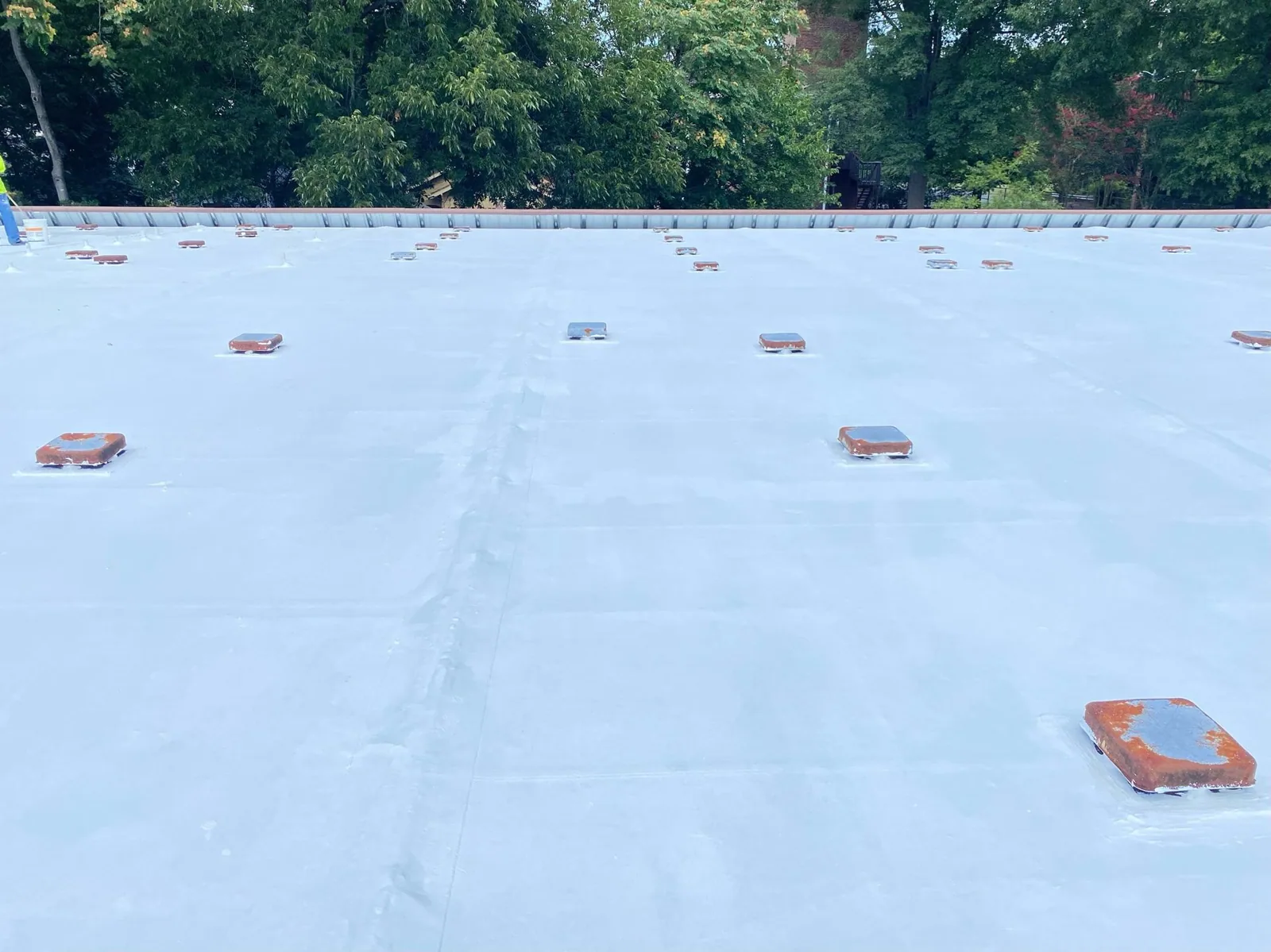
Below a kitchen exhaust fan, a film of grease settles on the membrane and spreads outward with every rain, and the roofing material under that film decides how long the surface lasts. PVC was developed for exactly that kind of exposure, since its welded sheet resists many fats, oils and chemicals that soften other single-ply membranes. In Cary, NC, restaurants, hotels and shops share space with offices and flex buildings, so we look first at what lands on the roof, then at the seams, the membrane turns and the termination edge, before recommending whether to repair, recover or replace.
PVC earns its place where the roof receives more than weather. Grease from restaurant exhaust, oils from rooftop kitchens, runoff from chemical storage vents and airborne residue from nearby process equipment all attack common membranes, and a welded PVC sheet is a defensible response. Crescent, south of Tryon Road, puts retail, hotels, restaurants and offices side by side, a mix where kitchen exhaust and rooftop mechanical units can share a single roof level.
At Fenton, shops, dining and Class A offices sit in one walkable district, and the same question applies building by building: what is venting onto this surface, and how close is it to a seam? The district tells us the uses, not the roof. We confirm the actual membrane and its condition on site before choosing a system.
Hotels add a different wrinkle: laundry exhaust, pool equipment and rooftop mechanical rooms each put moisture or chemical vapor on the surface, and a roof that serves a lobby, guest floors and a kitchen has several exposures at once. We map those sources on the roof plan so the membrane choice answers the real conditions.
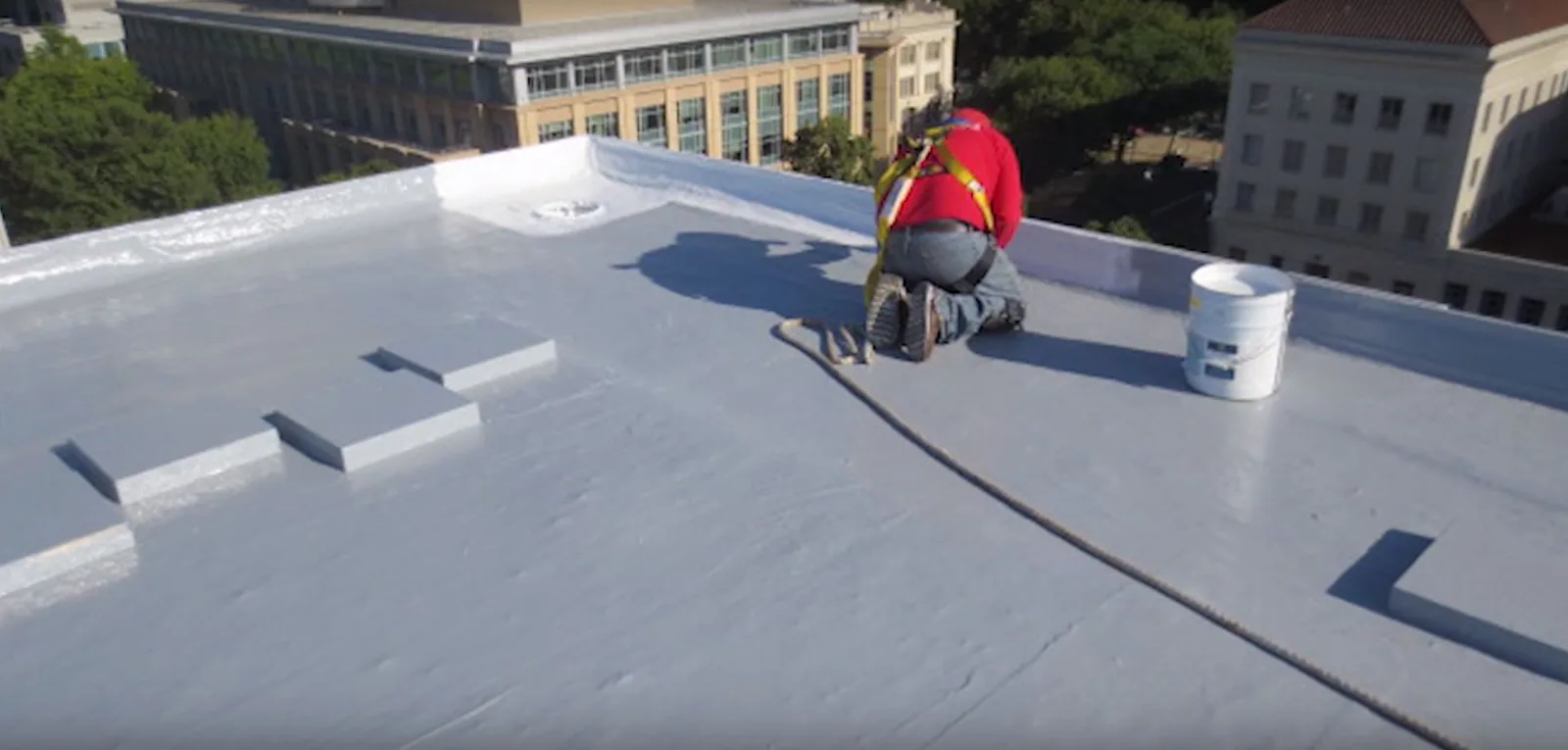
A PVC membrane ages through its plasticizers. Over many years the sheet can stiffen and shrink, which pulls at the corners and tightens the membrane across curbs and parapet bases. We press the surface near penetrations to feel for brittleness, look for hairline cracks where the sheet turns upward, and measure how far flashing has drawn back from its termination edge.
Seams are probed along their full length rather than sampled, because a welded lap that looks intact can hold a pocket where the two sheets never fused. Grease staining tells a separate story: if the film has been sitting unwashed, it traps dirt and can mask pinholes or a split seam. We clean a test area first, then photograph it at the same position on the next visit so any change shows up as a comparison, not an opinion.
Installation begins with the deck, then the insulation. We confirm fastener pull-out where the deck is steel, replace any panels that have rusted through, and lay polyisocyanurate in staggered layers with taped or sealed joints as the design requires. The membrane is rolled out dry, aligned with the lap line toward the drains so water crosses seams rather than running along them, and welded with hot air in overlapping passes.
Every weld is probed once the sheet has cooled. Corners and penetrations use pre-formed or custom-cut pieces, welded to the field with a measured tie-in width. At walls and curbs the sheet turns up, is secured at the top with a termination bar, and is closed with sealant and counterflashing or coping. Because Cary receives 48.80 inches of annual precipitation, each work area is dried in before the crew leaves, and any open edge is temporarily sealed. Edge metal is returned over the termination so the perimeter does not hold a gap between the sheet and the wall.
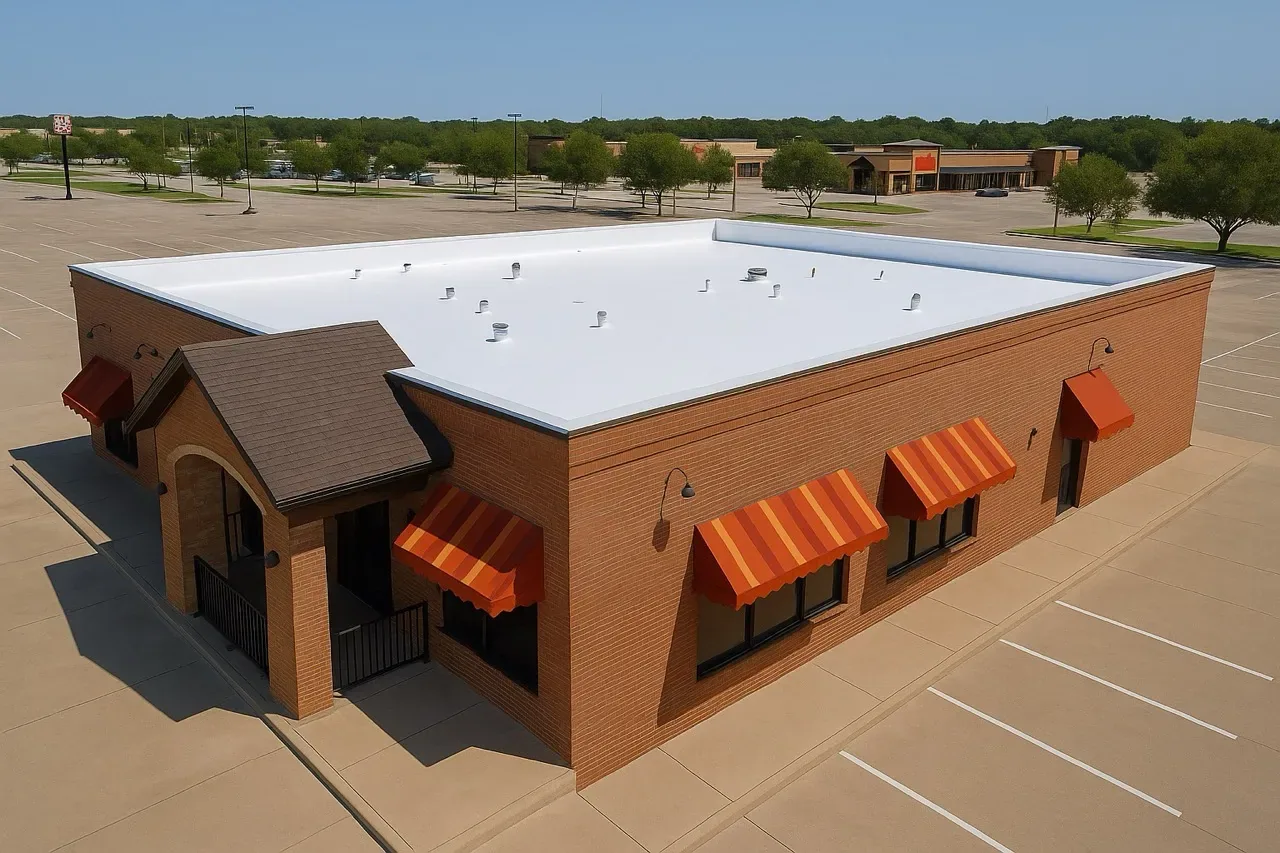
Patching works when the sheet around the defect is still weldable and the insulation is dry. We cut a small test opening, sample the insulation, and try a weld on a scrap of the existing membrane. If it fuses cleanly, a reinforced patch with rounded corners restores the detail and the repair stays local.
If the old sheet will not weld, the repair becomes a section replacement or a full reroof. Sometimes a different chemistry is the answer: KEE membranes are PVC-alloy sheets formulated to keep their flexibility longer, and TPO is the option where rooftop exposures are mild. We compare the choices against the measured condition and exposure, then write them into the scope together.
A third path is restoration with a liquid coating, which needs a clean, dry and well-bonded surface. Grease residue and plasticizer bloom both interfere with adhesion, so we test a cleaned area before suggesting it, and we say so when the substrate rules it out.
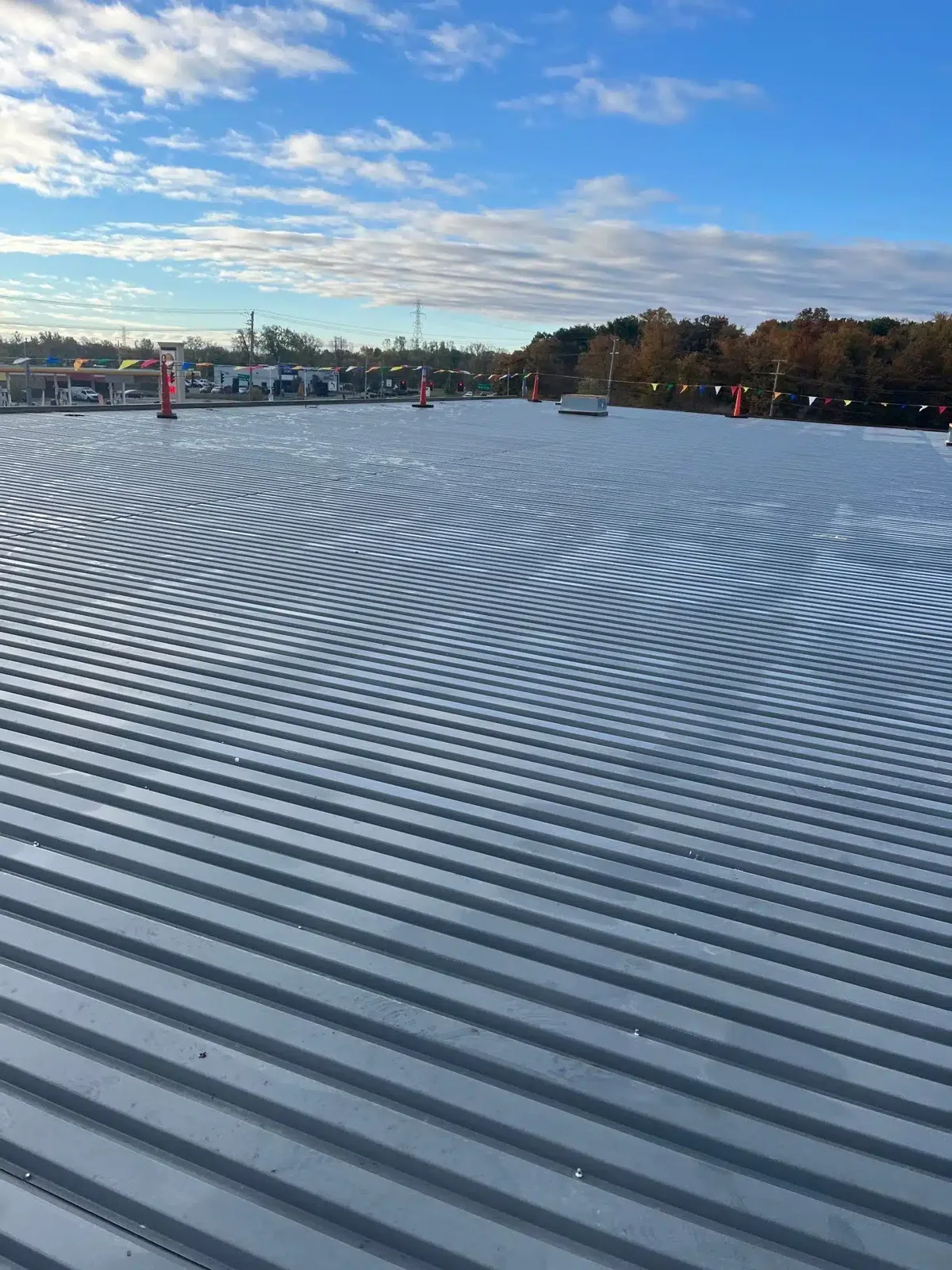
Occupied buildings change the order of operations. Hot-air welding is quiet compared with tear-off, so we schedule removal and loud work for hours that suit the tenants, and plan material staging away from entrances and delivery points. Kitchen exhaust is a particular consideration: fans are shut down only when the restaurant agrees to a window, and grease-contaminated sections are cleaned before new membrane goes down.
In Downtown Cary, where civic destinations such as the arts center and the regional library draw foot traffic, we plan pedestrian protection under any work zone. Crane and lift positions are agreed with the building contact, and the mechanical contractor is brought in before a curb is flashed so equipment shutdowns stay short.
Along the Crescent frontage and the Regency Park side of US 1 and US 64, deliveries and tenants share access routes, so we confirm the haul path and the hours when loading is quietest before the first truck arrives.
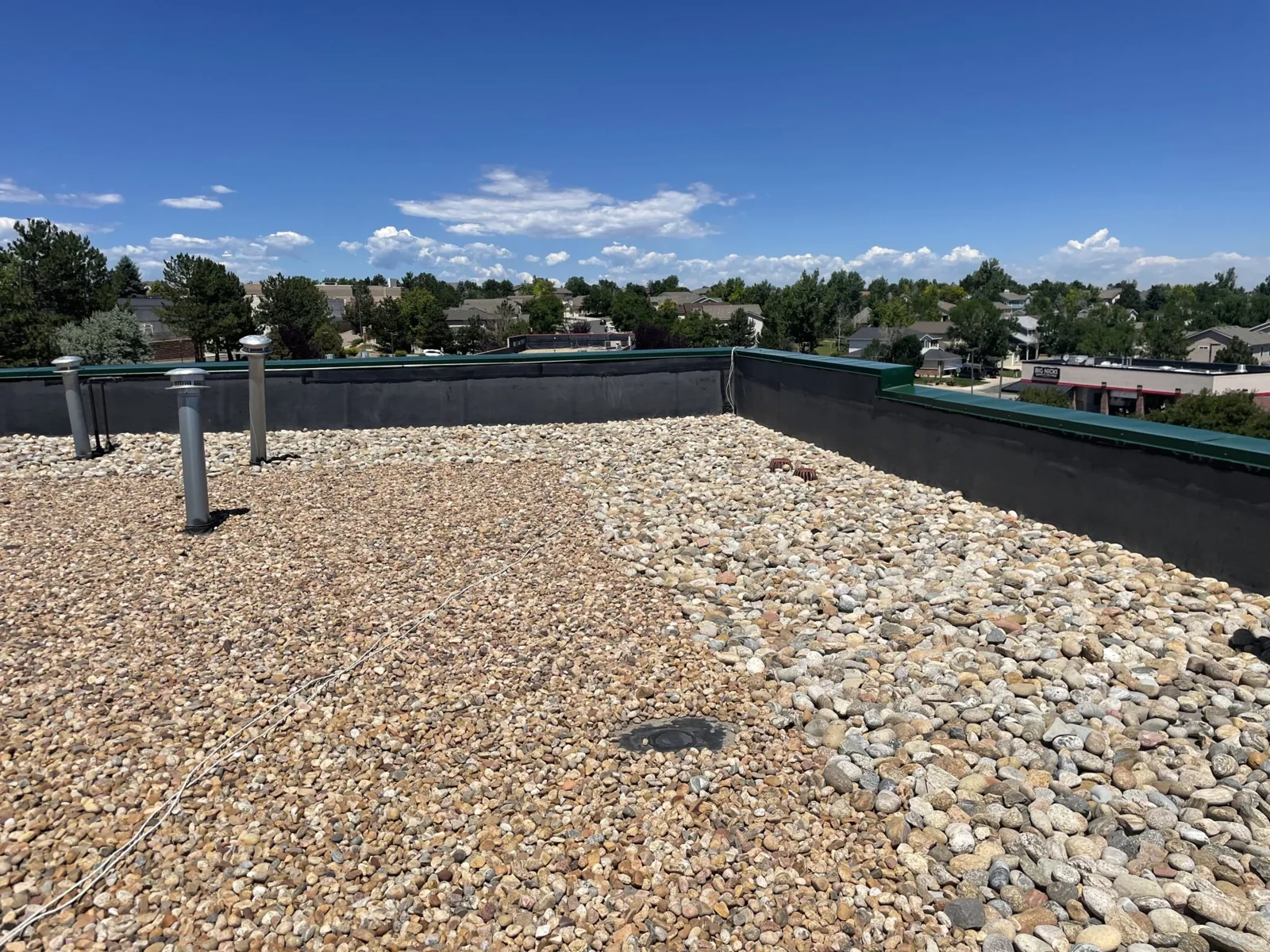
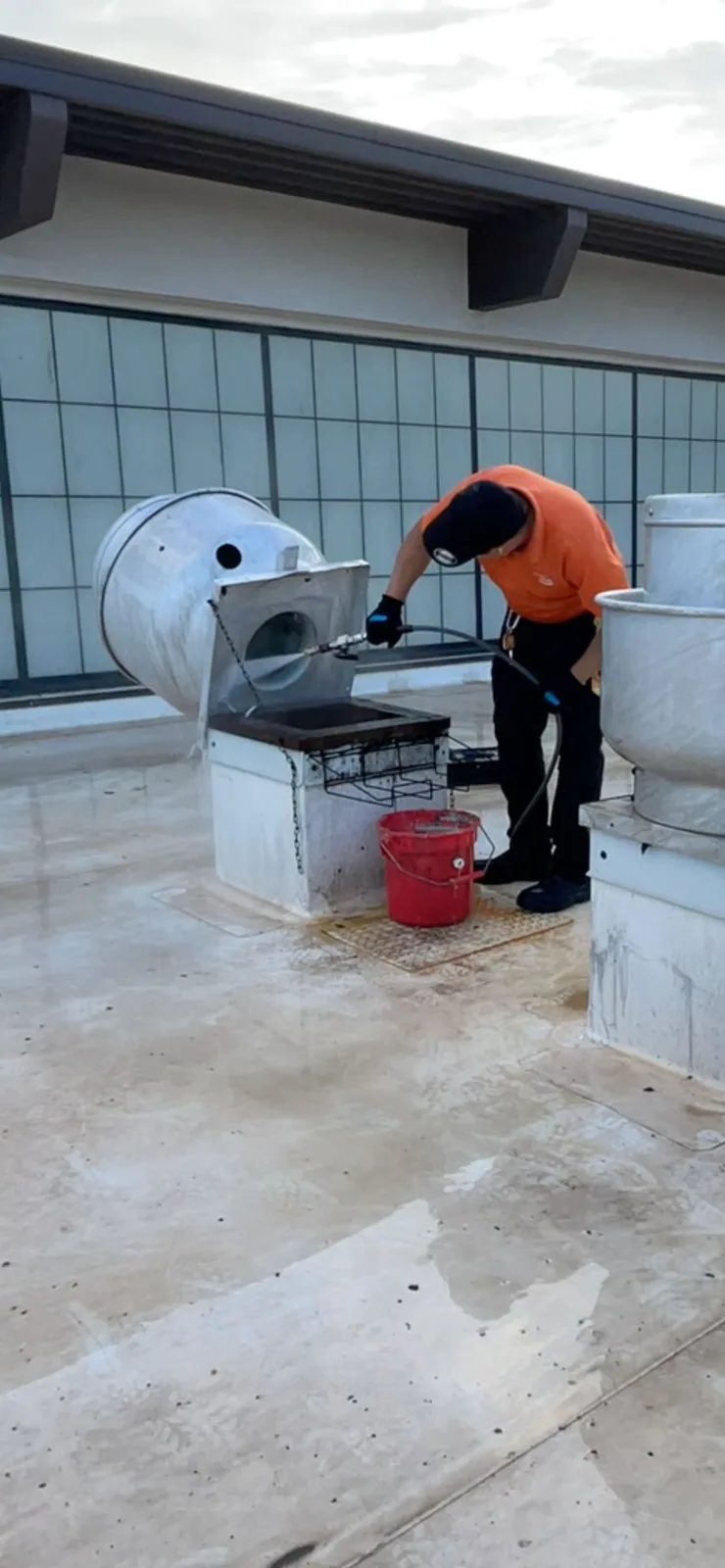
The owner leaves with photographs sorted by roof zone, the probe summary for each seam and a roof plan that marks every repair and every excluded area. Termination edges, drain tie-ins and kitchen-exhaust curbs are photographed separately. The record then feeds preventive roof maintenance, where a technician washes grease buildup from exhaust zones and rechecks the marked seams after the summer. North Carolina adopts its State Building Code with state amendments, and we confirm the local requirement for the permit on each project.
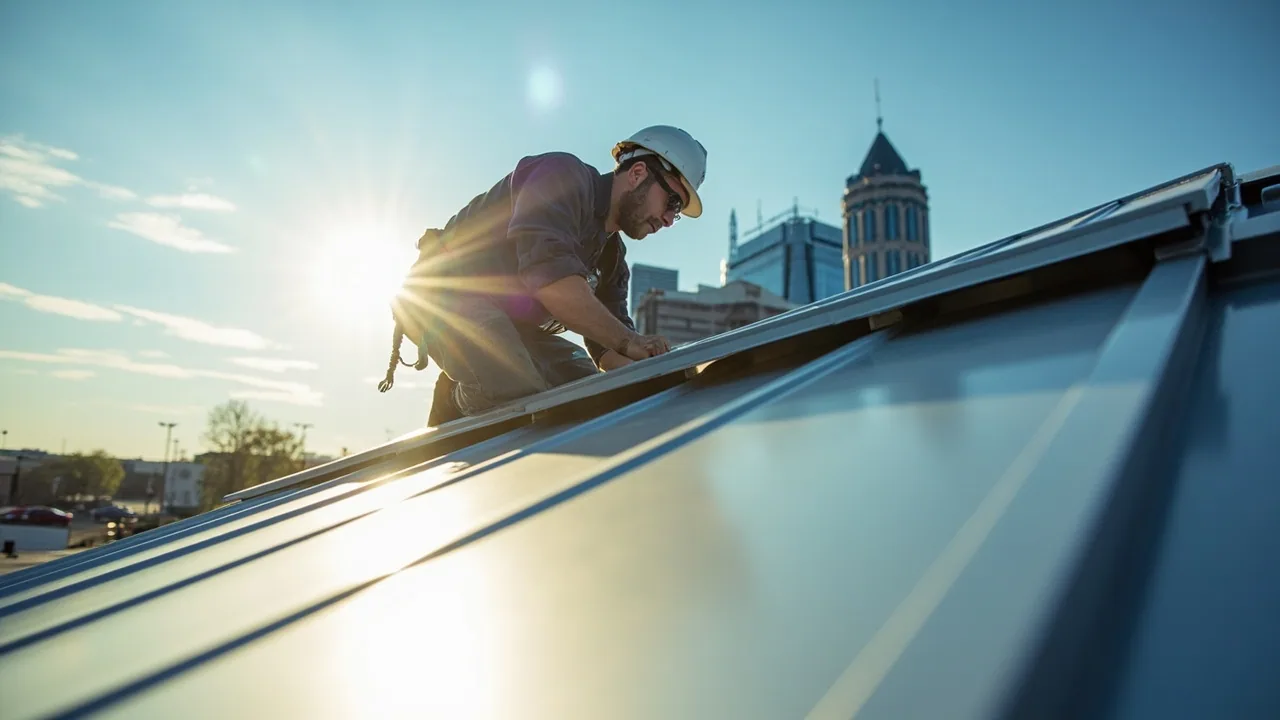
Welded PVC resists many fats and oils better than most single-ply sheets, but residue still needs removal. We wash the area under the fan, check the seams nearest the exhaust, and recommend a grease containment tray where the fan discharges onto the roof.
Contamination, cold welds and age are the usual causes. Dust or grease on a lap can stop two sheets from fusing, a weld run too fast or too cool leaves a weak bond, and a stiffened old sheet can pull apart at the corners as the building moves with Cary's summer heat.
An infrared survey shows where heat is held in wet boards, and a test opening confirms it by direct inspection. The combination turns a suspicion into a mapped area, so the repair boundary is drawn on the roof plan before material is priced.
Exposure is the deciding factor. Rooftop kitchens, chemical vents and heavy oil residue favor PVC, while a roof with few contaminants may suit a lower-cost single-ply. We look at what discharges onto the roof and where the seams sit relative to it.
Often, yes, provided the surrounding sheet still welds. We cut back to sound material, install a pre-formed or field-fabricated flashing, weld it with a measured overlap, and probe the result. Brittle or shrunken membrane at the flashing changes that answer.
Contact Commercial Roofing Cary to arrange a roof walk. We will probe the seams, review what discharges onto the membrane and send you a scoped next step for the building.
Roof leaking now? Call for emergency roof repair.
Or email [email protected].