
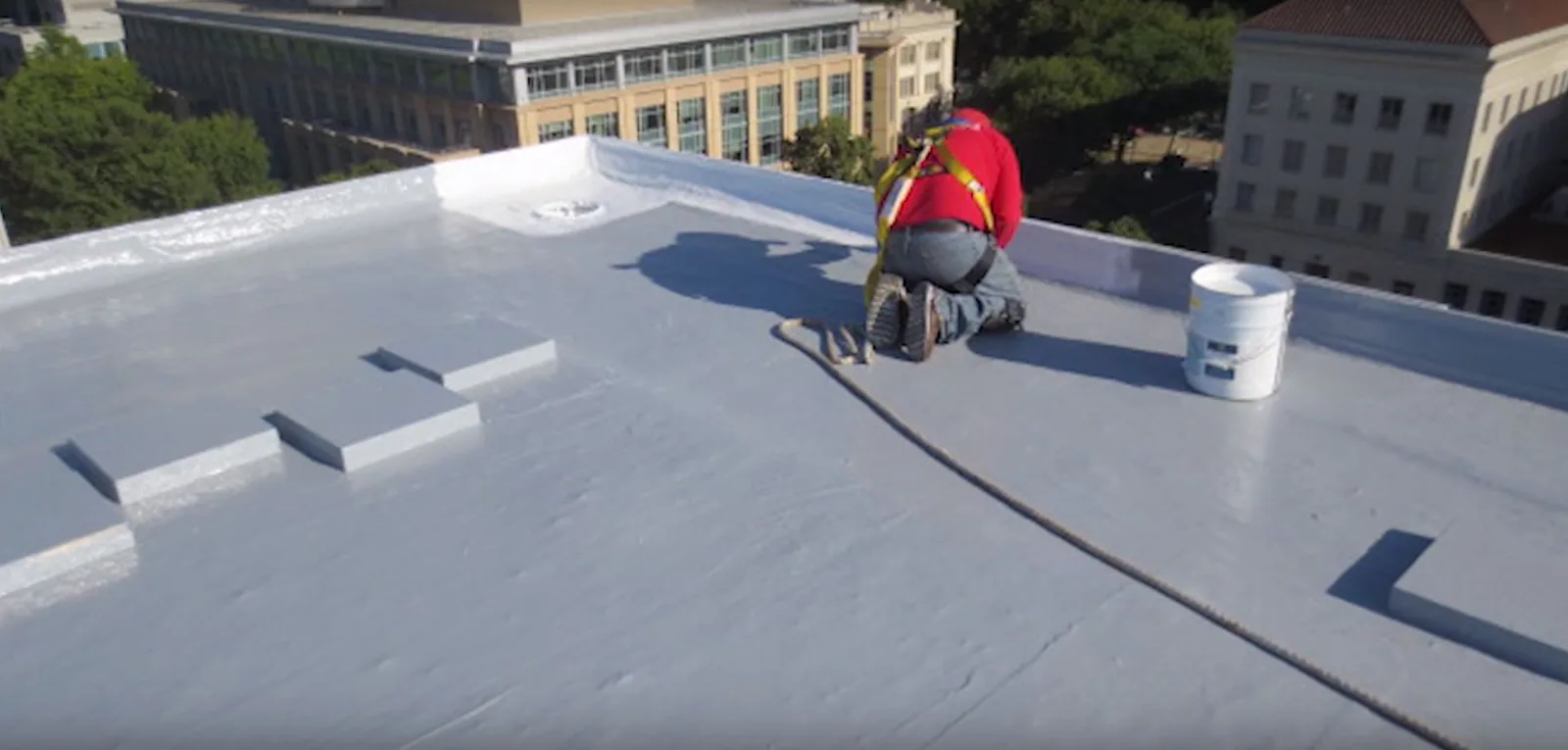
A TPO field seam can look sealed from the walking path while the weld underneath has a gap you could slide a probe into. That is where we begin on a Cary, NC roof: along the lap line, at the membrane turn onto a parapet, and at the termination edge where the sheet meets metal. A single-ply white membrane reflects sunlight well, but it still lives through a Cary summer, and the seams and flashings take the daily heating and cooling harder than the open field does. Our job is to find which details have moved, decide whether the repair boundary is a seam, a corner or a whole slope, and put the scope in writing before any material is ordered.
Age on a thermoplastic sheet rarely shows as a single dramatic failure. More often we see a dull, chalky surface, dirt that has bonded in low spots, and field seams where the edge of the top sheet has lifted a few millimeters. At penetrations the pattern changes: pipe boots crack where the pre-molded flashing meets the field, and unreinforced sealant dries out and shrinks away from the pipe. Along the perimeter, a termination bar that has loosened lets the membrane drift and wrinkle, and the wrinkle then holds water against the wall.
We walk the whole surface, mark every suspect lap with chalk, and photograph each mark with enough surrounding roof to find it again. A probe result tells us how far a seam has opened, and a test opening, cut where we suspect trapped moisture, shows whether the insulation beneath is still dry. Together they separate a roof needing weld repairs from one with a substrate problem.
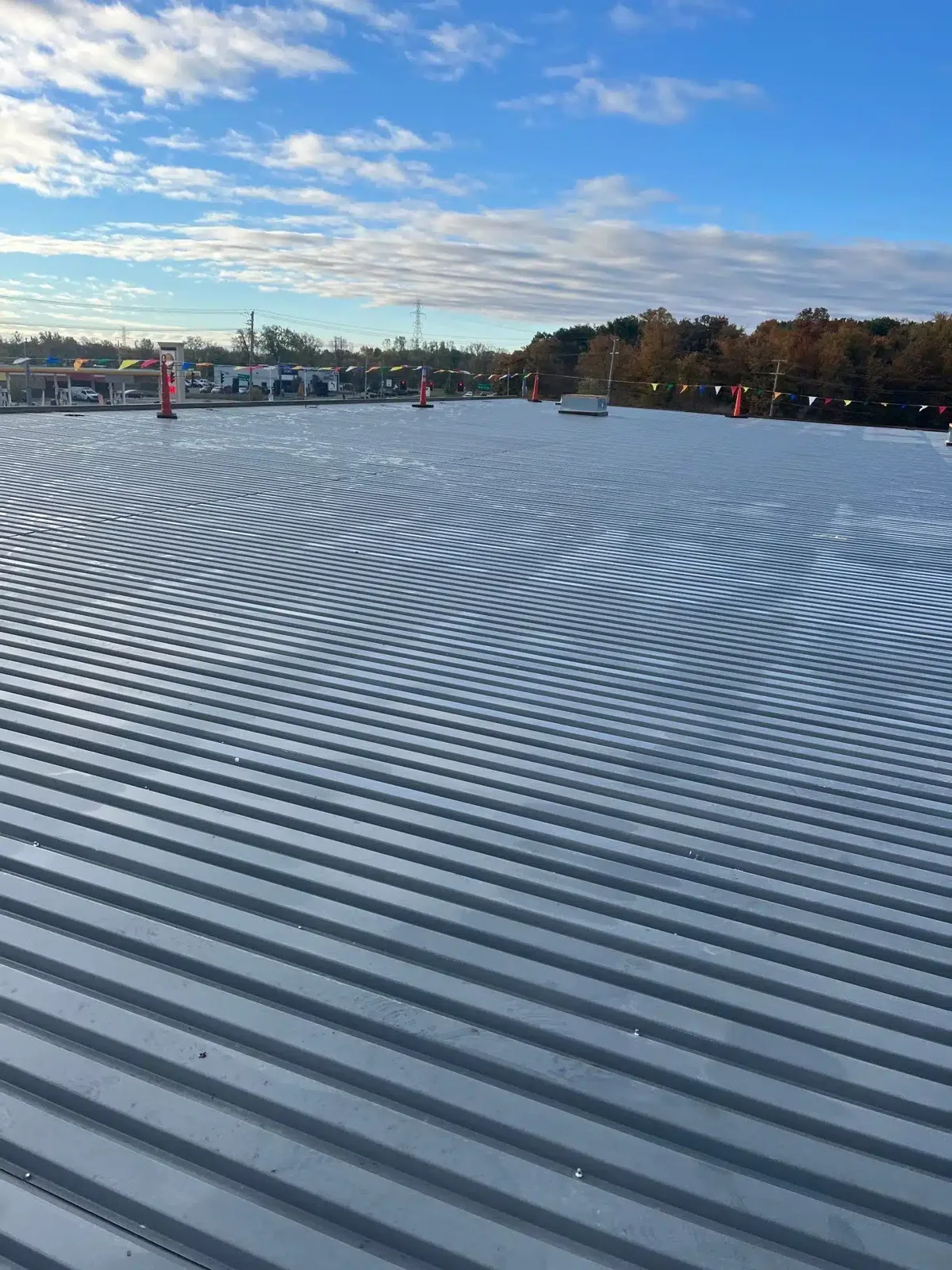
Inside and outside corners are formed by hand from separate pieces, so they carry more joints in a small area than anything else on the roof. A reinforced corner patch that was welded cold, or heat-welded over a dusty surface, will separate first. Field seams fail when the welding temperature or speed was off on installation day, or when surface contamination kept the two sheets from fusing. Fasteners that back out of the deck lift the membrane into a bump, and foot traffic wears through it.
Around equipment we check curb flashing height, the counterflashing, and whether the membrane turn is tight against the vertical face. Where service crews have walked a path to a unit for years, the surface may be worn clean through the top ply to the scrim. Worn paths are repaired with walkway pads set over a sound base, not sealant brushed over thin membrane.
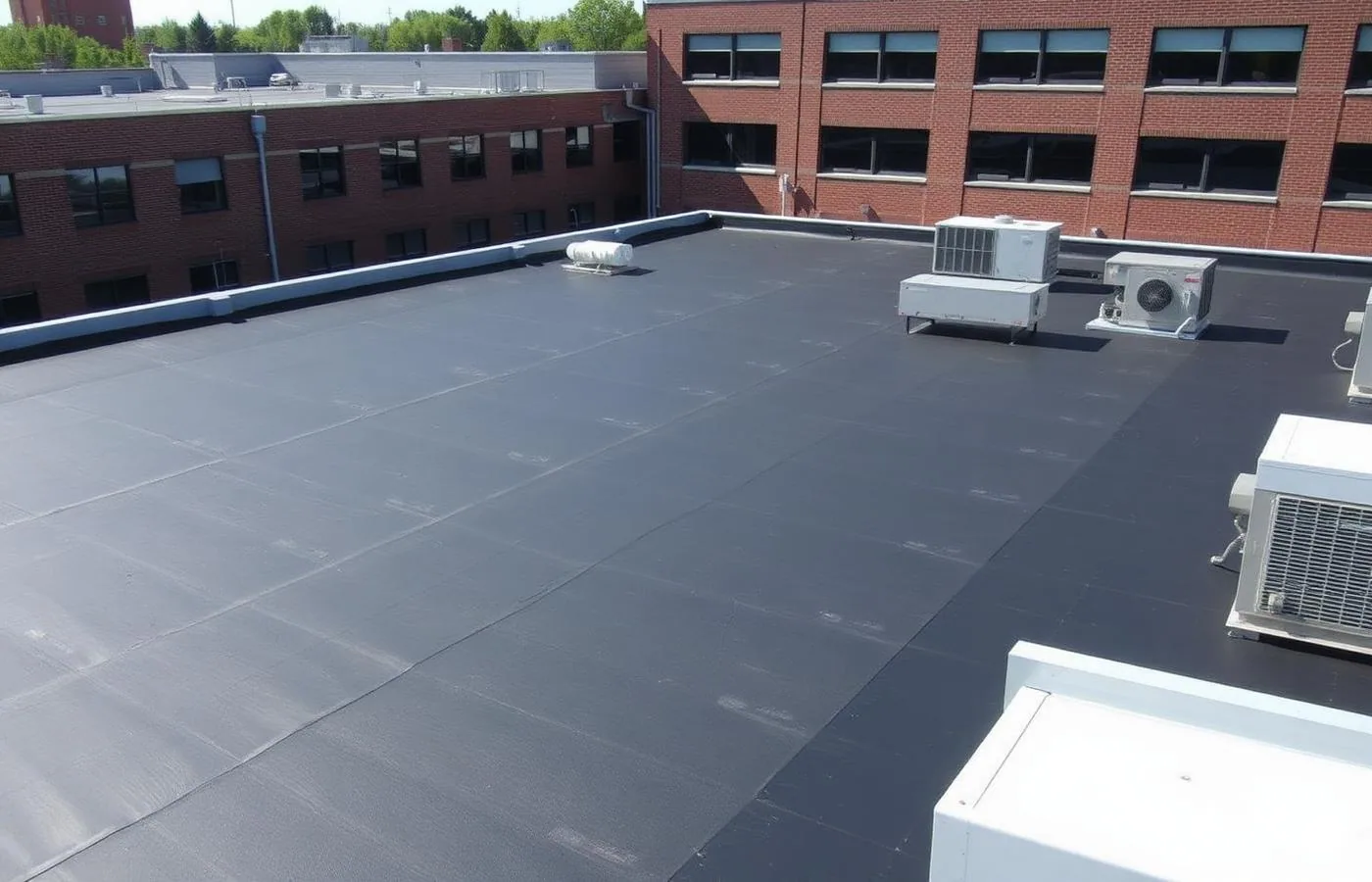
The sequence starts with the deck and the insulation. If the existing roof is coming off, we strip in sections sized to what can be dried in the same day, inspect the deck as it is exposed, and replace any rusted or deflected panels before new insulation goes down. Polyisocyanurate boards are staggered so joints do not stack, and a cover board goes down where traffic or hail exposure calls for it. The new sheet is rolled out, set in adhesive or mechanically attached according to the wind uplift design, and each lap is hot-air welded and probed.
Where a recover is practical, we first confirm that the old roof is dry and flat enough to accept new layers. Infrared scans and test openings decide that, not appearance. The membrane then turns up every wall and curb, and terminations are closed with bar, sealant and edge metal returned over the top. The roof is dried in at the end of each shift, because Cary's 48.80 inches of annual precipitation gives little reason to leave open insulation overnight.
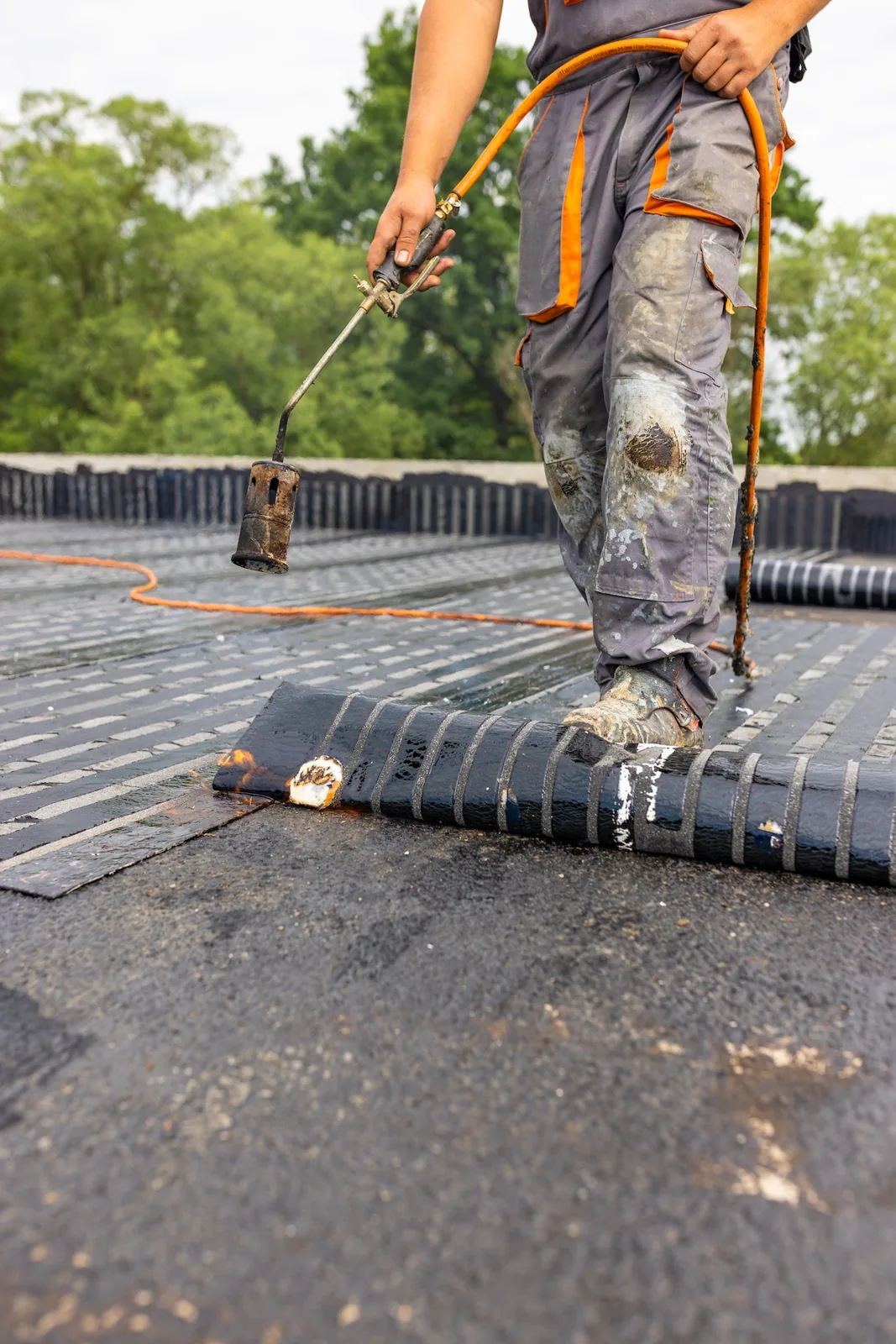
Access depends on who is below the roof. At Woodlake Industrial Center, seven Class A industrial buildings have I-40 and I-540 access, so deliveries and lift placement are planned around whatever dock doors and truck turning each building has, which we sequence with the building contact before mobilizing. At Crossroads Corporate Park, the mix of offices and commercial uses at the I-40, US 1 and US 64 crossroads means neighboring tenants keep different hours, and hot-air welding, adhesive odors and noisy tear-off are scheduled with that in mind.
We protect entries and walkways below the work, keep debris chutes away from tenant doors, and stage rolls on the roof so crane time stays short. Rooftop equipment is flashed one unit at a time, with the mechanical contractor looped in before a curb is touched.
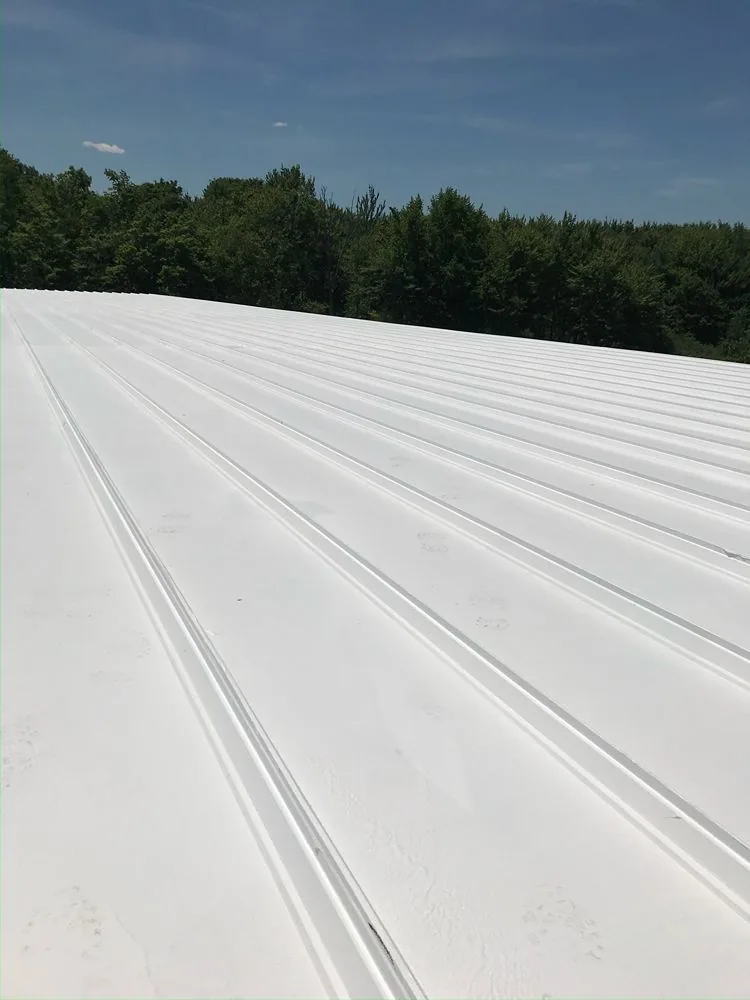
A TPO roof with sound insulation, a clean test cut and a limited number of open laps is usually a repair candidate, and we price it by repair boundary: this corner, that run of seam, the curb by the unit. When infrared shows moisture across more than a localized area, the repair question shifts, because saturated insulation holds water against the deck and wears out the new welds sooner. At that point a recover may still be possible if the wet material is cut out, but a full replacement is more often the sound choice.
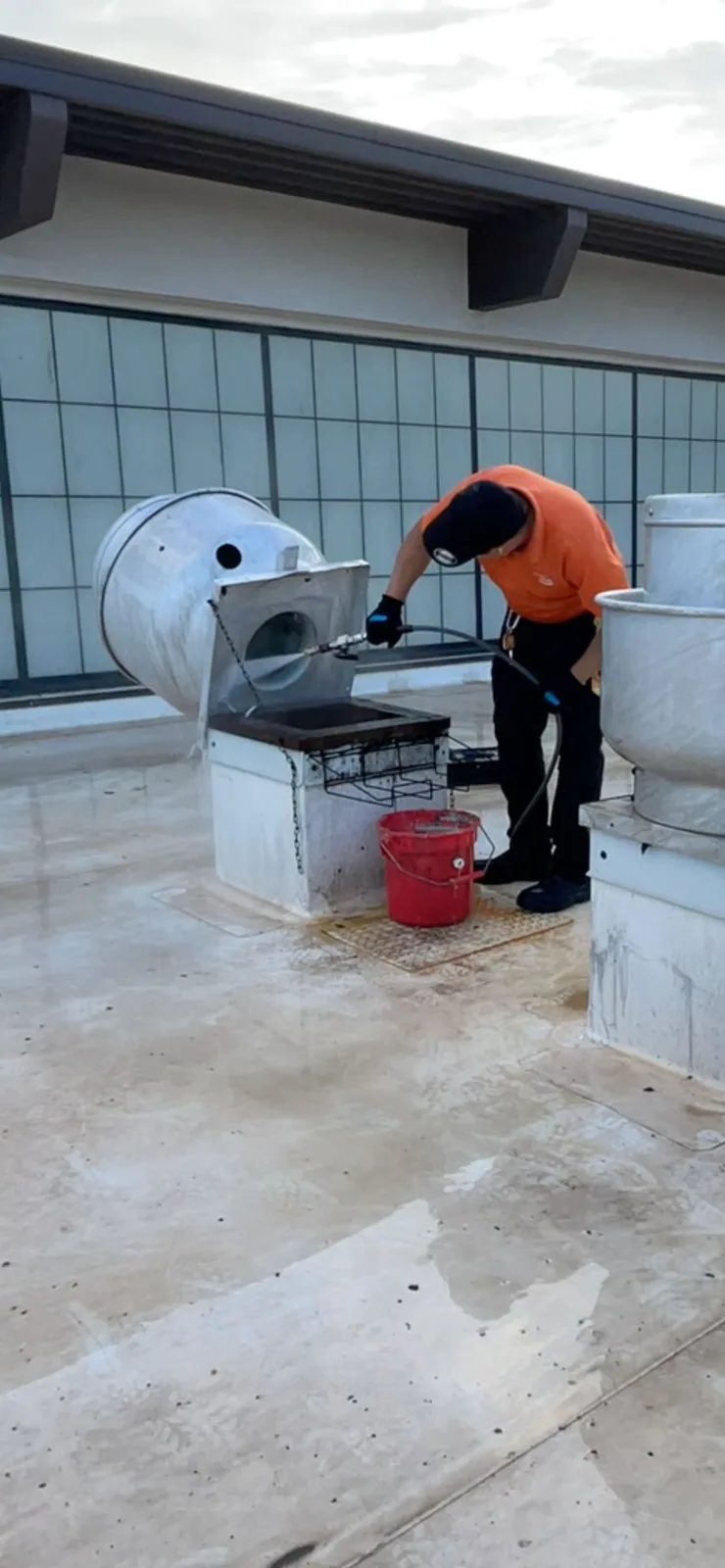
A coating over aged TPO is a third path. It needs a clean, dry, well-welded surface, and a silicone coating suits a roof with chronic wet spots. Where a membrane swap is cleaner, PVC is the other single-ply we weigh, especially near kitchen exhaust.
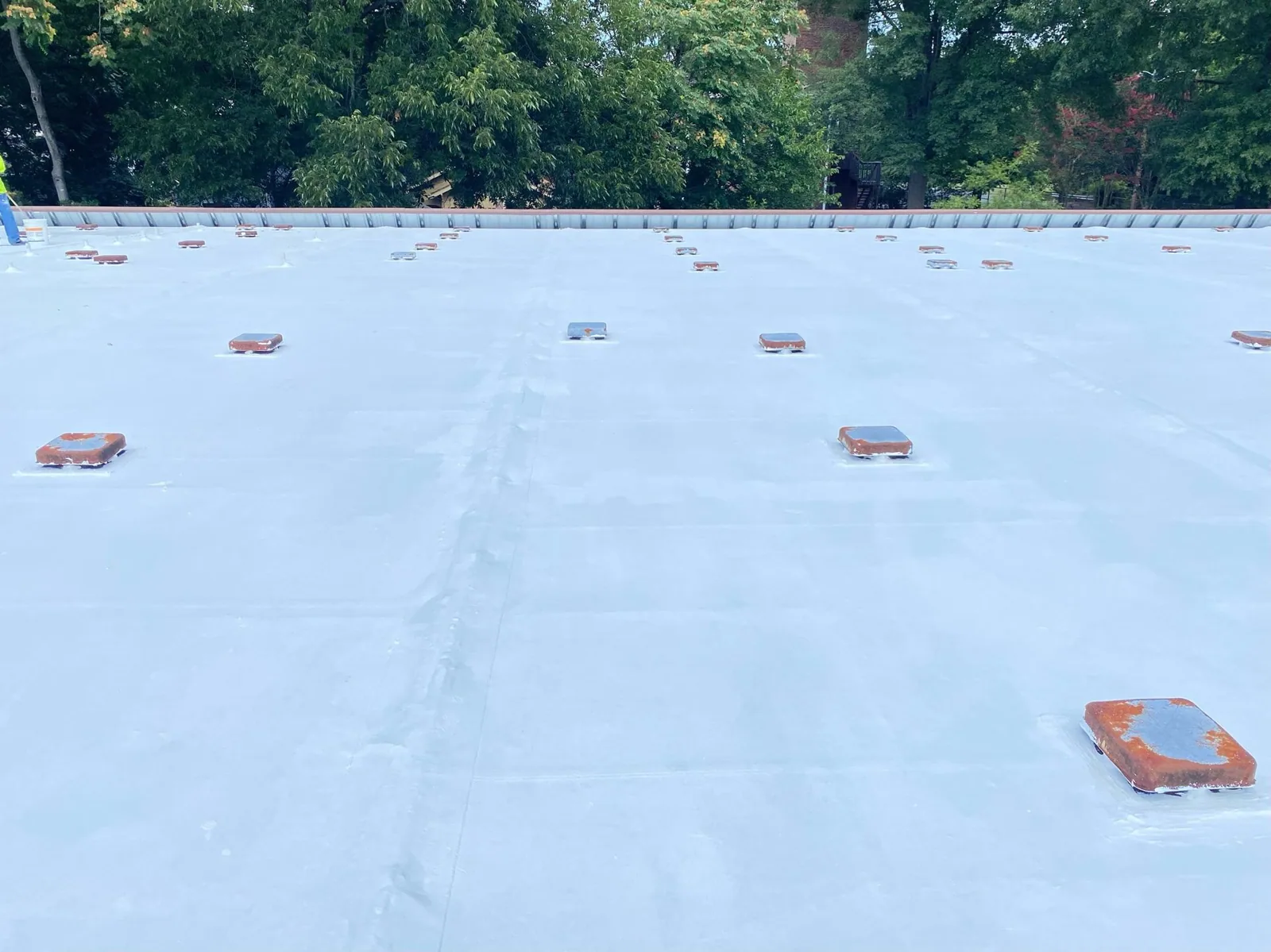
At closeout the property manager holds a photograph set by roof zone, a probe summary for every seam and a drawing of each repair, which gives the next visit a known starting position. Termination edges, drain tie-ins and equipment curbs are each photographed after completion. If any area was left out of the scope, the record names it and says why.
That record becomes the baseline for preventive roof maintenance, where a technician returns to the marked laps after the first hot summer and the first heavy rain. Hail, tornado and damaging-wind reports appear in the National Weather Service Raleigh climatology for its 31-county area, and after a severe event the baseline lets us compare a bruised or torn area against what the roof looked like before. Work is permitted under the North Carolina State Building Code, and we confirm the local requirement at each project.
The condition of the sheet around the defect decides it. If the surrounding membrane is clean, flexible and still welds when we test a scrap, a patch with a reinforced edge holds. If the sheet is brittle, chalked through or has lost its top ply, a weld will not bond, and we cut back to sound membrane and replace that section.
Reflectivity lowers surface temperature, but laps, flashings and sealants still expand and contract through the season. After the first hot stretch of the season we look at curbs, pipe boots and termination edges, because those details open before the field sheet shows wear.
It should state whether the boards were tested, where moisture was found and what is being replaced. A scope that prices only the membrane leaves the owner exposed to a change order when wet polyiso is found mid-job. We probe and scan first so the quantity of insulation is a number, not a surprise.
Sometimes. A dry, single-layer roof with a smooth surface and sound attachment can accept a cover board and new membrane. Multiple prior layers, trapped moisture or a deck with rust at the fasteners usually end that option, and we show the test findings that led to the answer.
We coordinate with the mechanical contractor before work reaches each unit. Curbs are flashed to height, refrigerant and electrical lines are protected, and any disconnect or crane lift is scheduled so tenants lose cooling for as short a window as the work allows.
Call Commercial Roofing Cary to walk your roof, probe the seams and review the findings with you. You will receive a scoped next step for the building, with the repair boundary marked on the roof plan.
Roof leaking now? Call for emergency roof repair.
Or email [email protected].