
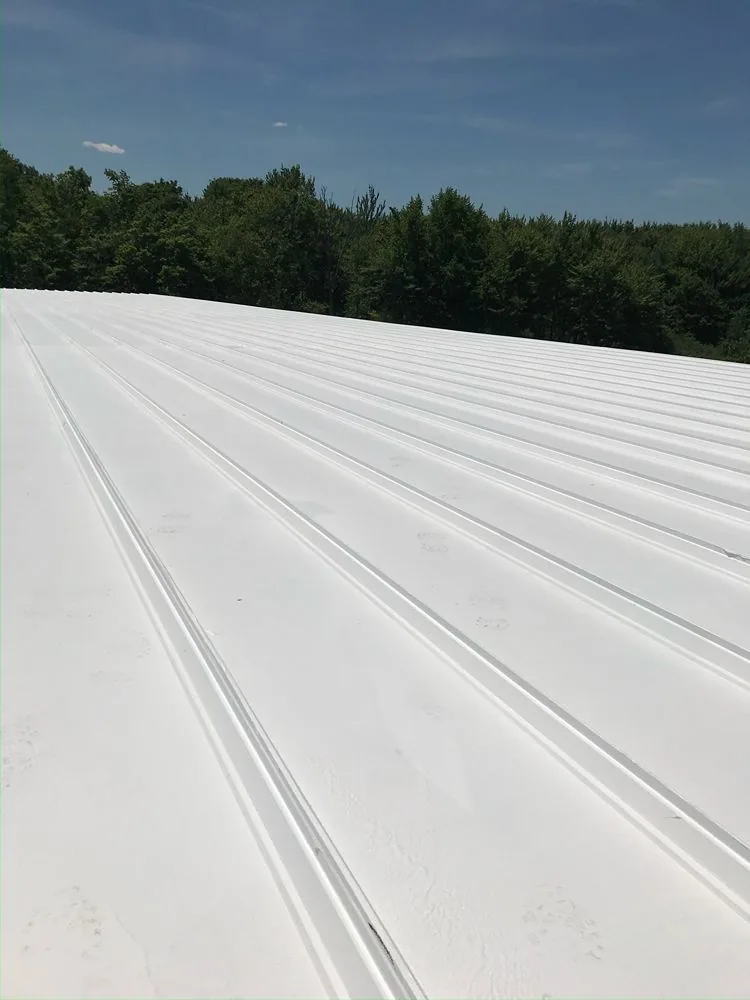
Water that sits on a roof for two days after a storm tests a coating in a way a dry slope never does, and silicone is the chemistry most often chosen when a roof holds water. It cures into a flexible, UV-stable film that tolerates standing water better than most acrylics, and it bonds to many existing surfaces when they are clean and sound. On a Cary, NC roof we start by finding out what the old surface is, whether it is dry, and whether silicone will adhere, because the coating can only be as good as the roof it covers.
A roof suited to silicone has a continuous existing membrane or metal surface, dry insulation, seams that can be repaired, and a deck that is stable. The common surfaces are aged single-ply membranes, smooth or granulated bitumen, spray foam and metal panels. Silicone can bridge small defects but cannot carry a roof with open laps, soaked insulation or a collapsing deck.
The mix of buildings around Garner, where logistics, retail, technology and advanced manufacturing are among the sectors and I-40 and US 70 are major routes, spans many roof ages. In Fuquay-Varina, manufacturing and business services are among the area industries. Those economic sectors point to roofs of many types, so each building is evaluated for what is actually on top of it.
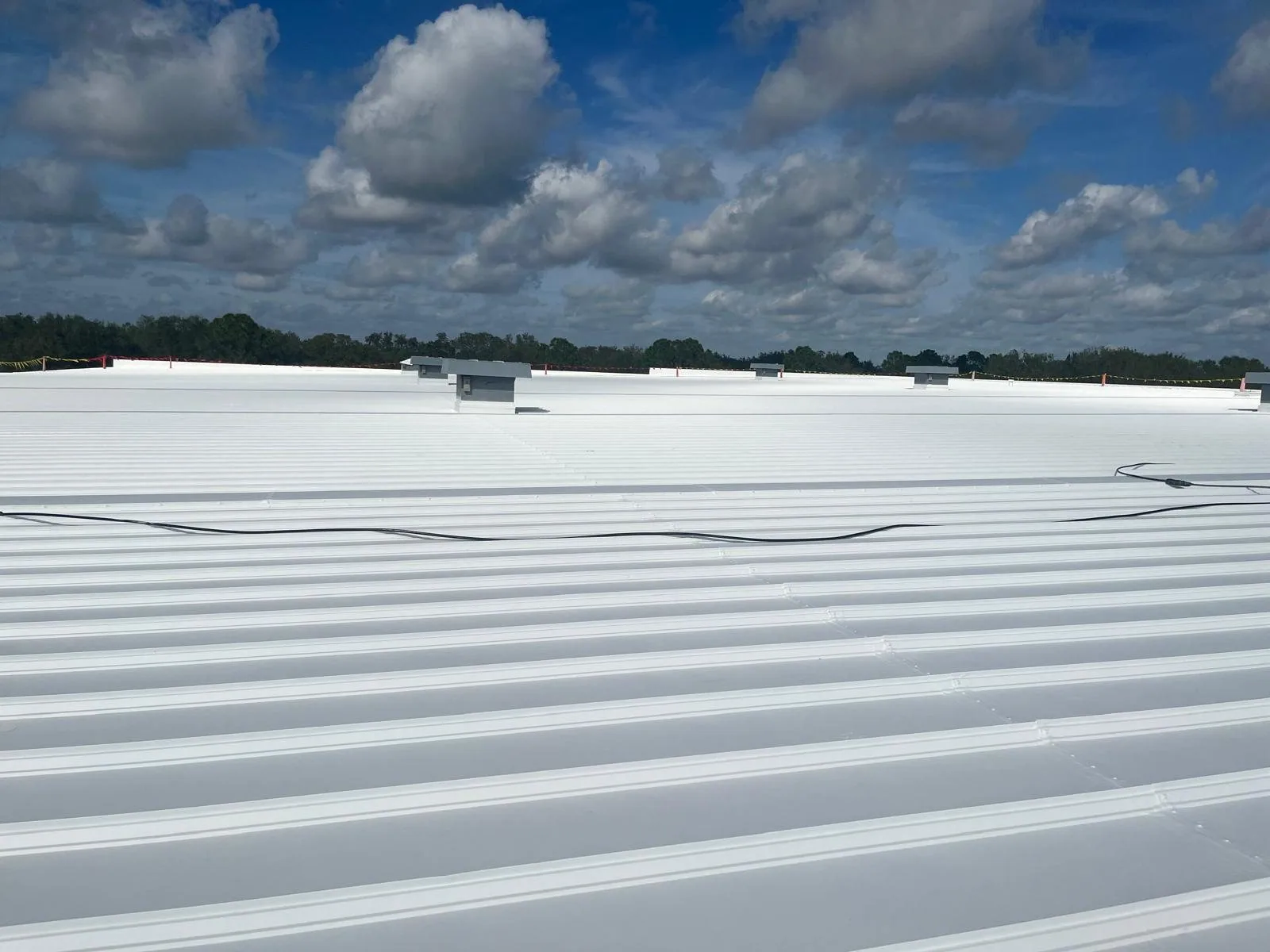
Testing comes before pricing. We identify the substrate, clean a representative patch, and apply a small test area of the proposed coating to check adhesion after it cures. A cross-hatch or peel test reveals whether the film bonds or lifts. We use an infrared scan and a moisture meter to find wet insulation, and we cut a test opening where results are unclear.
Contaminants decide many coating jobs: oil, algae, chalked membrane, old coatings and sealants can each block adhesion. Some old asphalt surfaces bleed oils that stain the coating, so a barrier primer may be required. Silicone also does not bond well to itself once it has weathered, which means an existing silicone coating must be cleaned and checked before a second coat goes on. Each finding is photographed in position and added to the roof plan.
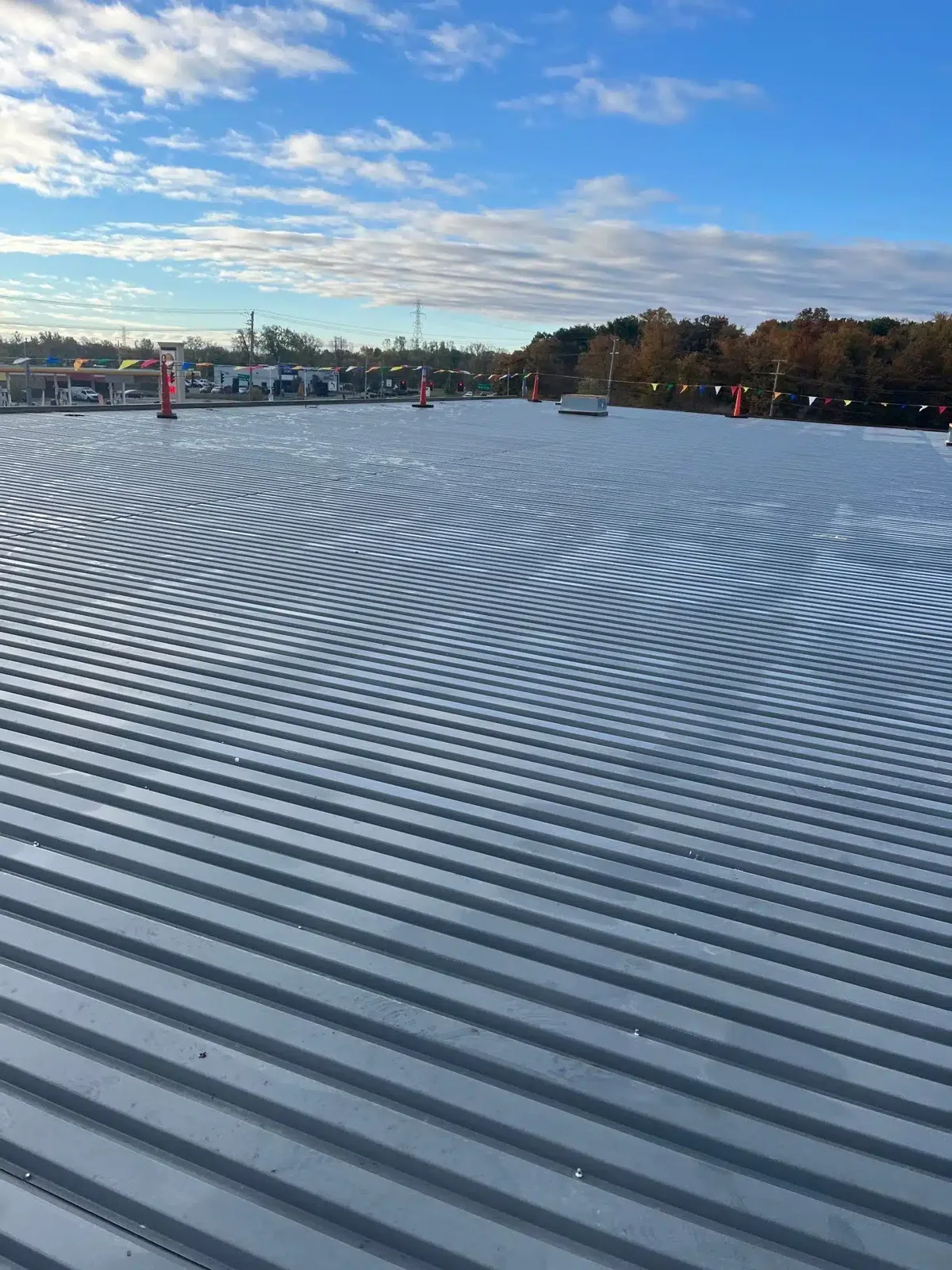
Metal roofs get a rust and fastener review at the same stage. Surface rust is wire-brushed and primed, and panels that have rusted through are replaced instead of coated over, since a coating bridges a pinhole for a season and then lets go. On single-ply roofs, we look at whether plasticizer migration has left an oily film that would keep the coating from bonding.
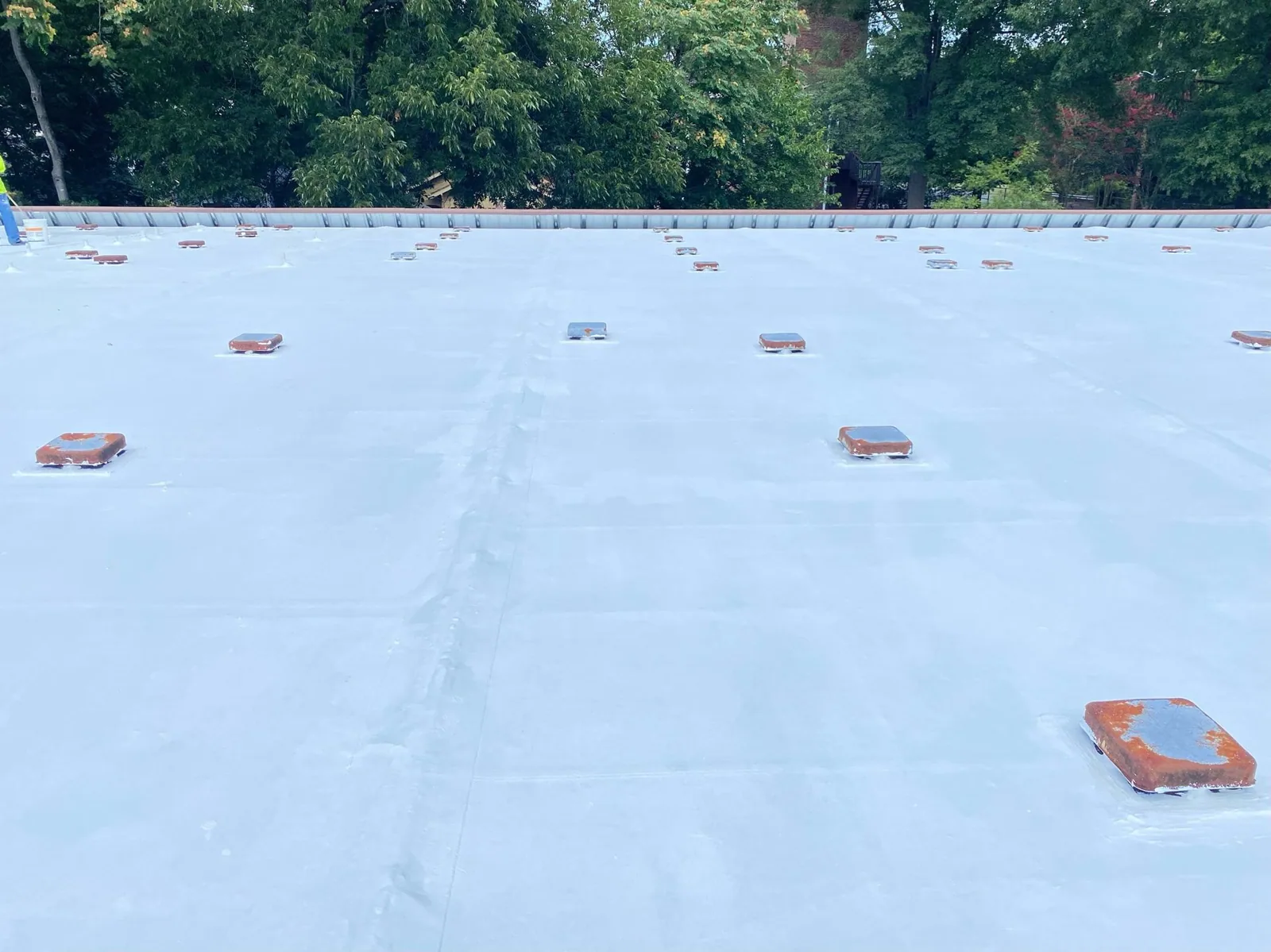
Seams, flashings and fasteners need correction first. Open laps are heat-welded or sealed with compatible material, fasteners on metal are backed out and replaced with fresh washers, and corners and penetrations are reinforced with fabric embedded in a base coat. Cracks are routed and filled, and blisters are cut and dried.
At drains, the bowl and clamping ring are cleaned and checked, and the coating is tied in without burying the strainer seat. Ponding areas are measured. Silicone tolerates standing water, but water that stays for weeks adds weight and invites algae, so we mark low spots and talk through whether tapered insulation or additional drains are needed. Cary's 48.80 inches of annual precipitation is a reason to review drainage during every coating scope.
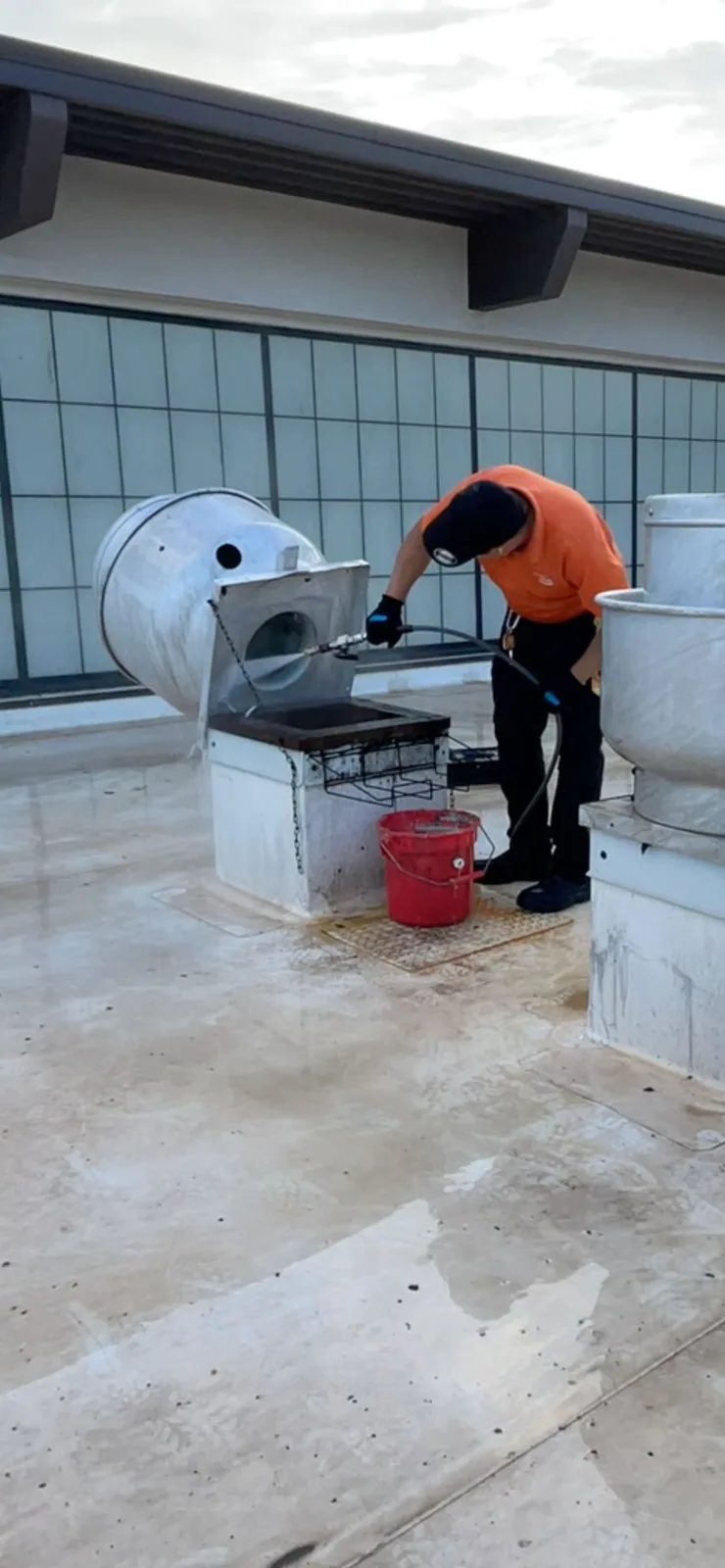
The roof is power-washed and allowed to dry. Repairs are completed, primers are applied where the substrate requires them, and seams and details receive a reinforced base coat. The field coating follows, applied by spray or roller at the coverage the product requires, measured as wet-film thickness across a grid.
Weather decides the schedule. Surface moisture, dew, rain within the cure window and wind all affect application, and the product has temperature limits. A Cary summer roof surface can run too hot to hold the product, so we plan the day around cure times and avoid application during the hottest hours. Each completed area is inspected for pinholes, thin spots and missed edges before the crew moves.
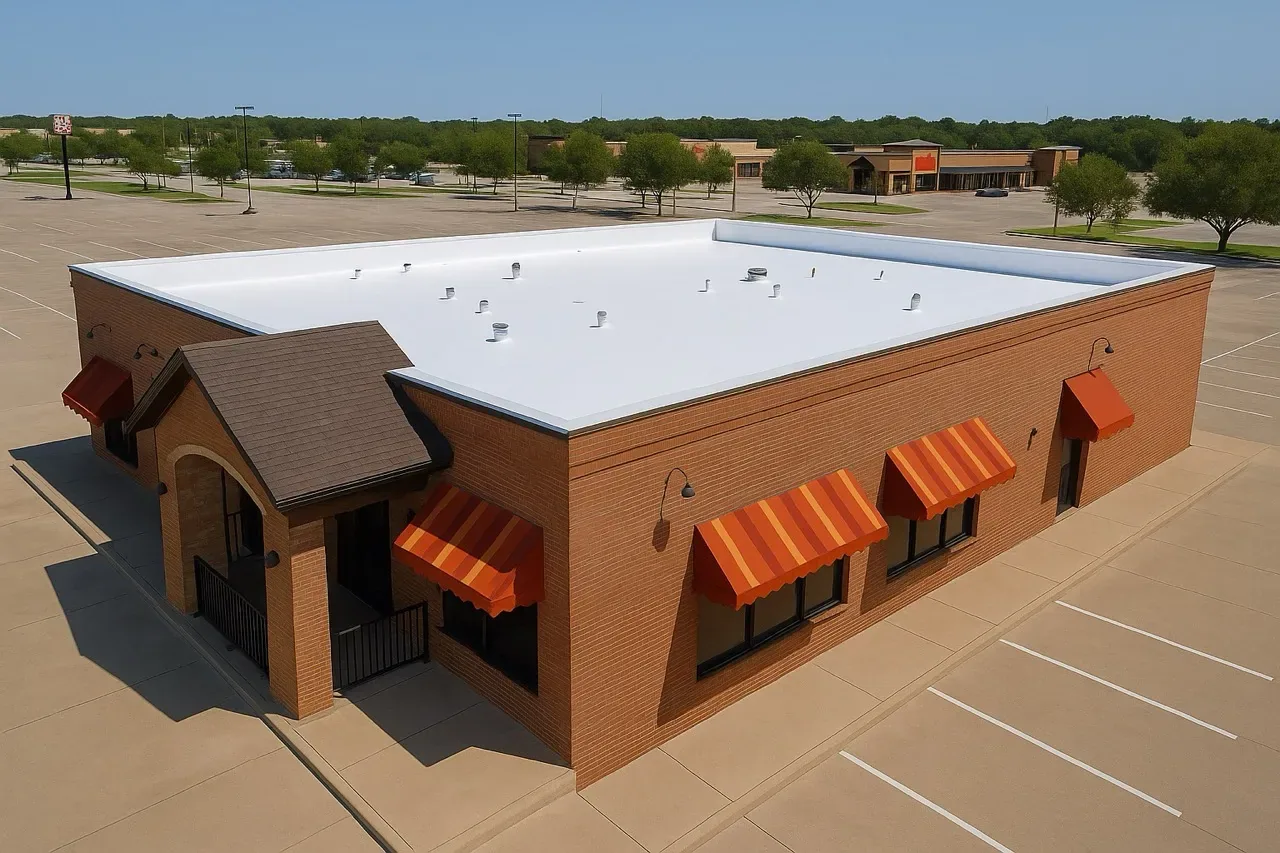
Silicone is a poor fit when the substrate is wet, the membrane has widespread open seams, or the roof sees heavy foot traffic that will wear a soft film. It also collects dirt, which can dull the reflective surface over time, though rain removes part of it. Where the roof is near the end of its life, a replacement may serve the building better.
For roofs that do not hold water, an acrylic coating suits sound, sloped surfaces that drain freely. On metal, a retrofit may be the right frame for the coating decision. The wider coating restoration process begins with the same adhesion and moisture checks.
Coating is quieter than tear-off, which makes it workable above occupied space, but it brings its own planning points. Pressure washing sends water and debris toward drains and downspouts, so we protect the outlets and keep runoff away from entries, parked vehicles and loading docks. Spray application can carry overspray on wind, and we mask rooftop units, skylights and nearby glass before the first pass.
Adhesion primers and some coatings carry odor while they cure. We note the intake locations on the roof plan, coordinate shutdown windows with the building contact, and tell tenants when the work will start and finish. Along the I-40 and US 70 corridors around Garner, material trucks share the road with everyone else, so deliveries are timed for quieter hours when the site allows. Rolls of reinforcing fabric, drums of material and the spray rig are staged at one point and removed at day's end.
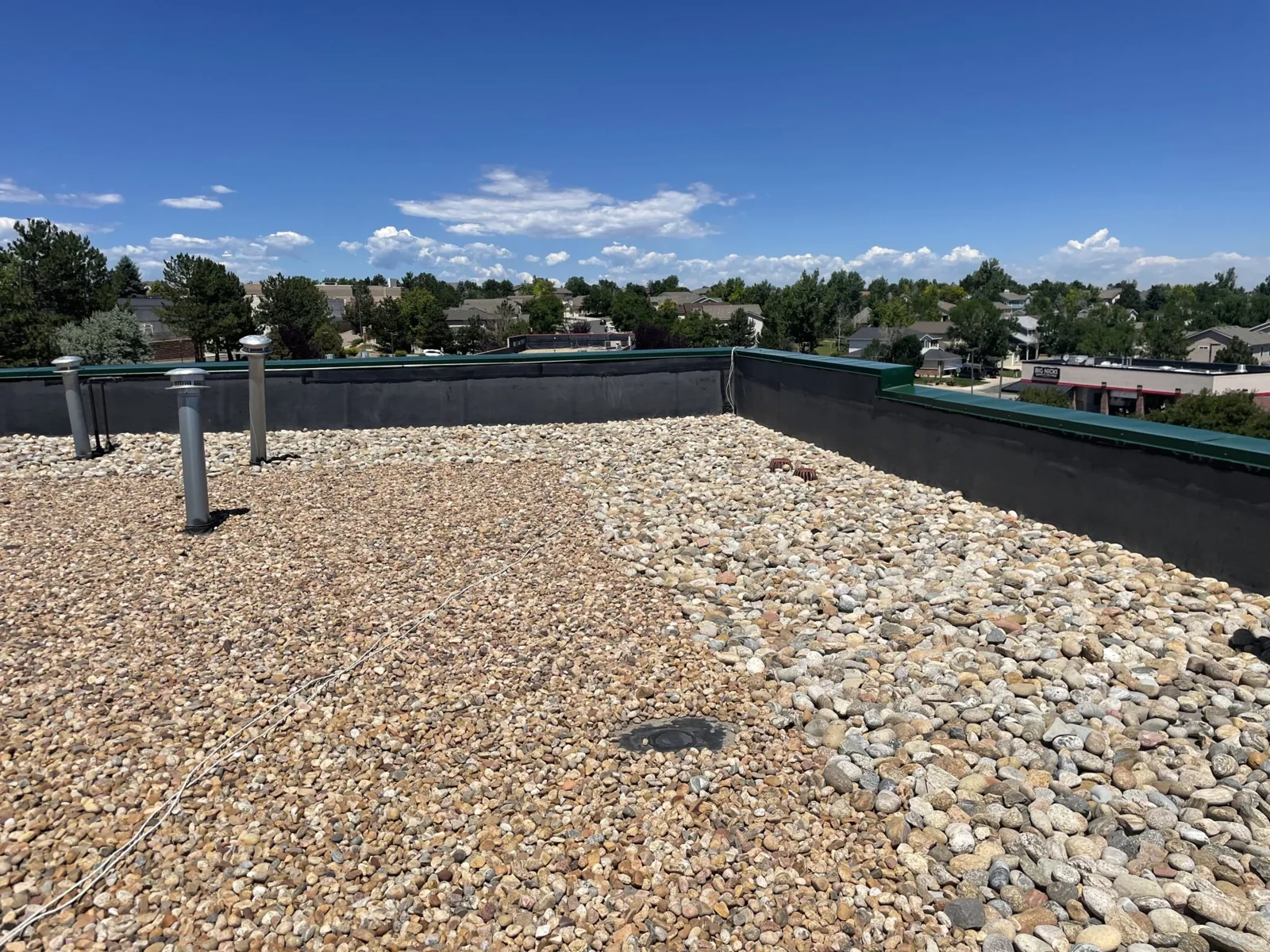
The record shows coating coverage by zone, test results, repairs and any excluded areas. Photographs capture drains, seams and flashings after completion. A maintenance plan schedules washing and inspection so dirt and debris do not reduce the surface. Where a permit is needed, it is reviewed under the state code with its North Carolina amendments, and the local path is settled before the first wash.
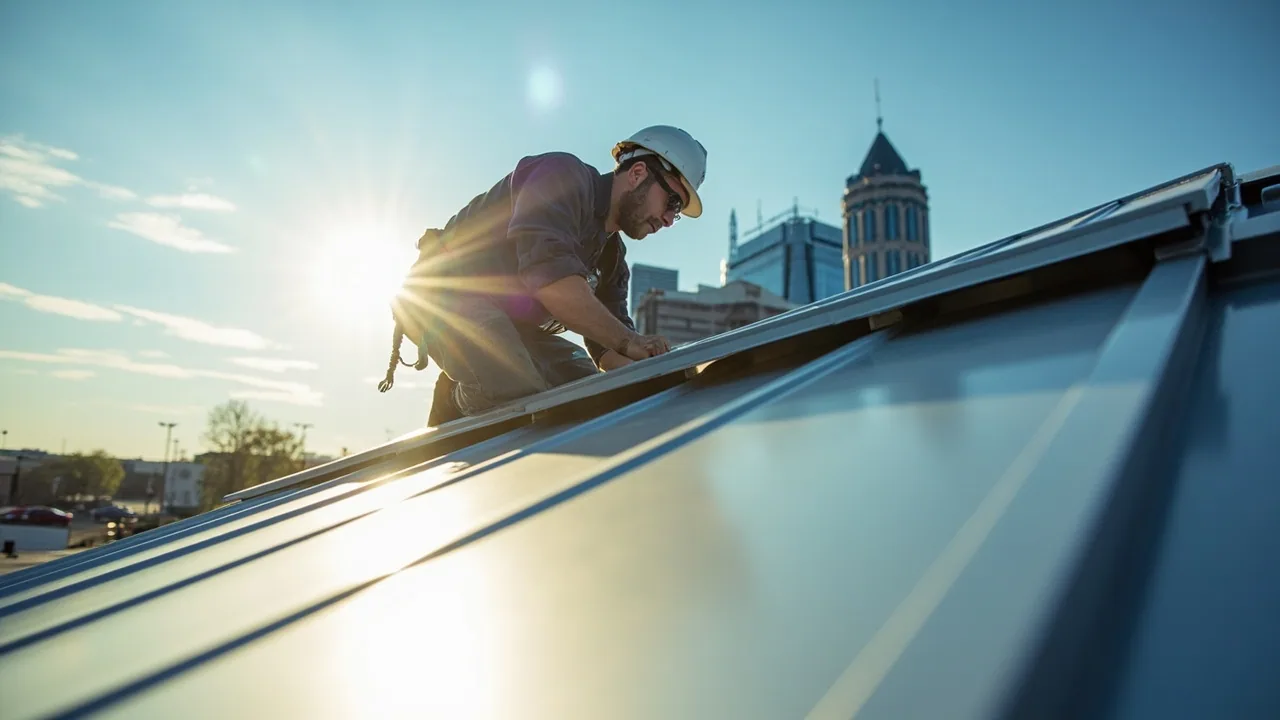
It tolerates standing water better than most coatings, but that does not fix the cause. We measure the pond, check the deck and drains, and report whether tapered insulation or an added drain should be considered.
Sometimes, after cleaning and an adhesion test. Compatibility between old and new coatings varies, so we apply a test patch and check it after cure before committing the full roof.
Silicone cures quickly, but foot traffic on a fresh film can scuff it. We keep crews and tenants off new areas until the product has cured, and set walk pads around equipment if service access is needed.
Only when the leak source is within a repaired detail the coating can bond to. Open seams, failed flashing and wet insulation must be corrected first. We trace the water path before choosing the repair.
We clean the surface, test adhesion, repair damaged areas and apply a new coat. Silicone does not bond easily to weathered silicone, so surface preparation and primers are part of the recoat scope.
Call Commercial Roofing Cary to arrange a roof walk. We will test adhesion, scan for moisture and send a scoped next step for the building.
Roof leaking now? Call for emergency roof repair.
Or email [email protected].