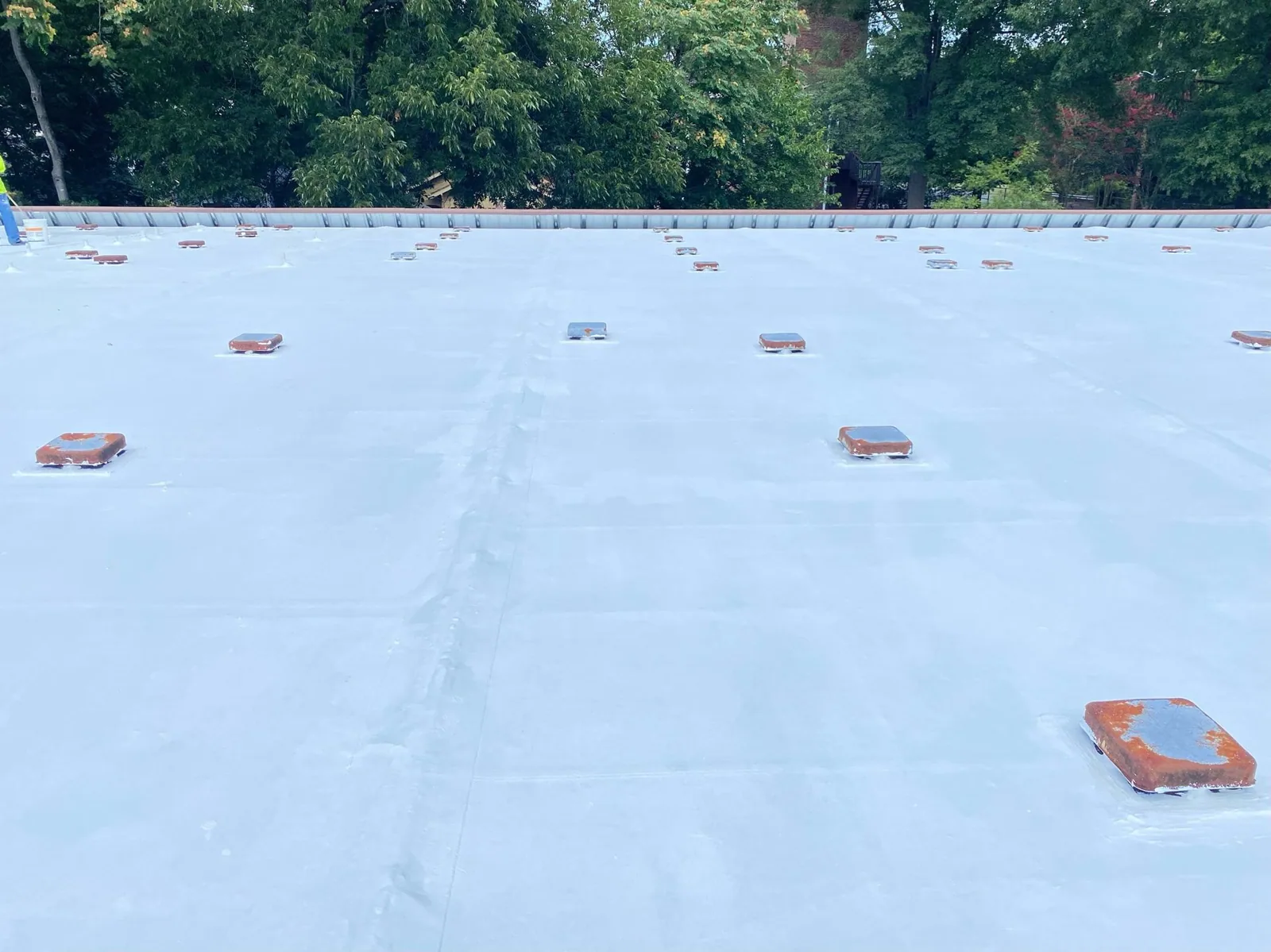
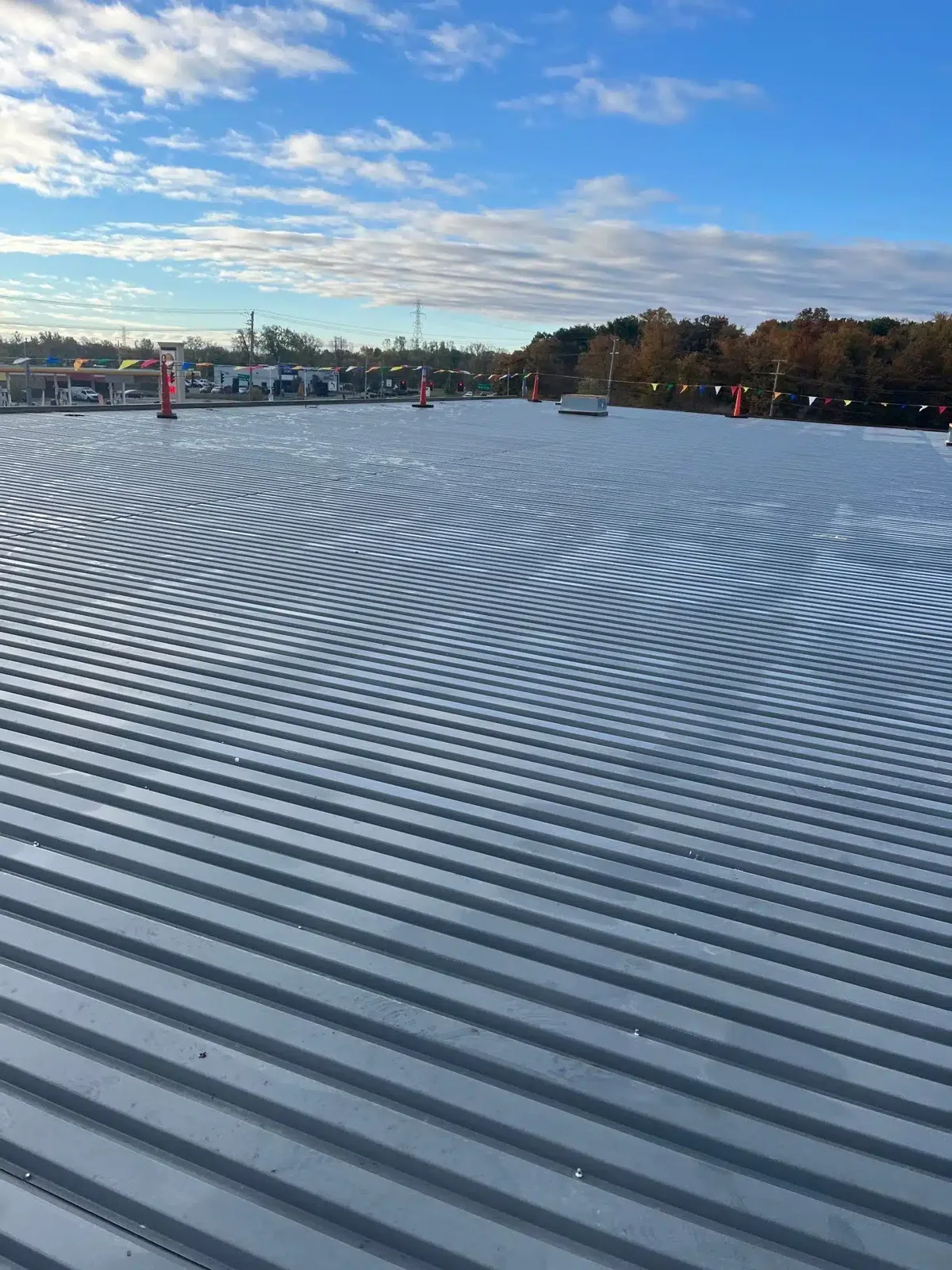
On an exposed-fastener metal roof, the first thing to fail is usually a small rubber washer under a screw head, one of hundreds in a single slope. The washer dries, splits and lets a thread of water follow the screw into the purlin, and a rusting fastener then backs out and loosens the next one. In Cary, NC, that pattern can develop where metal panels carry office, flex and industrial buildings through summer heat and 48.80 inches of annual rain. A retrofit means working with the panels that are there: tightening, sealing, replacing hardware, and in some cases overlaying the roof with a new system rather than tearing it off.
We begin at the fasteners, because they carry the roof's history. Backed-out screws stand proud of the panel, washers show cracks or flattened edges, and rust trails run down the rib from the head. Along the laps, sealant tape may have dried and left a gap, and where panels overlap at the end, a thin line of daylight or staining marks water entry.
The panels come next. Coating chalk, scratches to bare steel and rust at cut edges tell us how far corrosion has advanced. Oversized or stripped screw holes are common where earlier repairs used the wrong diameter, and they cannot hold a new screw of the same size. We also check the framing visible from below: purlin deflection, rust at connections and stains on insulation that point to a persistent leak path. Findings are chalked, photographed and mapped by roof zone so the scope separates a fastener replacement from a panel or framing problem.
Condensation is a separate finding that can look like a leak. Warm interior air meeting a cold panel underside drips from the ribs, and a roof that seems to leak only on cool mornings may have an insulation or vapor-control gap, not an open fastener. We check the underside for staining patterns and look at the insulation facing before assigning the cause.
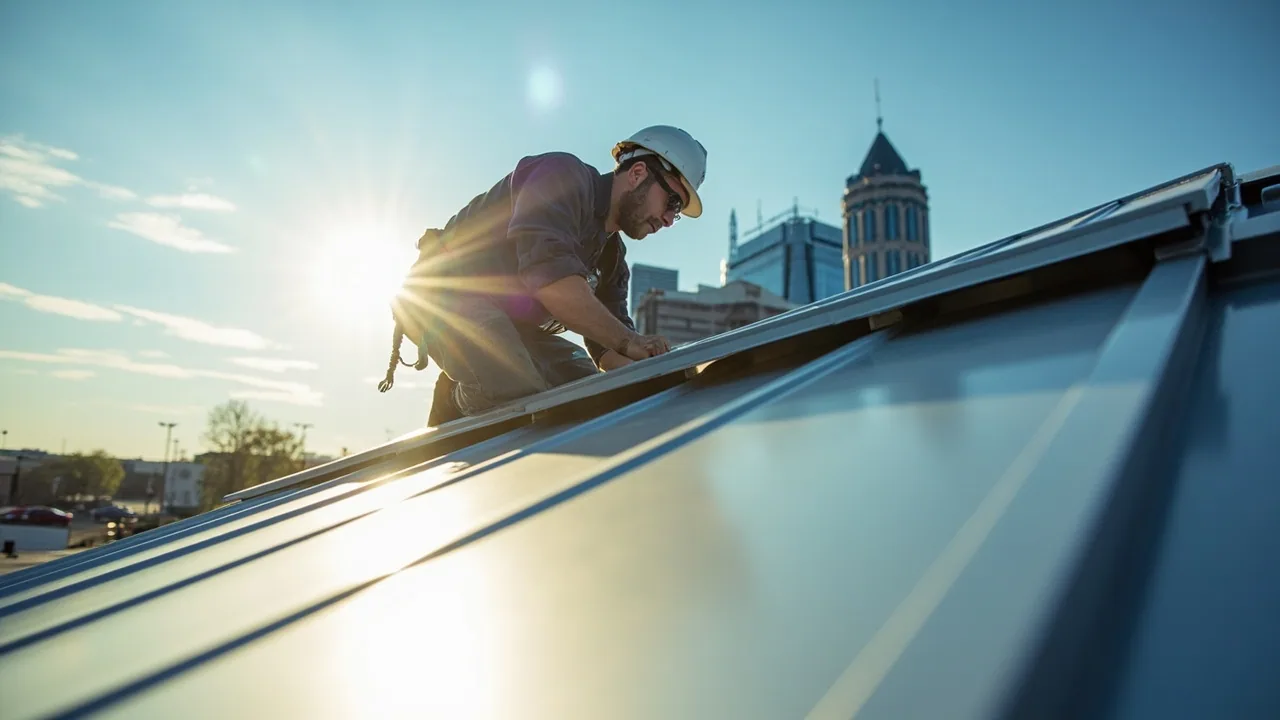
The restoration sequence follows the roof's condition. Panels are cleaned, loose screws are removed, and oversized holes are filled or replaced with larger-diameter fasteners that bite into sound steel. New screws with fresh washers are set to the correct torque, since overdriving crushes the washer and underdriving leaves a gap. Lap sealant is reapplied and end laps are closed with butyl tape or a compatible sealant.
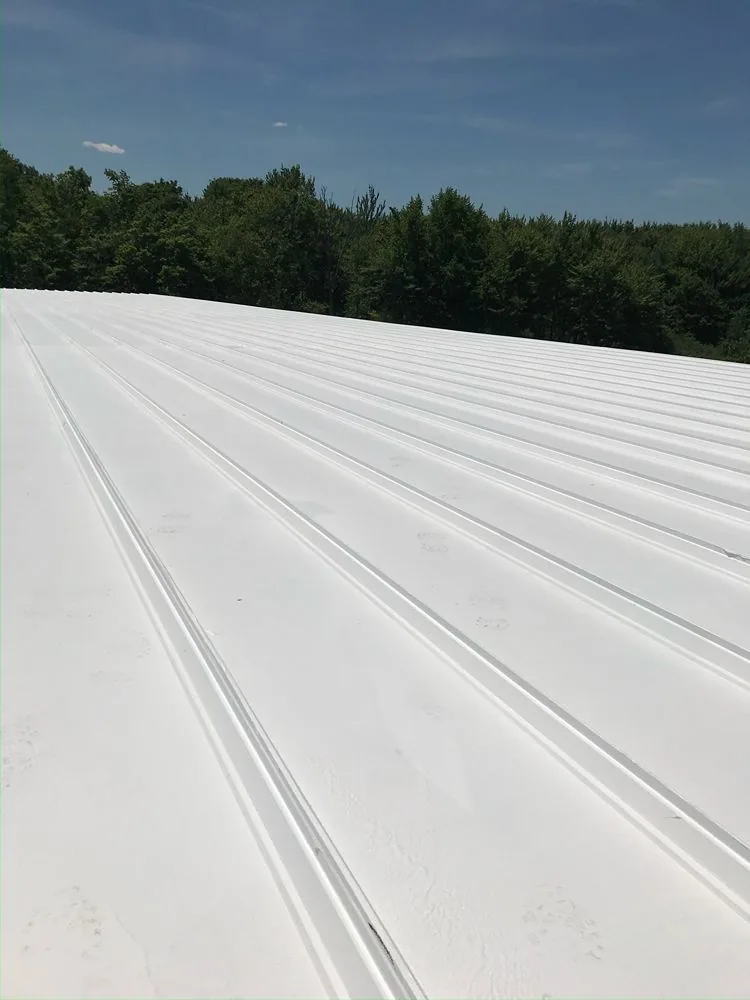
Penetrations and curbs receive new flashing, and ridge caps, gable trim and eave closures are reset. When the panels are sound and the profile is regular, a silicone coating system can be applied over the cleaned, repaired surface to seal fasteners and laps. Each step is documented, and the work is sequenced so no section is left open if rain arrives, with tarps and temporary sealant staged at the ridge.
The decision depends on the panel, the framing and the insulation. If the panels are sound and the fasteners are the problem, restoration is the lower-disruption path. If panel corrosion is widespread, or the profile is bent and kinked, a retrofit overlay is possible: new framing or sub-purlins are set over the old roof, and a new standing seam panel system covers it. This leaves the old roof in place as a temporary cover for the building during construction, which matters when the tenants cannot leave.
The overlay adds weight and changes the roof height, so we check the structure, the eave and rake details, and any rooftop equipment that must be raised. Full removal is the third option, appropriate where moisture has saturated the insulation or the structure needs repair. A recover review shows which path the existing roof allows.
Gutters and downspouts belong in the same plan. Metal sheds water fast, and a gutter that was undersized, pitched backward or fastened to rotted fascia can hold water against the eave and rust the lowest panel. We check slope, hangers and end caps, and we repair the drainage edge as part of the retrofit so the new work is not undone by an old gutter.
Industrial and flex properties can carry metal roofs, and we confirm each one. Apex 64 is a two-building industrial development of approximately 154,350 square feet fronting US 64, about two miles from I-540, with US 1 close enough to matter for deliveries. That access tells us how to bring materials and equipment; it does not tell us what roof the buildings carry. In Peak City Business Park, Apex lists office and flex uses across about 42 acres, a mix where tenant operations and building ages can differ from one building to the next.
Wherever we work, the first visit identifies the panel profile, the gauge, the fastener type and the framing, and the proposal is written for that building.
Skylights and roof vents are checked at the same time. A translucent panel yellows and cracks with age, and its fasteners and sealant tape age differently from the steel around it. Where a panel has lost strength, we flag it as a fall hazard and replace it with a panel of matching profile before the crew works near it.
Metal retrofit is well suited to occupied buildings because the existing roof stays in place as the weather barrier. We plan the work in slopes or bays, protect interior stock and equipment below the work area where drips are possible, and coordinate noisy tasks, such as screw driving and panel cutting, with tenant hours. Rooftop units are lifted or raised only after the mechanical contractor and the building contact agree on the shutdown.
Safety planning includes fall protection at the edges and skylights, and we mark any fragile panel or translucent light panel before the crew walks the roof. At closing, each slope is swept of metal shavings, since stray fasteners and cuttings can stain or puncture the finish.
The record lists replaced fasteners by zone, sealed laps, flashing details and any areas left unrestored. Photographs show penetrations, ridge and eave before and after. A maintenance schedule then returns to check washers, laps and coatings each season. A permit for retrofit work is reviewed under the state code and its North Carolina amendments, with the local requirement checked per project.
Often, yes. Replacing screws and washers, resealing laps and flashing penetrations can stop the leaks, provided the panels are not rusted through and the framing is sound. Heavy corrosion or bent panels point to an overlay or replacement.
Thermal movement, a poor hold in the purlin and rust at the thread all loosen them. Expansion in summer heat works on every fastener, so a screw in a stripped hole will work out repeatedly until the hole is repaired.
It adds weight and raises the roof, so the structure must be checked and details at the eave, rake and rooftop equipment adjusted. Engineering input is part of the scope where the added load or uplift is in question.
No. A coating seals the surface but does not hold a loose screw or close a stripped hole. We repair the hardware and laps first, then apply the coating to a clean, dry, sound surface.
Light surface rust is cleaned, treated and primed before coating or sealing. Rust that has eaten through a panel means that panel must be replaced. We map both conditions so the proposal separates cleaning from replacement.
Call Commercial Roofing Cary to arrange a roof walk. We will check fasteners, laps and framing and send a scoped next step for the building.
Roof leaking now? Call for emergency roof repair.
Or email [email protected].