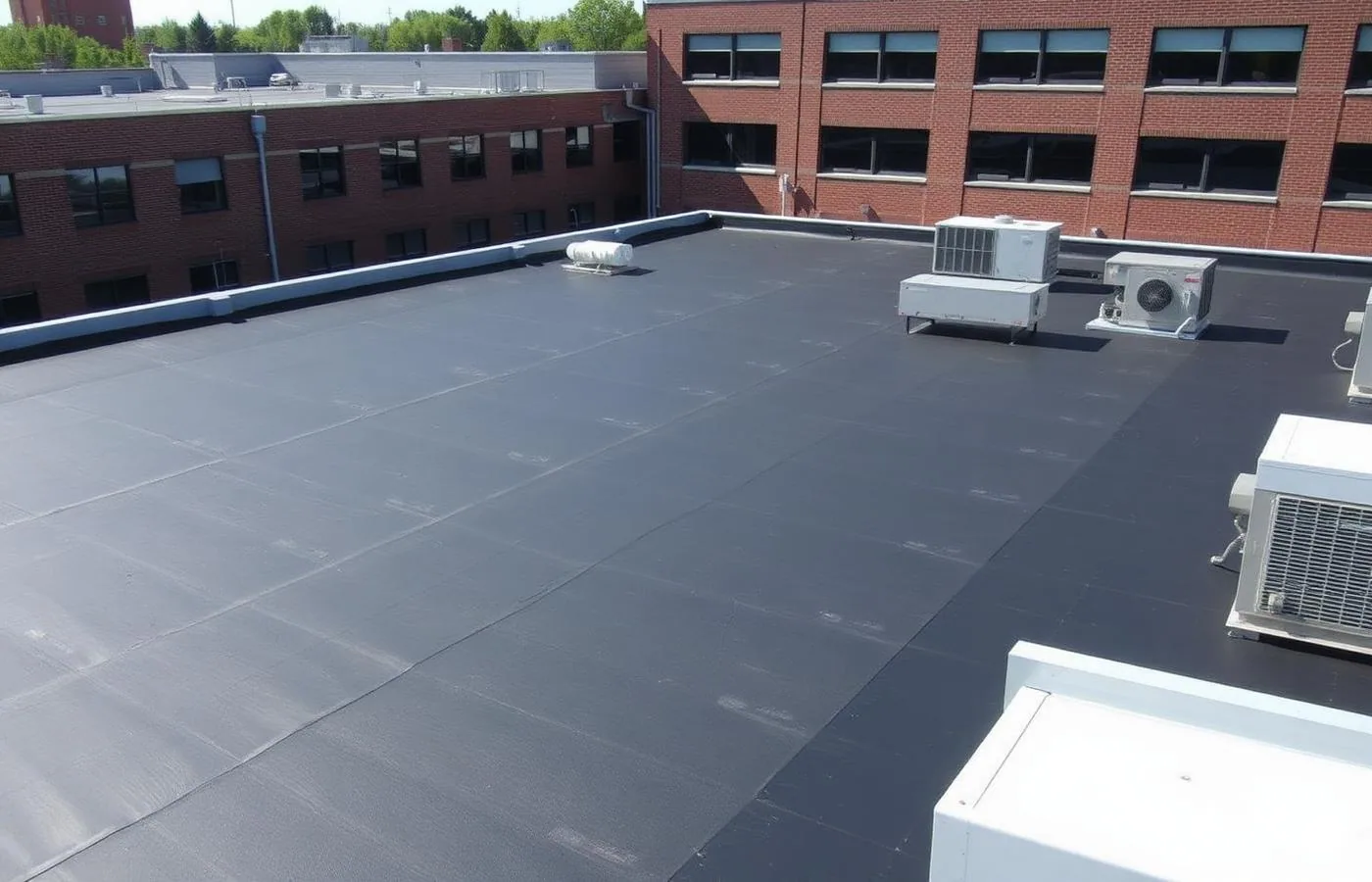
A KEE membrane is a PVC-alloy sheet, and what sets it apart shows up at a roof drain or a curb corner years after installation, when a plain PVC sheet might have stiffened and drawn back. The alloy uses a ketone ethylene ester modifier to hold the sheet flexible, so seams that were hot-air welded keep their lap line and flashing turns stay relaxed. On a Cary, NC roof that has come through its summers, we start any KEE job by probing the welds, checking each membrane turn, and measuring whether the termination edge has moved, since those details record how the sheet has aged.
The alloy is chosen for roofs that see more than weather: restaurant exhaust, chemical vents, process discharge and mechanical exposures that break down ordinary single-ply sheets. Cary has settings where those exposures can arise. The Weston Parkway corridor sits beside Lake Crabtree and close to RDU International Airport and Research Triangle Park, and a corporate building there that vents laboratory or process exhaust would put the same question to its roof. Research Triangle Park describes wet-lab, clean-room and advanced-manufacturing uses, and any of those can put vapors or residue on a roof.
A district or a use does not prove a roof system. We confirm the existing membrane on site, then decide whether a KEE sheet answers the exposures we find or whether another single-ply serves the building better.
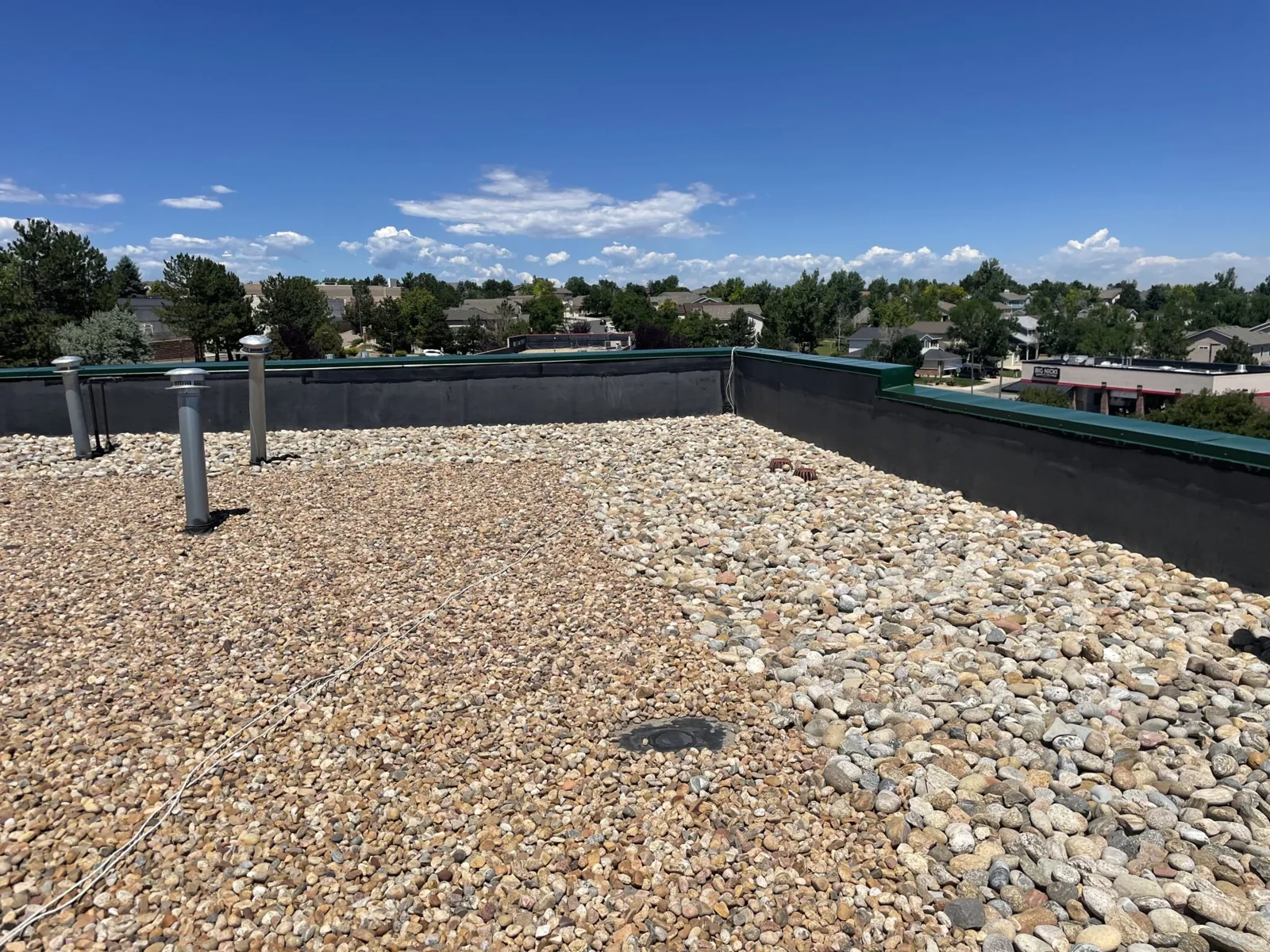
The condition review starts with touch and sight. A healthy alloy sheet stays pliable at the cut edges of a patch and relaxed at pipe boots. Staining under exhaust fans tells us where chemicals discharge, and we wash a test patch to see the surface beneath. At curbs we look for gaps between the membrane and the vertical face, and at seams we probe the full length of every lap rather than sampling.
Where welds look intact we still press near the termination edge, because a membrane that has relaxed there usually loosens elsewhere. If the sheet has grown brittle, we try a hot-air weld on a scrap before promising any repair. A sheet that will not fuse cannot take a patch, and the scope moves to section replacement. Photographs follow the same roof zones every visit so changes can be compared directly.
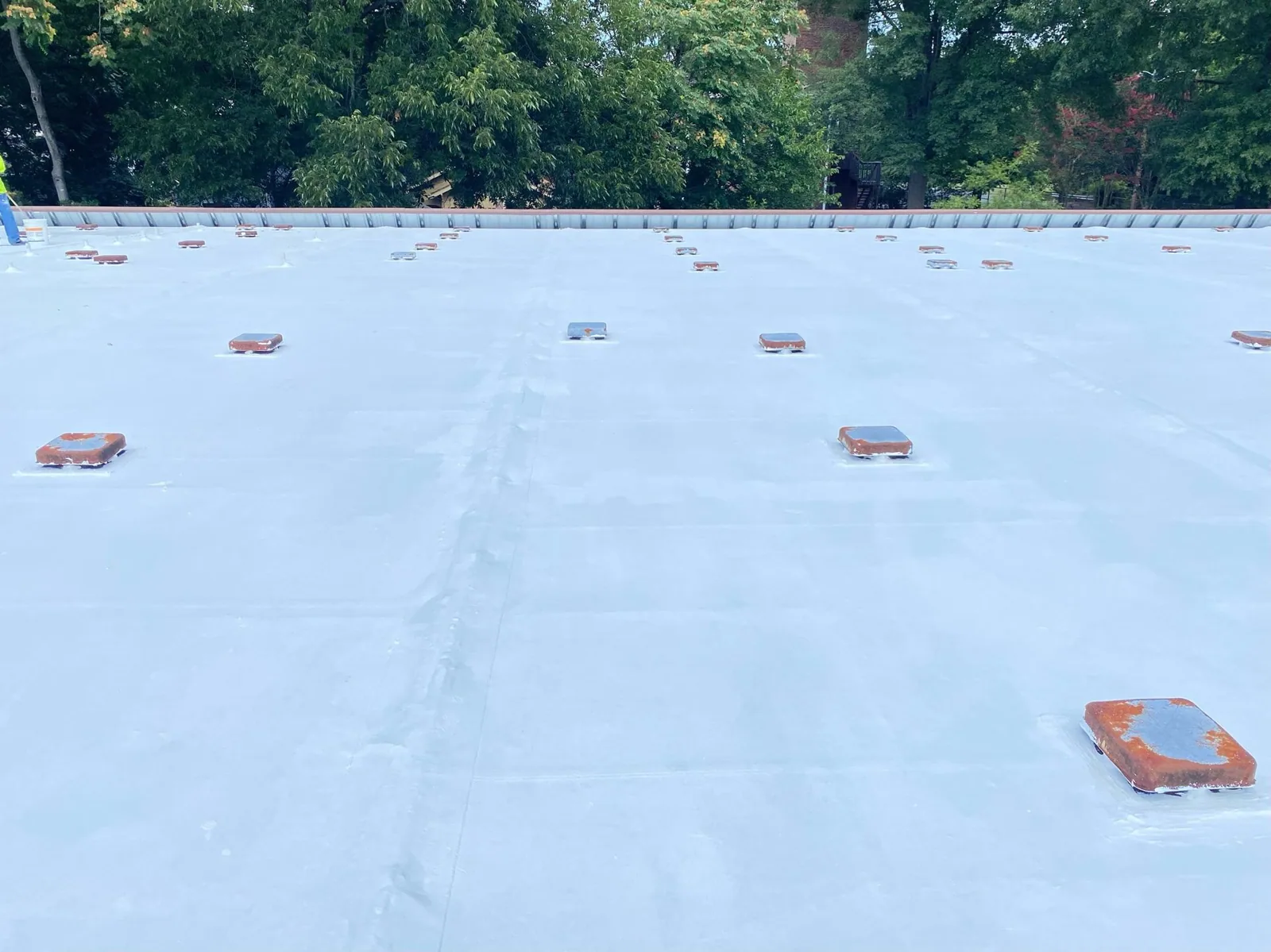
Drains get a separate look on a membrane like this. We check that the sheet turns down into the bowl without a fold, that the clamping ring bears evenly on the flange, and that the weld at the edge of the drain sump has not opened. A drain detail that was cut a little short on installation will show up as a ring of staining, and fixing it early costs far less than a leak into the ceiling below.
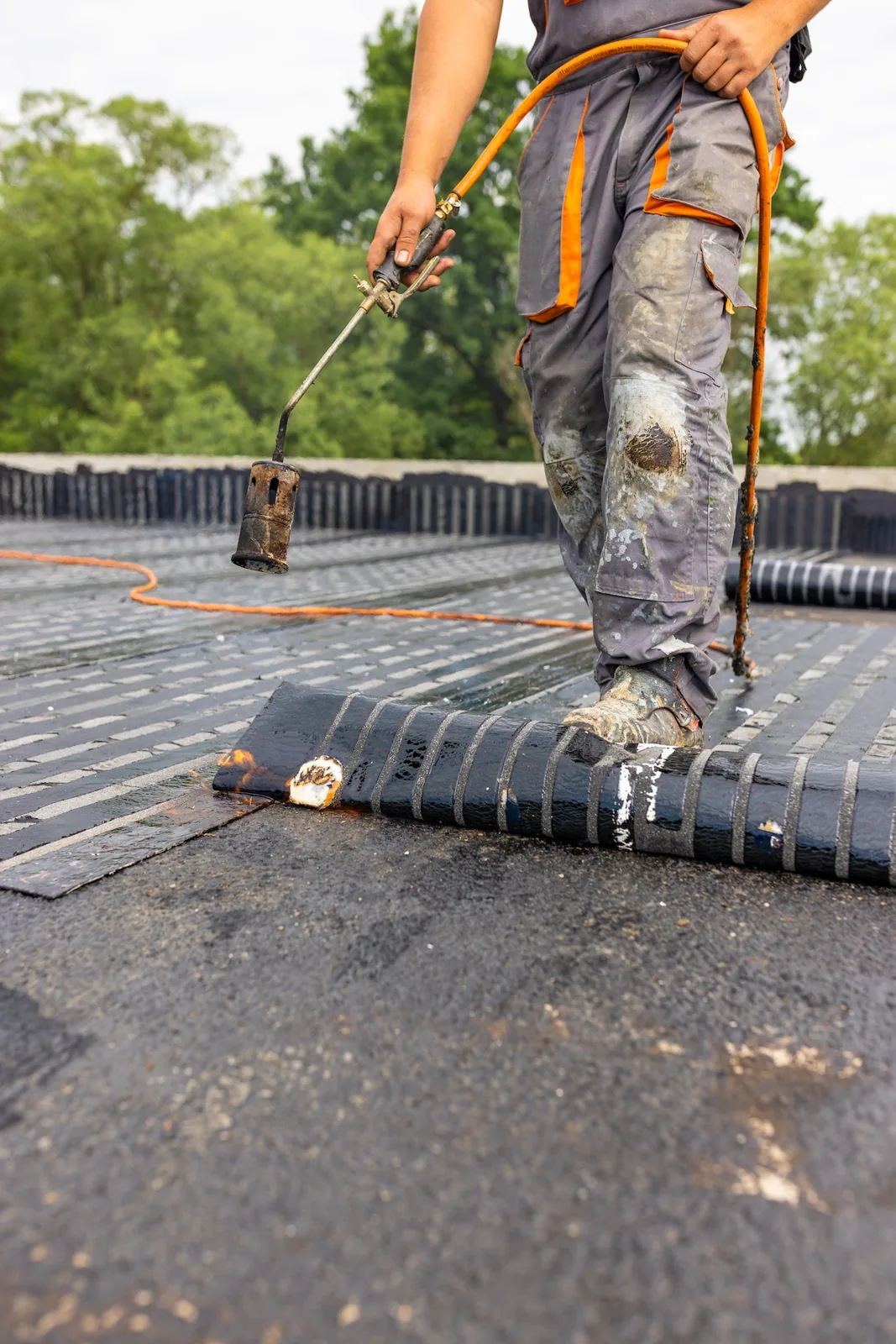
Installation starts below the membrane. We verify the deck, replace corroded panels, and install insulation boards with staggered joints and fastening patterns that match the wind uplift design. A cover board may separate the insulation from the sheet where traffic or hail exposure justifies it. The membrane is laid out so lap lines run toward the drains, and each seam is hot-air welded with the pass width the manufacturer specifies.
After welding, every seam is probed, and cross-seams at T-joints receive extra attention because three layers meet there. Penetrations get pre-formed boots or custom flashings, welded with a measured tie-in width. At the perimeter we install termination bars at the specified spacing and close the top with sealant and edge metal returned over the sheet. Open areas are dried in each day because Cary receives 48.80 inches of precipitation a year.
Before the final walk, a second crew member checks each weld that the installer probed, because a second set of eyes catches the missed corner. Any wrinkle that traps water, any lap with a visible gap, and any fastener head under the sheet is corrected before the roof is released to the owner.
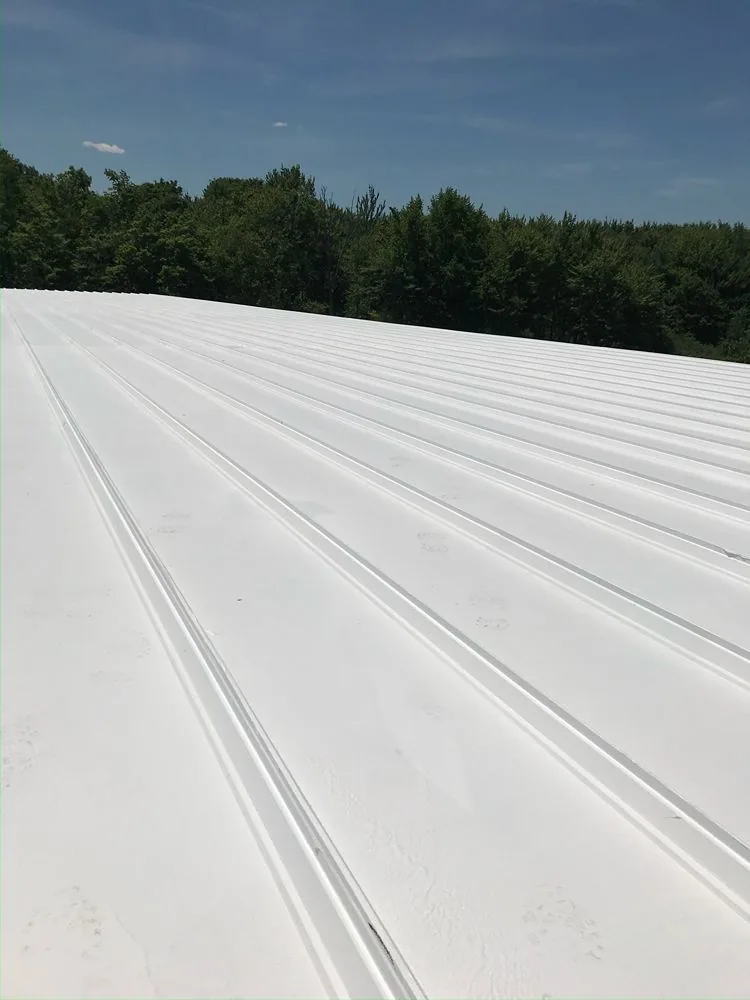
Local failures are often a repair. A reinforced patch, a new pipe boot or a rebuilt corner restores the detail if the surrounding sheet still welds. Moisture is the question that changes the scope: an infrared survey followed by test openings shows where insulation is wet, and the repair boundary follows that map. If the roof is large in area and widely compromised, a full replacement removes the uncertainty.
When the sheet is sound but the exposure has changed, it may be worth comparing standard PVC on a roof without heavy chemical exposure, or a silicone coating if the membrane is clean and well bonded. Our job is to lay out the choices with their drivers so the owner can see what each path depends on. Compatibility with any earlier repair is part of that review: a patch of mismatched membrane or a field of sealant over a weld can make a clean tie-in impossible without cutting back.
Building users set the schedule. Tenants in office and technology space around Research Triangle Park may run sensitive equipment, so we coordinate noise, dust and fumes with the facility contact before tear-off, and confirm where rooftop intakes are located so welding exhaust and adhesive odors do not enter the building. Air handlers and exhaust fans are shut down only in agreed windows, and temporary covers protect open intakes.
At the planned Merritt RDU Business Park, flex and industrial space is still coming soon, so the question there is membrane choice before the buildings are detailed, when drainage and equipment locations can still be adjusted.
Handoff includes photographs by roof zone, a seam probe summary, and a roof plan marking repairs and exclusions. The record names the membrane type and the details that were rebuilt, so a later technician can match materials. Where a roof zone was left alone, the record says so, and the plan shows its boundary. It supports preventive roof maintenance, with a return visit after the first summer to recheck welds and exhaust zones. Permits for the work follow the North Carolina code with its state amendments, and the local requirement is confirmed before the first day on the roof.
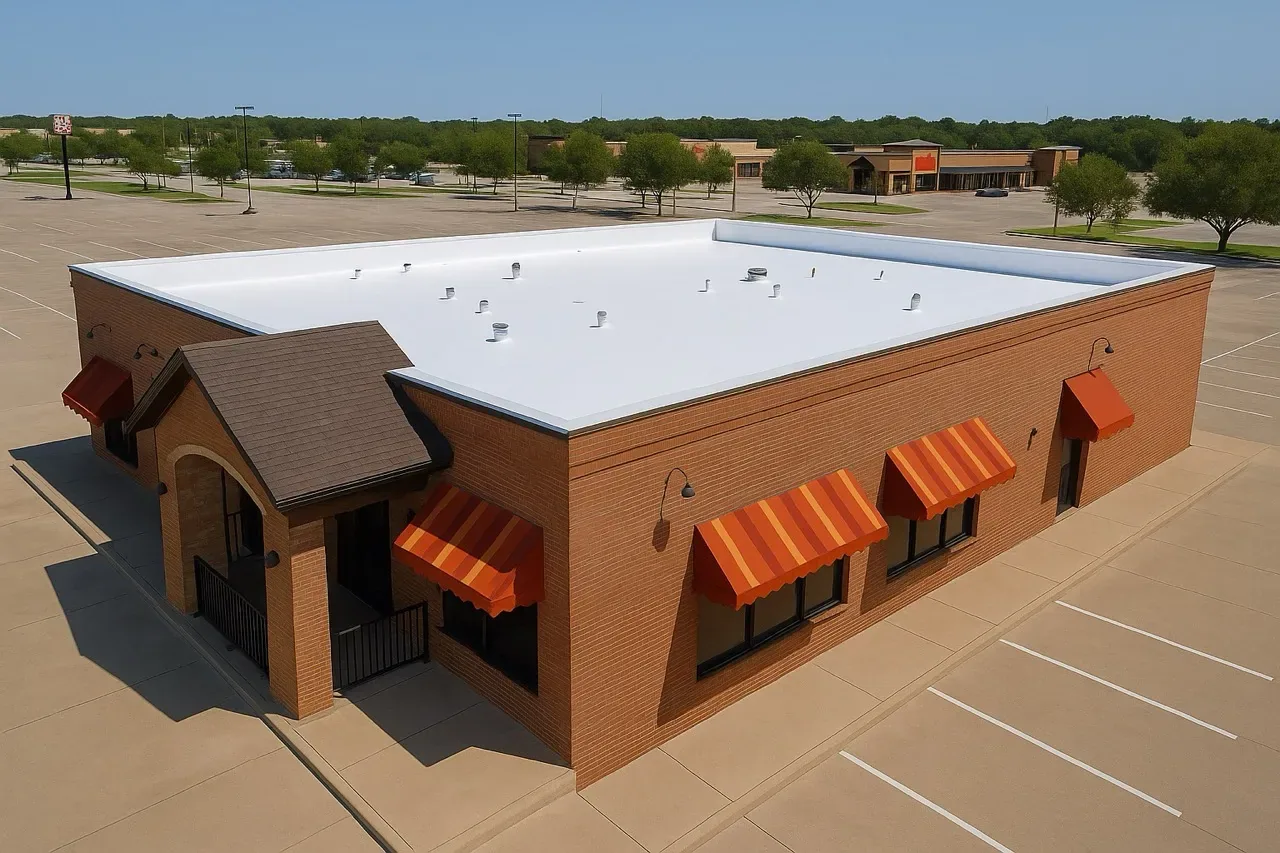
The alloy modifier keeps the sheet flexible as it ages, so welded laps and membrane turns are less likely to stiffen and pull. That does not remove the need to probe seams, since contamination or a cold weld can still leave a gap.
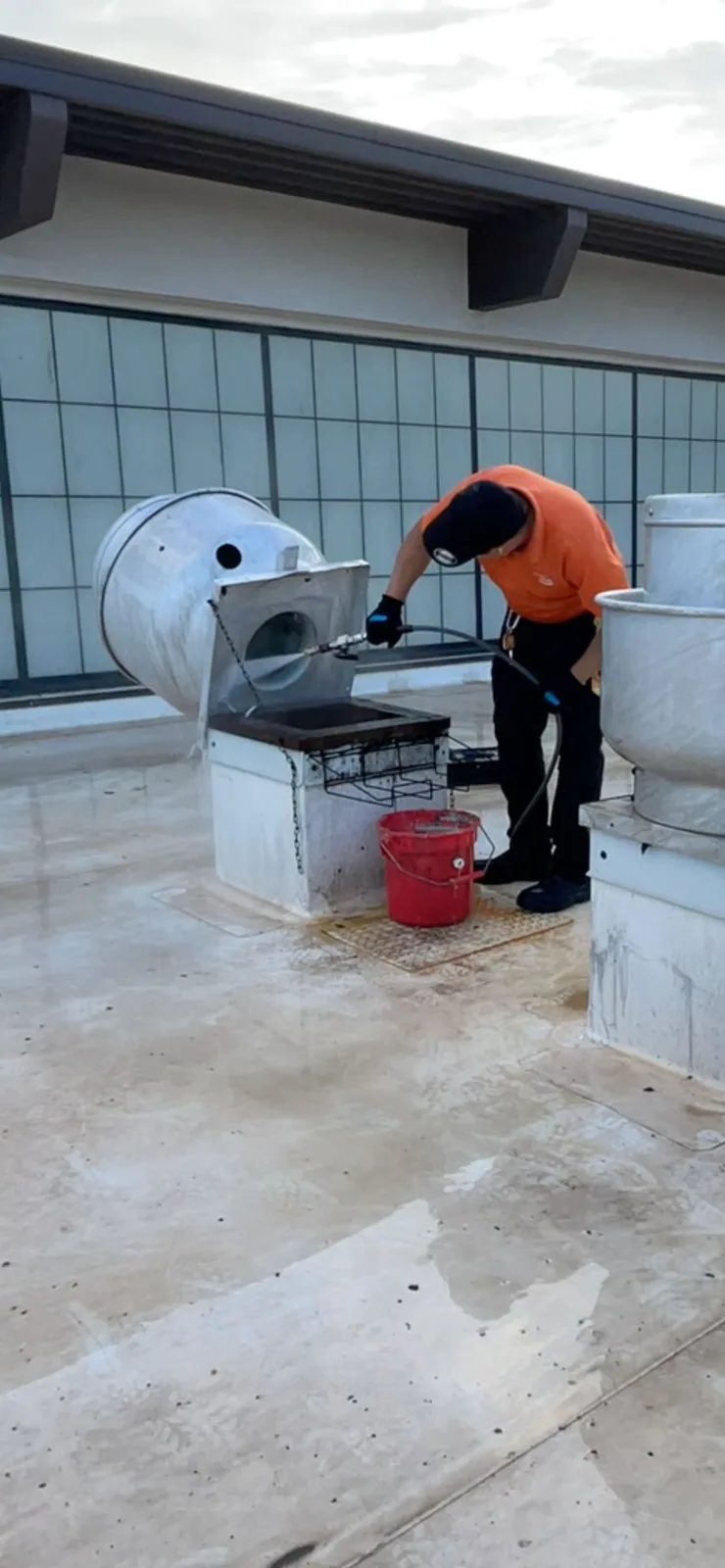
We inspect the surface near exhaust discharge, wash a test area, and look for softening, staining or surface crazing. A clean, firm sheet suggests the alloy is holding. Any change is photographed and compared at the next visit.
Yes, as long as the sheet still welds. We identify the membrane, test a weld on a scrap, and match the patch material. If the sheet will not fuse, the scope moves to section replacement or a different system.
The decision comes from traffic, hail exposure and insulation type, not from the membrane itself. Foot traffic around equipment and a possible hail event both favor a cover board, and we explain the reasoning in the scope.
A coating suits a roof that is dry, well bonded and clean, with intact seams. Wet insulation, open laps or a brittle sheet rule it out. We test adhesion and moisture first, then show the owner which path the findings support.
Call Commercial Roofing Cary to arrange a roof walk. We will probe the welds, check exposure at each exhaust, and give you a scoped next step for the building.
Roof leaking now? Call for emergency roof repair.
Or email [email protected].