

A patch that sits on top of an older patch is a note left by whoever last had a ladder on the roof, and reading those notes in order is the quickest way to learn what an established roof has been through. Regency Park is a corporate park by the US 1 and US 64 routes in Cary, NC, with regional access to I-40, I-440 and I-540, and it is counted among the town's established business locations. Established tells us the park has history, not what any single roof has underneath. So the first visit to a Regency Park building is a reading of the surface: how many repairs, where, in what material, and whether each one is holding or only hiding the cause.
Repair history shows where water has found a way in before, and the pattern is more useful than any single patch. If three repairs cluster along one wall, the wall flashing is the likely cause. If they trail away from a drain, the slope or the drain flange is suspect. If they sit around rooftop units, the curbs and boots deserve a close look. We photograph every repair we can find, mark it on the plan, and compare it with interior reports and with whatever records the property manager holds. That comparison tells us whether to treat the next leak as a new event or as the return of an old one, and it keeps the owner from paying twice to fix the same detail with the same method.
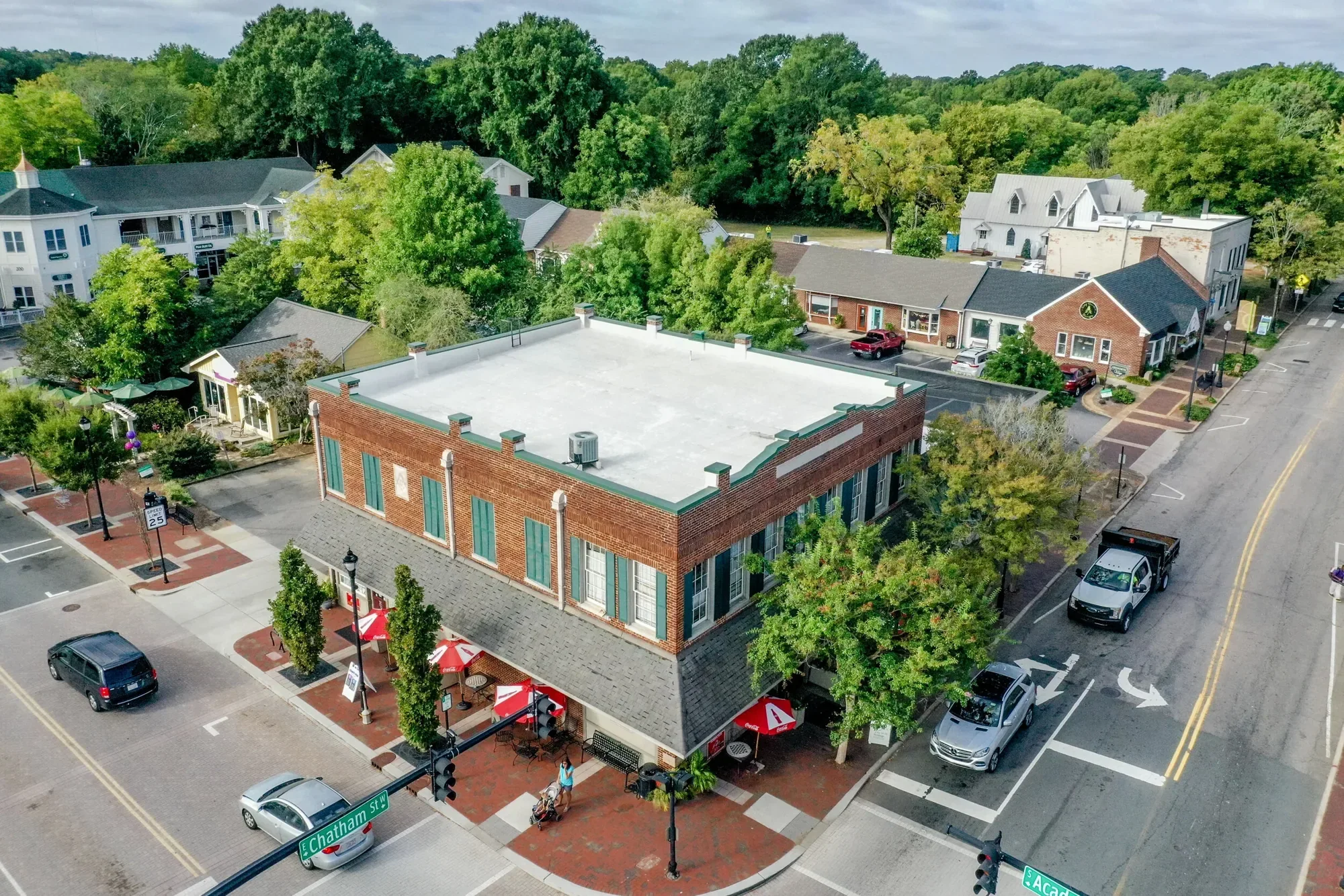
A patch is judged by its edges. We check whether the membrane around it has lifted, whether the sealant is cracked or pulled back, and whether the material under it is dry. Edges that have opened mean water is getting beneath the patch, and a surface bead over a moving detail only delays that. A probe through or near the patch, with a test opening where the path is unclear, tells us about the insulation and the substrate condition. When the patch is sound, it is left in place and noted on the plan. When it is not, the repair boundary is redrawn wider, and the new work is tied into sound material with a clear tie-in width that is photographed before the area is closed.
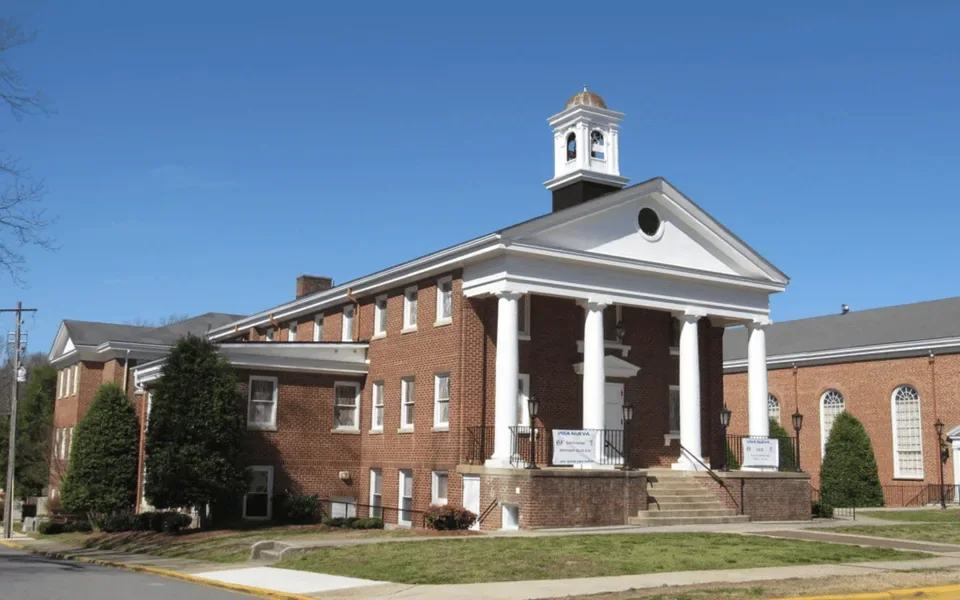
Cary's normals give an annual mean of 59.6°F, a July high near 88.2°F, 32.9 days at 90°F or hotter and 48.80 inches of precipitation. Years of that cycle age seams, shrink flashings and slow drains, so those are the details we check on an established roof. Severe-weather reports kept by the Raleigh weather service for its region are context and not a statement that any event struck this park, but they are a reason to walk a roof after severe weather. A hail damage repair scope starts with photographs of impact marks and bruised seams.
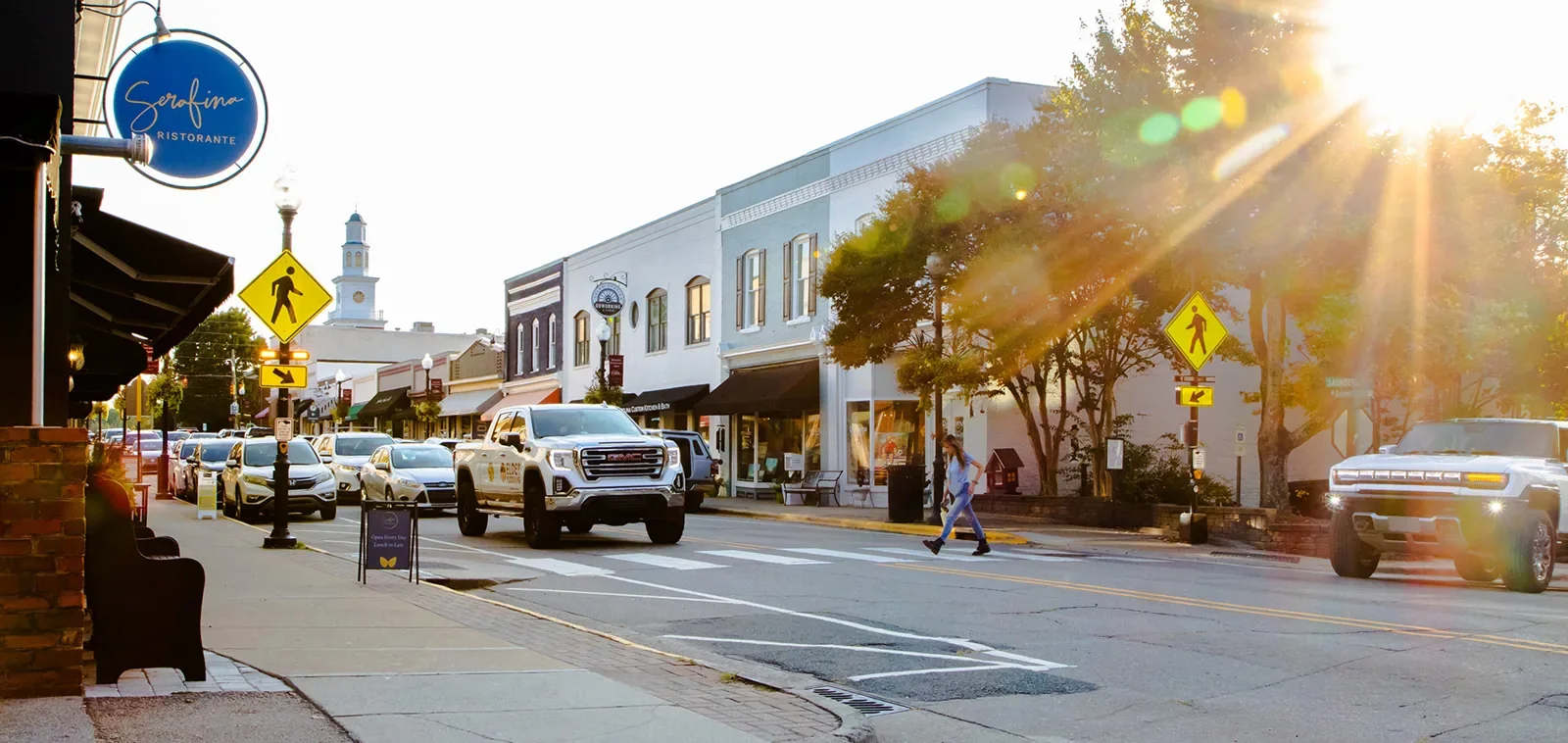
A coating extends the life of a membrane that is dry, sound and clean. It does not fix wet insulation, open seams or failed flashing, and applied over those it hides them. We decide with three checks: a moisture survey of the roof, a series of probes at the seams and drains, and a look at the substrate condition where fasteners are visible. If the roof passes, a roof coating with seam and flashing repair first is a reasonable scope, priced by area, surface preparation and the time the building can give. If it fails, the owner sees the reasons in photographs and decides between a recover and replacement. The full comparison includes what each leaves behind in the assembly.
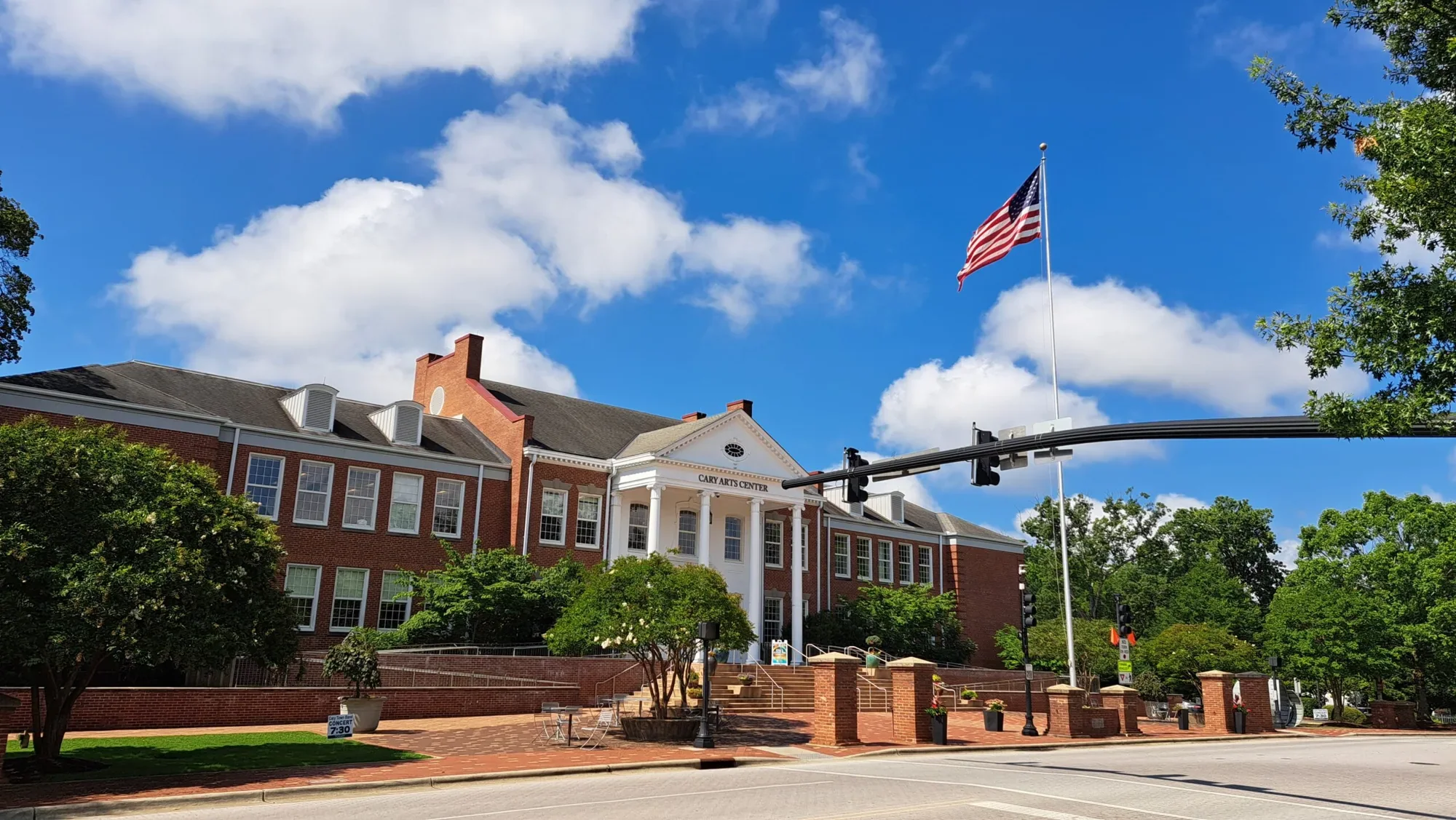
The park's position near US 1 and US 64 and its reach to the interstates make material delivery straightforward up to the edge of the property. Inside it, the route is a drive aisle, a loading area and a parking lot, so staging is agreed with the property manager before anything is ordered. Established parks often have mature landscaping, overhead lines and tight corners, and we mark them on the plan when a crane or lift position is chosen. Neighboring parks follow the same logic on their own routes, as in Crescent and MacGregor Park.

A walk after severe weather is a documentation visit. We begin at the roof edges, where wind lifts metal and loosens fasteners first, and look at the coping, the edge metal return and the corners with reinforced membrane. We then follow the field for punctures, torn flashings and displaced equipment covers, check the drains for debris that blew in, and photograph anything unusual with enough of the surrounding roof to locate it. If hail is suspected, we look for bruising, fractured insulation boards under the membrane and damage to metal components such as vents and curbs. The photographs carry dates and zones, and the written summary separates what looks like storm damage from older wear, which is the distinction an insurer asks about.
For owners who prefer to act at once, a storm damage roof repair scope covers the immediate protection and the permanent repair as separate entries, so temporary work is never mistaken for a final fix. For owners who want a routine check after any severe event, the same walk fits a commercial roof inspection schedule.
Once a building has a dated photograph set, a plan and a ranked list, the owner can time work against budget. Repairs that protect the building now come first, a coating or recover is scheduled when the probes support it, and a replacement is planned for the point where repairs stop holding. Roof capital planning lays those steps in sequence with the cost drivers named. Permit records sit in the same file, with local requirements confirmed per project under the state's adopted code family.
The same file helps when a tenant changes. A new occupant often brings new rooftop equipment, and the baseline plan shows where curbs already sit, which penetrations are original and which were added later. Before an owner agrees to a roof opening, the property manager can check the plan, choose a location that avoids old repairs and require a flashing detail that matches the roof system. After the opening is made, a photograph and a plan entry close the loop, and the next walk begins from the updated record instead of from memory.
Past repair records, leak reports with dates, any drawings and the contact for each tenant. Even partial history shortens the walk and sharpens the plan.
By comparing the location with the repair history and checking the patch edges. A lifted edge or a wet probe under the patch points to the old problem returning.
No. It suits dry, sound, clean membranes. Wet insulation, open seams and failed flashing must be corrected first or the roof needs a different scope.
Bruised seams, punctures and damaged flashing can stay hidden until a later rain. Photographs taken soon after the storm also support any insurance claim.
Dated photographs, a roof plan, the repair history we could find, the observed conditions and open items in a recommended order.
Arrange a roof walk with Commercial Roofing Cary. We will read the repair history, record the observed details and send the property manager a scoped next step.
Roof leaking now? Call for emergency roof repair.
Or email [email protected].