
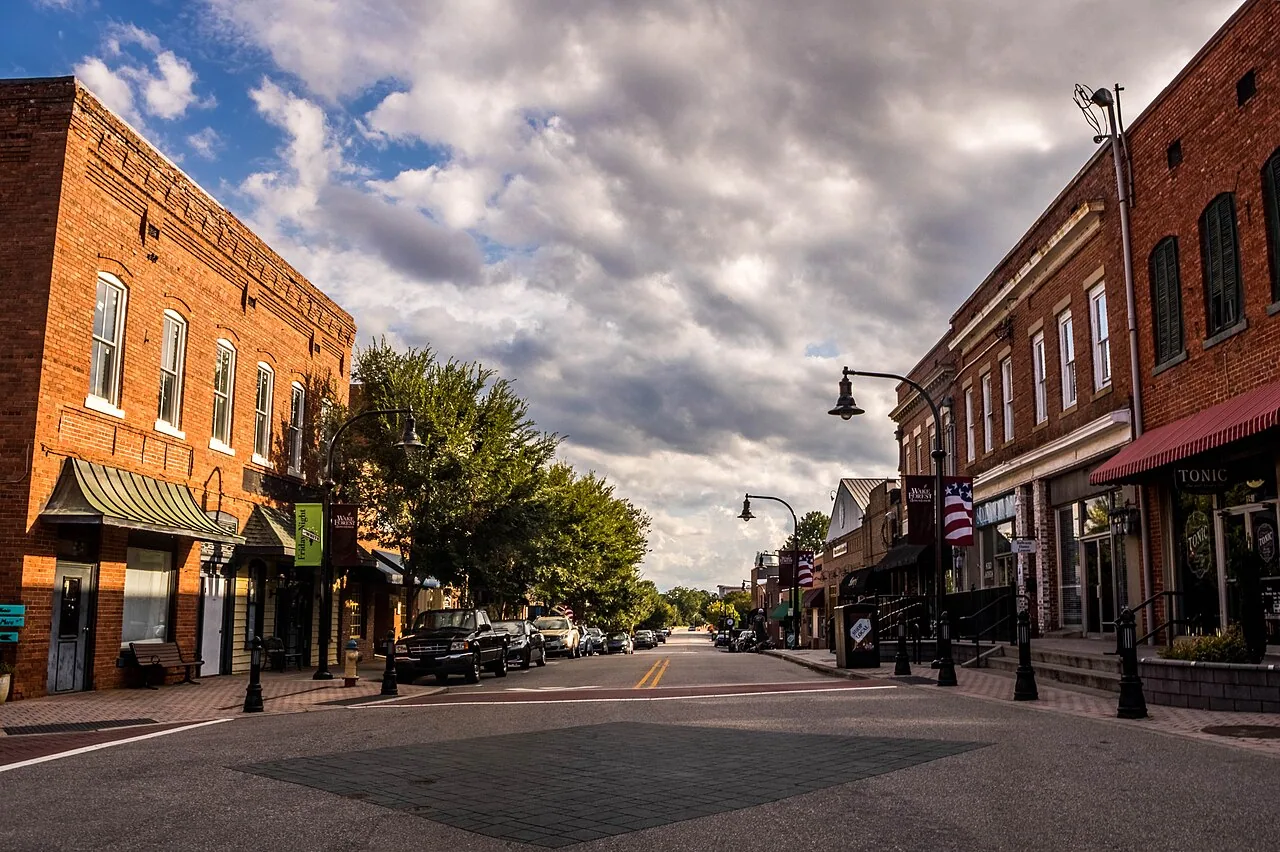
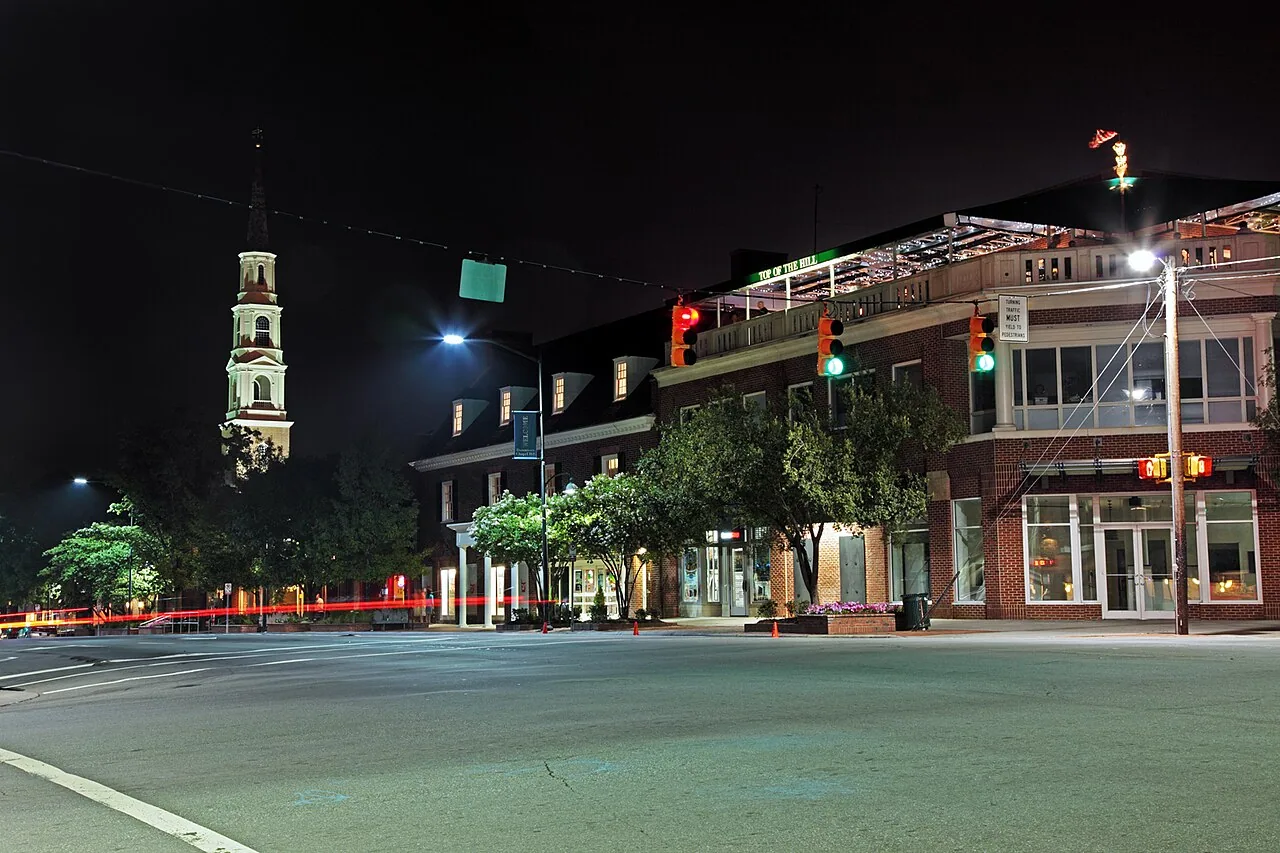
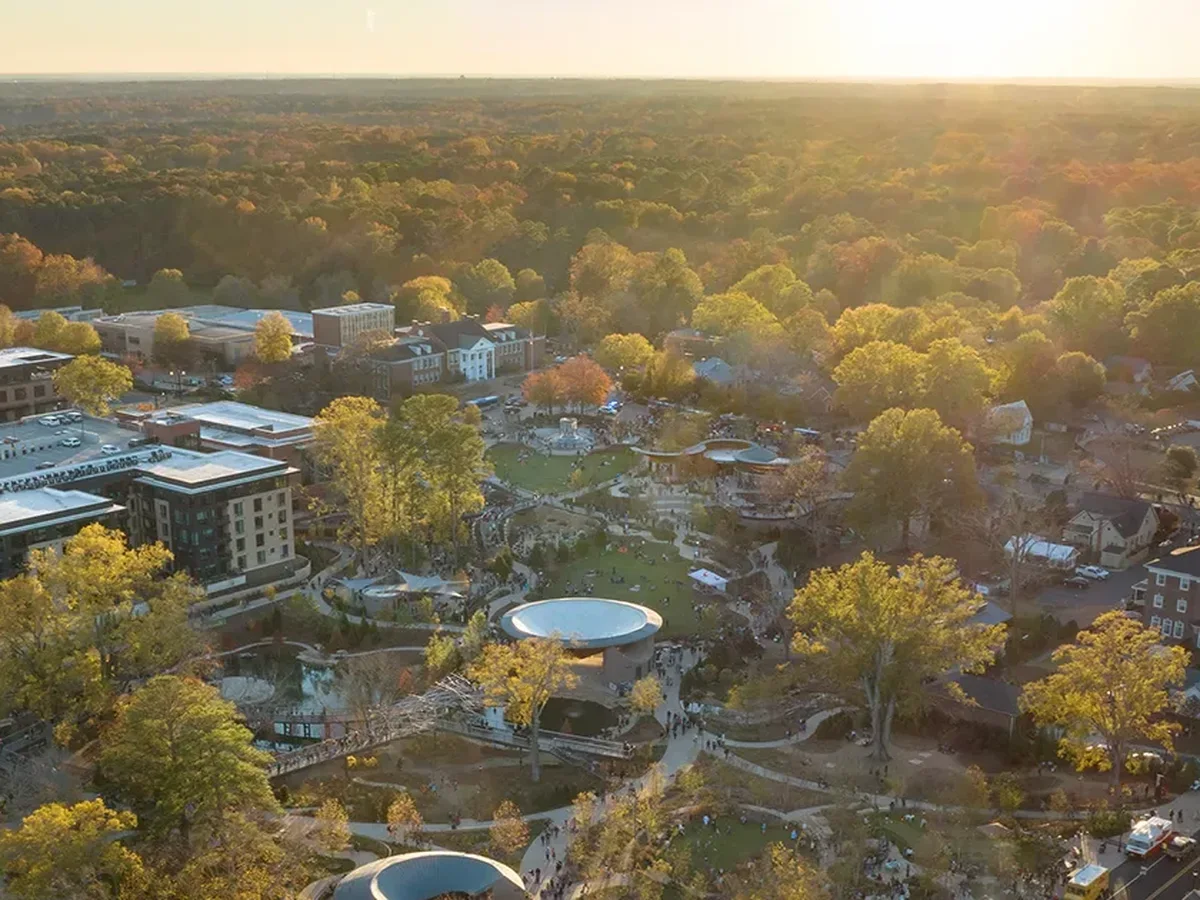
Where a parapet wall meets the neighboring building, the flashing that closes that joint decides whether water stays on the roof, and in a district built for walking that joint is usually only one of several details sharing a short block with people below. Among Downtown Cary's civic destinations are Downtown Cary Park, the Cary Arts Center and the regional library, all within one of the town's special planning areas. Commercial roofing work in a district like that begins on the roof but is planned from the sidewalk: who passes under the work, which street can hold a lift, when events draw crowds, and how a membrane turn at a shared wall will be reached and inspected.
Overhead work needs a protected path below it. Before any tear-off, hoisting or fastening begins, we mark the work zone, set barricades or covered walkways where the building meets the public way, and agree with the property manager on the hours when foot traffic is lightest. Debris is lowered in enclosed containers instead of dropped, and tools are tethered at the roof edge. A district with civic destinations will have days when more people than usual are on the sidewalk, so the schedule asks about events before dates are fixed. That sequencing is the core of any occupied building reroof, and a walking district raises its stakes. The roof walk itself is quiet and can happen at nearly any time, which makes it a good first step while the owner finds the right weeks for loud steps.
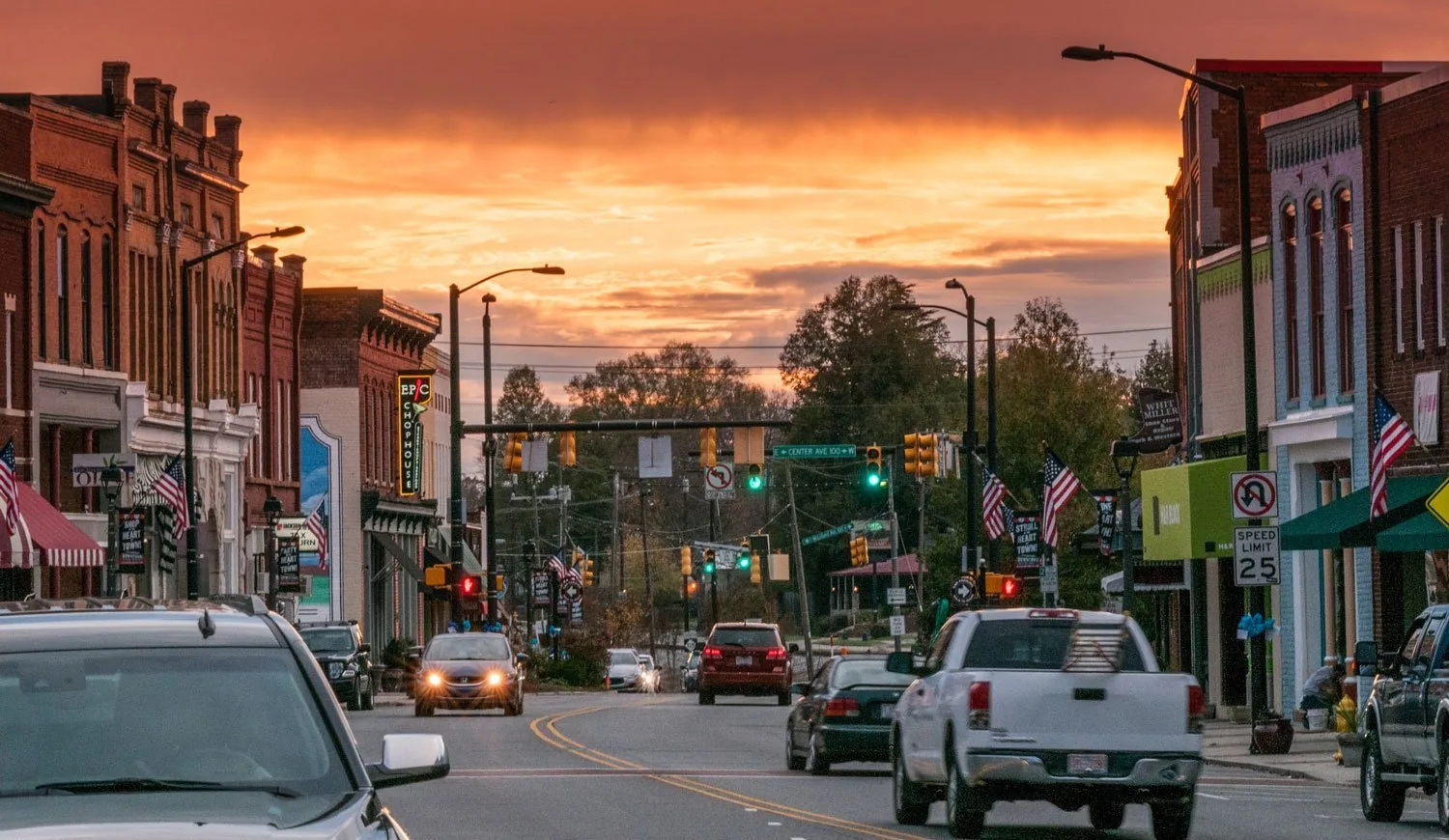
Where two buildings stand wall to wall, or a taller wall rises beside a lower roof, the roof meets that wall through a flashing assembly: a membrane turn up the wall, a termination edge, counterflashing above it and sealant along the top. These assemblies move with temperature and settle with time, and water that gets behind them can run down inside the wall. We inspect the full length of each wall line, probe the termination edge for lifted sealant, and look for open laps where the membrane turns a corner. When the neighbor's roof is higher, we also check where its drainage discharges, since a downspout that empties onto a lower roof sends a steady stream across the membrane and wears it in a line.
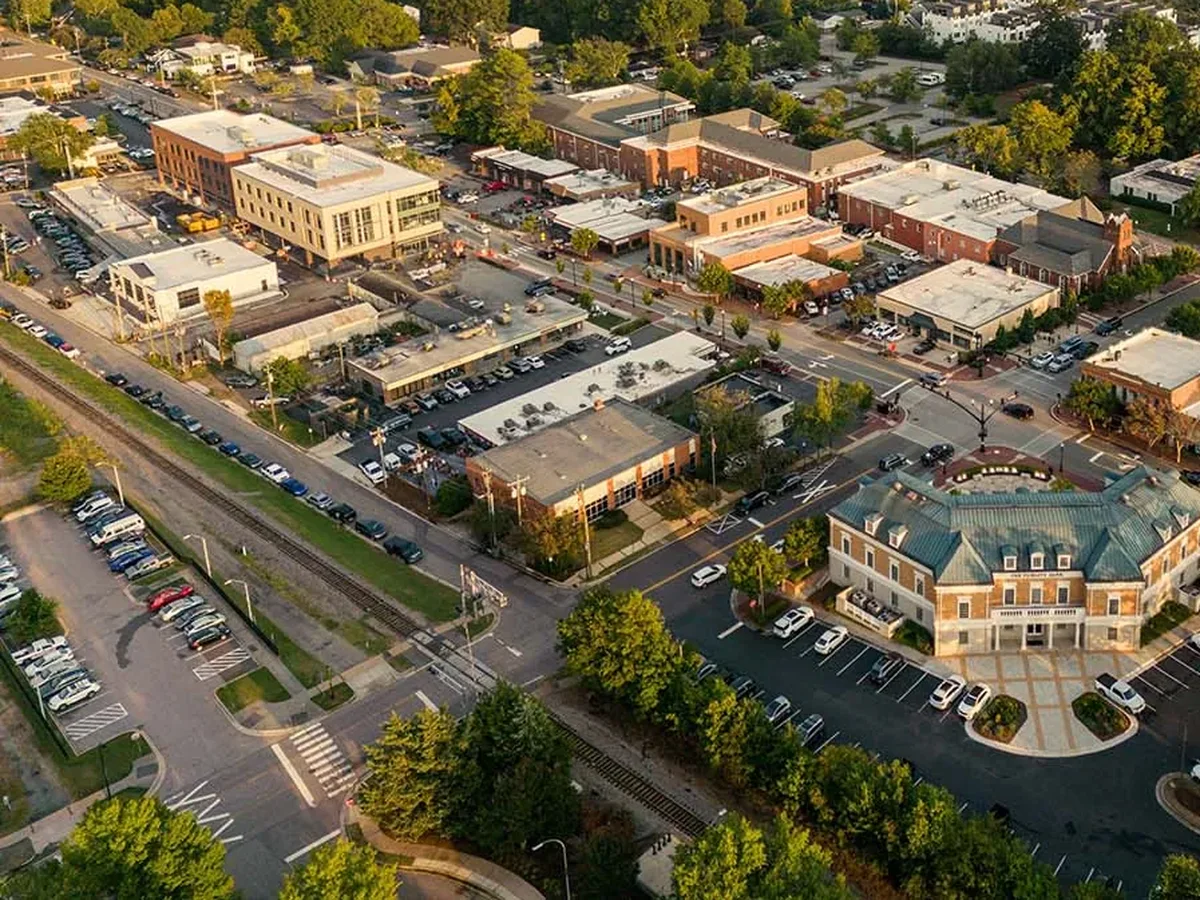
A roof with a small footprint concentrates its details. The same few drains, vents, hatches and units serve the whole area, so a defect at one of them affects most of the roof. We open with the drain and scupper, confirm the flange and the compatible membrane turn, then follow the slope to see whether water reaches the outlet or stops short. We note each penetration and its boot, the access hatch curb, and the reinforced corner where edge metal returns. If a repair can be made as a defined patch, we draw its boundary and photograph it so the next visit can compare. If the substrate condition is doubtful, a test opening tells us before a larger scope is chosen.
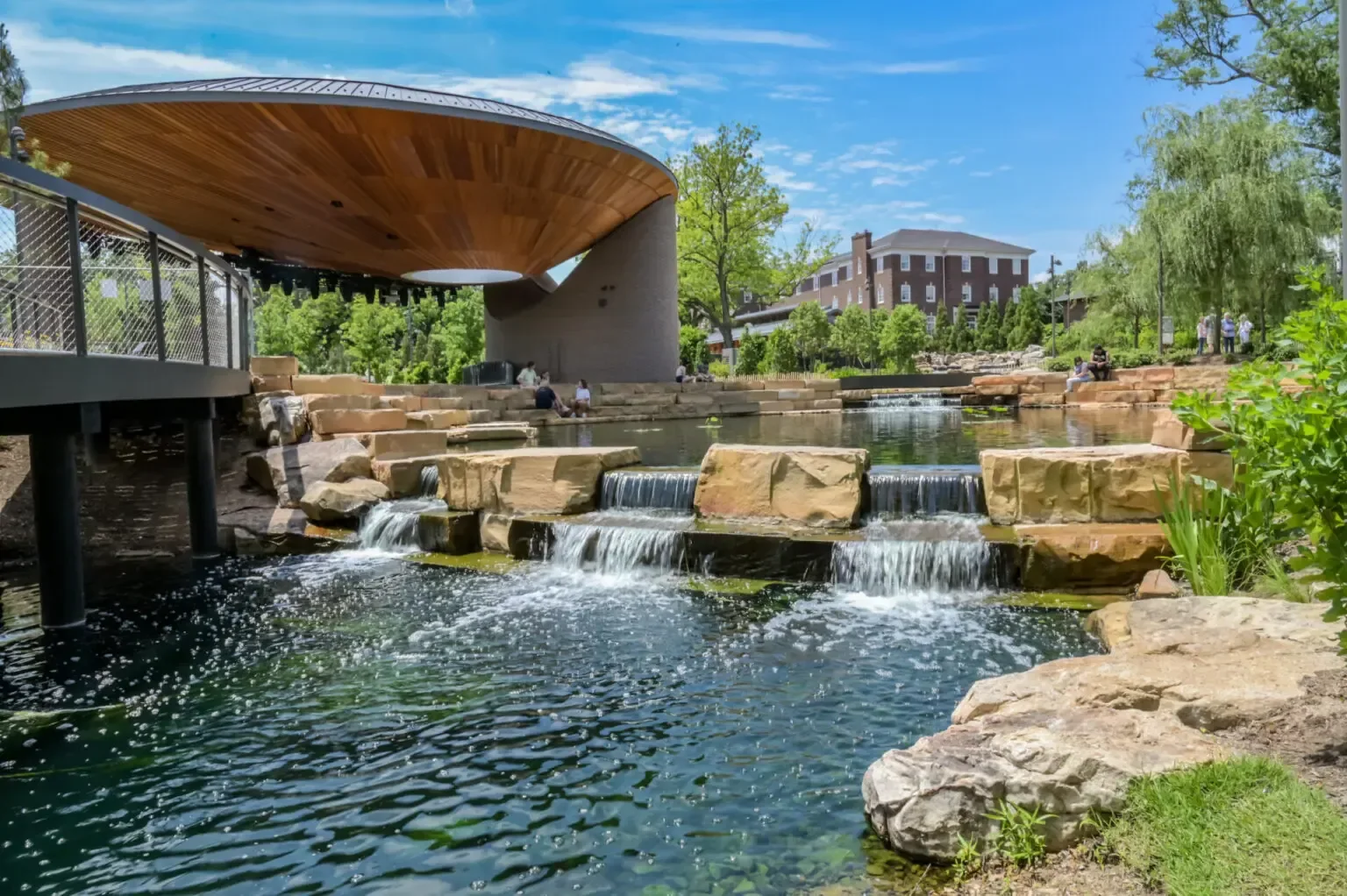
Street access is part of the estimate. A lift or crane in a public street may need a permit or a closure, and a delivery truck may need a loading zone at a time when parking is in demand. We confirm with the owner and the town what is required, place the staging on the plan and set the delivery window so material arrives when the work can receive it. Where the building has a rear service area, we use it. Crews carry small quantities by hand when the route allows, and we avoid storing material in the street overnight. The same attention to access applies in the planning area between downtown Cary and Raleigh, Eastern Cary Gateway, where interchanges rather than a street grid shape the approach.
In an average year Cary collects 48.80 inches of precipitation, and 32.9 of its days climb to 90°F or higher, with July highs averaging 88.2°F. A roof in a downtown district takes that heat and that water on small drains, tight corners and overflow routes that are easy to forget. We clear and photograph each drain, check that the overflow is higher than the primary and discharges clear of the sidewalk, and measure any low spot that holds water after rain. Where ponding is present, the options run from resetting the drain to tapering the insulation or correcting the slope, and the probe result and the drainage measurements decide which is justified. Drain repair, resetting and overflow work is carried out as roof drain and scupper work once the measurements are.

The closeout file starts with dated photographs of every roof zone before and after the work, then adds the final scope, the product data for installed materials, a drawing of each repair boundary and the tie-in width where new membrane meets old. Permit paperwork is filed with the photographs, because the town confirms which local requirements apply under North Carolina's State Building Code. A downtown owner who sells, refinances or renovates can hand the folder to the next party, and a property manager with several buildings can compare them on one format. When a leak does return, the file lets us check whether the new water is at the old repair or at a different detail, which is the question that saves the most time. A commercial roof inspection adds fresh photographs each year.

Cary's community planning framework treats downtown as a distinct area for coordinated future growth, and an owner thinking about the next ten years of a building needs to know what the roof can carry. A dated photograph set, a plan showing roof zones and a plain list of open items let an owner time a replacement with a renovation instead of before it. Roof capital planning converts that record into a sequence of repairs and replacements an owner can budget. Where older structures are reused, as Cary's plan contemplates in Historic Carpenter, the same record supports adaptive reuse decisions.
Often. Small repairs can be done from the roof with a protected zone at the edge. Larger work may need a covered walkway or a short closure, which we plan with the owner and the town. Hours are set around events.
Barricades or covered walkways below the work, enclosed debris containers, tethered tools and scheduled hours when foot traffic is lightest. The plan names who watches the zone.
Lifted sealant along the termination edge, open laps at corners and stains on the wall below the roofline. Photographs of the full wall line show how far the problem runs.
The source may be elsewhere. Water can run a long way along decking and insulation before it shows, so we trace upslope and open a test cut when the path is unclear.
Before a renovation, a sale or a lease renewal, and after any severe storm. The walk is quiet and fast, and it gives the owner a record to plan from. Fresh photographs make the next decision easier.
Arrange a roof walk with Commercial Roofing Cary. We will record the wall lines, drains and penetrations, review access from the street, and send the owner a scoped next step.
Roof leaking now? Call for emergency roof repair.
Or email [email protected].