
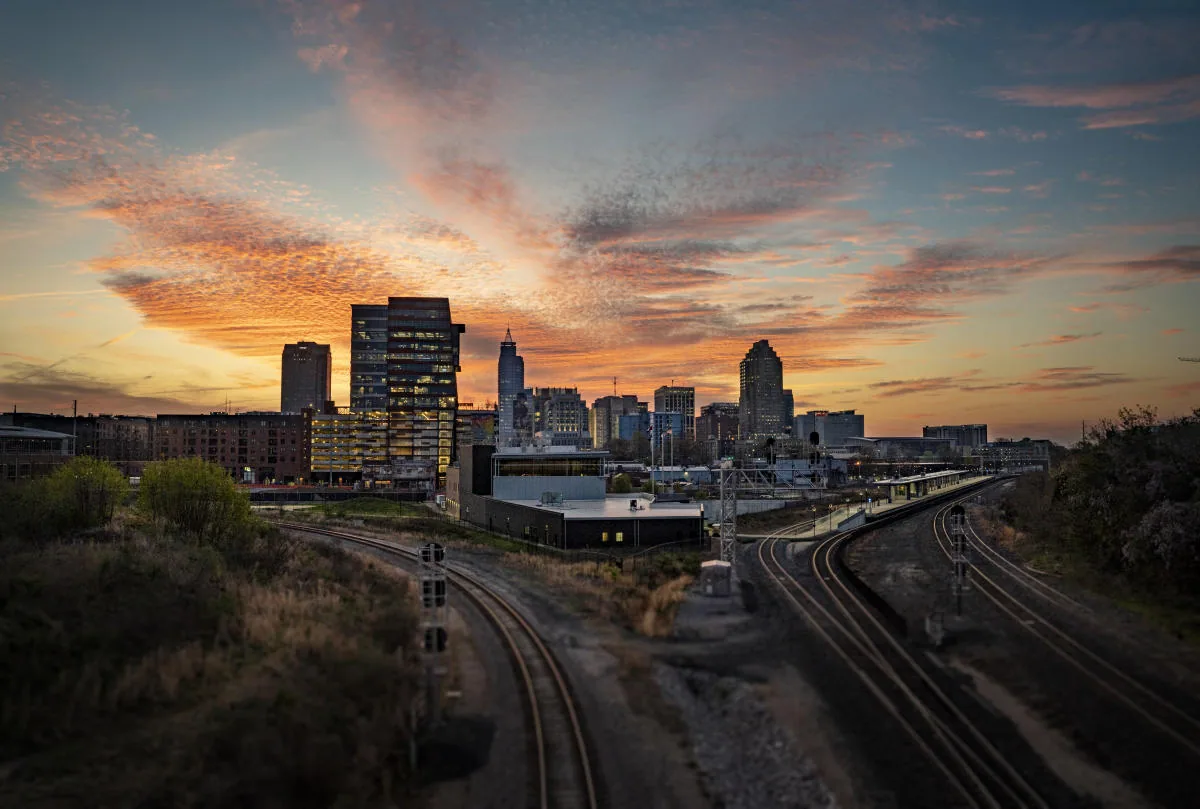
An owner who expects a property to change does not want a twenty-year roof on a building with a five-year future, and does not want a patched roof on one that will stay. Eastern Cary Gateway is a special planning area of approximately 800 acres in Cary, NC, lying between downtown Cary and Raleigh and including two I-40 interchanges, and Cary's plan treats it as an area for coordinated land-use and transportation planning. Commercial roofing there is therefore partly a timing question. We start by recording what each roof is doing now, then match the scope to how long the building is expected to stay in service, so an owner buys the repair, recover or replacement that fits the plan for the property.
A planning area signals that land use, access and building patterns may shift over time. It does not tell us what any owner will do, and we make no assumption about it. What it asks of a roofer is a clear look at the building's remaining service plan. If the owner expects to hold and operate the building for many years, a full replacement with good insulation and drainage can make sense. If the building may be redeveloped, a repair that keeps water out for a few seasons costs less and avoids overbuilding. We write both paths into the report with the cost drivers named, so the owner decides with the full picture in front of them.
Buyers, lenders and developers ask what condition the roof is in, and a record that answers them can change the course of a deal. We photograph the roof in a fixed sequence: drains, seams, the membrane turn at each wall, edge metal, penetrations and equipment curbs. We mark each zone on a plan, list open items and note what we could not reach. Probes at a sample of seams and a moisture survey show whether insulation is dry, and a test opening at doubtful points reveals the substrate condition. The resulting due diligence roof survey gives a buyer or seller a common set of facts to work.
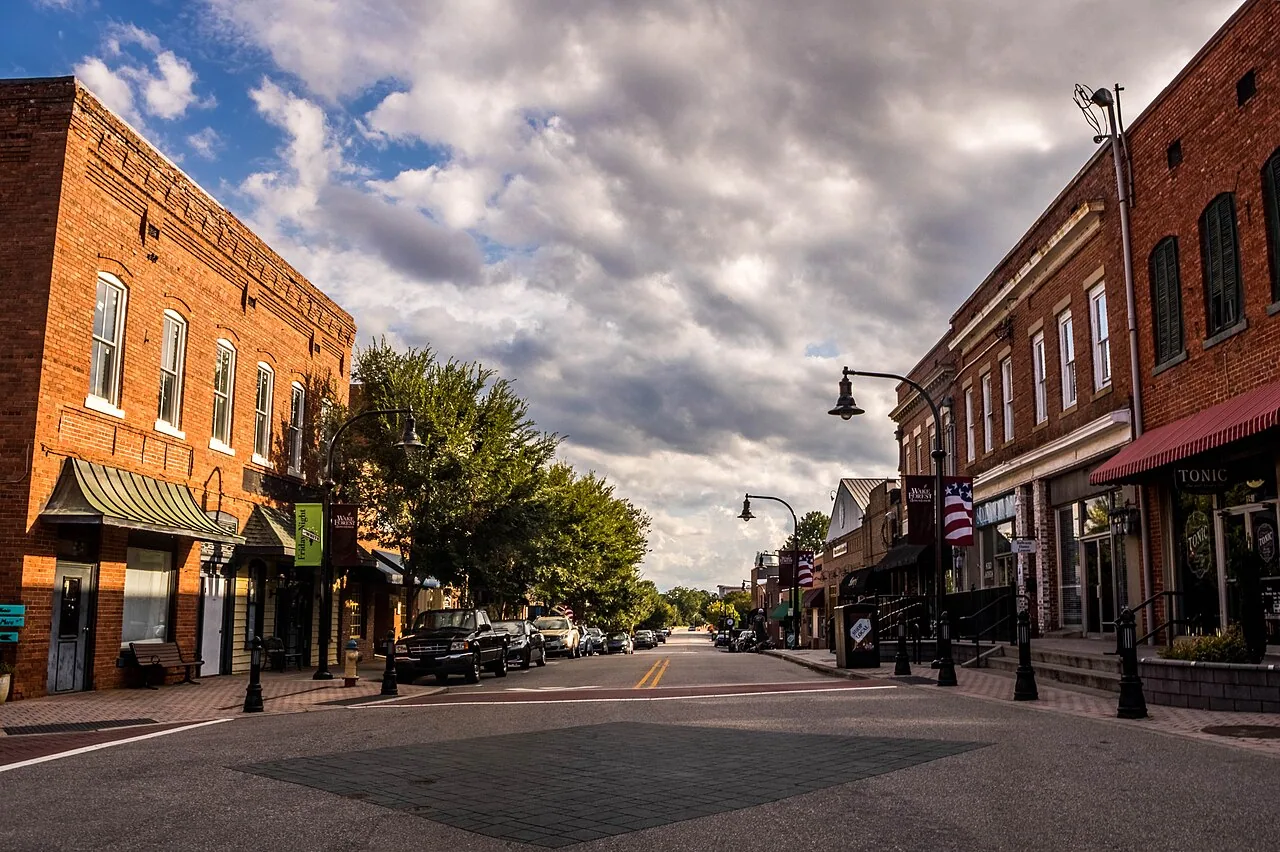
The two I-40 interchanges give trucks and crews quick highway access, which helps with scheduling a delivery or a lift. The last stretch is local, and in a planning area where roads and land use are being studied, we confirm current conditions before each job: driveways, turning radii, overhead lines, loading areas and any restrictions on staging. Material is delivered in a window agreed with the owner and held on site rather than at the roadside. Crane and lift positions are marked on the plan so that fire lanes and building entrances stay clear. Nearby, the downtown district has its own street-access demands, as in Downtown Cary.
Interchange-adjacent properties elsewhere in Cary raise the same points, for example Crossroads Corporate Park, at the crossing of I-40, US 1 and US 64. In each, the roof plan names the route, the staging area and the hours before the first truck is booked, and the owner holds a copy.
Cary's annual mean sits at 59.6°F, with 32.9 days of 90°F or hotter weather, July highs of 88.2°F and 48.80 inches of precipitation. Those are Cary's numbers and apply as regional context, so we check for heat-aged seams, dried sealant at the termination edge, slow drains and ponding on every roof. The Raleigh weather service's 1950 through 2005 climatology lists hail, tornado and damaging-wind reports over 31 counties, which says nothing about this gateway in particular but is reason enough to walk a roof after severe weather. A storm damage roof repair scope covers protection and permanent work as separate entries.
Whatever the plan for the area, buildings in the gateway are occupied today, and the roof crew works above people. We identify the tenant spaces under each roof zone, locate the air intakes and ask about operating hours before choosing products and methods. Interior protection goes up under open sections, debris is lowered in enclosed containers and entrances stay clear. Temporary protection is labeled as temporary in the work order, with its own photographs, and the permanent repair is scheduled as a separate entry. If a tenant changes during the work, the property manager receives an updated plan, and the crew works from the same version.
Each leak over occupied space is written down with its room and date, which lets us follow the stain back to a roof zone. That log, together with the plan and the photographs, lets the owner answer a tenant's question the same day. After the job, the closeout file records the work, the product data and any documented change, so the building's roof history survives whatever the area's plan does next.
A short-term repair is right when the substrate is mostly dry, the failure is local and the building's future is uncertain. We draw the repair boundary on the plan, photograph it and describe what the repair does and does not cover. Typical choices include resealing flashing at a wall, replacing a failed pipe boot, repairing an open lap and clearing a drain. We also describe the conditions that would make the repair a poor investment, such as repeated returns at the same detail or wet insulation under the surrounding membrane. The owner sees the reasoning and can revisit it when the plan for the property becomes clearer. A commercial roof leak repair of this kind is traced upslope and closed with a photograph of the finished detail.

A longer-lived roof pays off when the building will stay and the cost of repeated repair exceeds the cost of a new system. A new single-ply membrane, a metal retrofit or a restoration with coating can serve for many years when the substrate is sound, the drainage is corrected and the details are done properly. We compare these options by what they fix and what they leave behind, and we list the cost drivers: area, access, penetrations, insulation thickness and the time the building can give. Roof capital planning then places the choice in the owner's budget. Permit records stay in the file, and the local requirements for each project are confirmed.
Not if the roof is leaking. A local repair protects the interior and the building's value. The scope can be kept small until the property's plan is settled.
Moisture in the insulation, condition of seams and flashing, drainage and repair history. A dated photograph set and a plan answer most of the first questions.
Not by itself. Scope follows the building's use, condition and expected life. Location affects delivery and staging, which we plan on site.
Each is a separate entry in the work order, with its own photographs and a revisit condition. A temporary patch is never recorded as a final repair.
Wet insulation spreading beyond the leak, failures recurring across the field, or a deck that has stopped holding fasteners. Probes and a moisture survey show which applies.
Arrange a roof walk with Commercial Roofing Cary. We will record the roof as it stands, match options to how long the building will serve, and send the owner a scoped next step.
Roof leaking now? Call for emergency roof repair.
Or email [email protected].