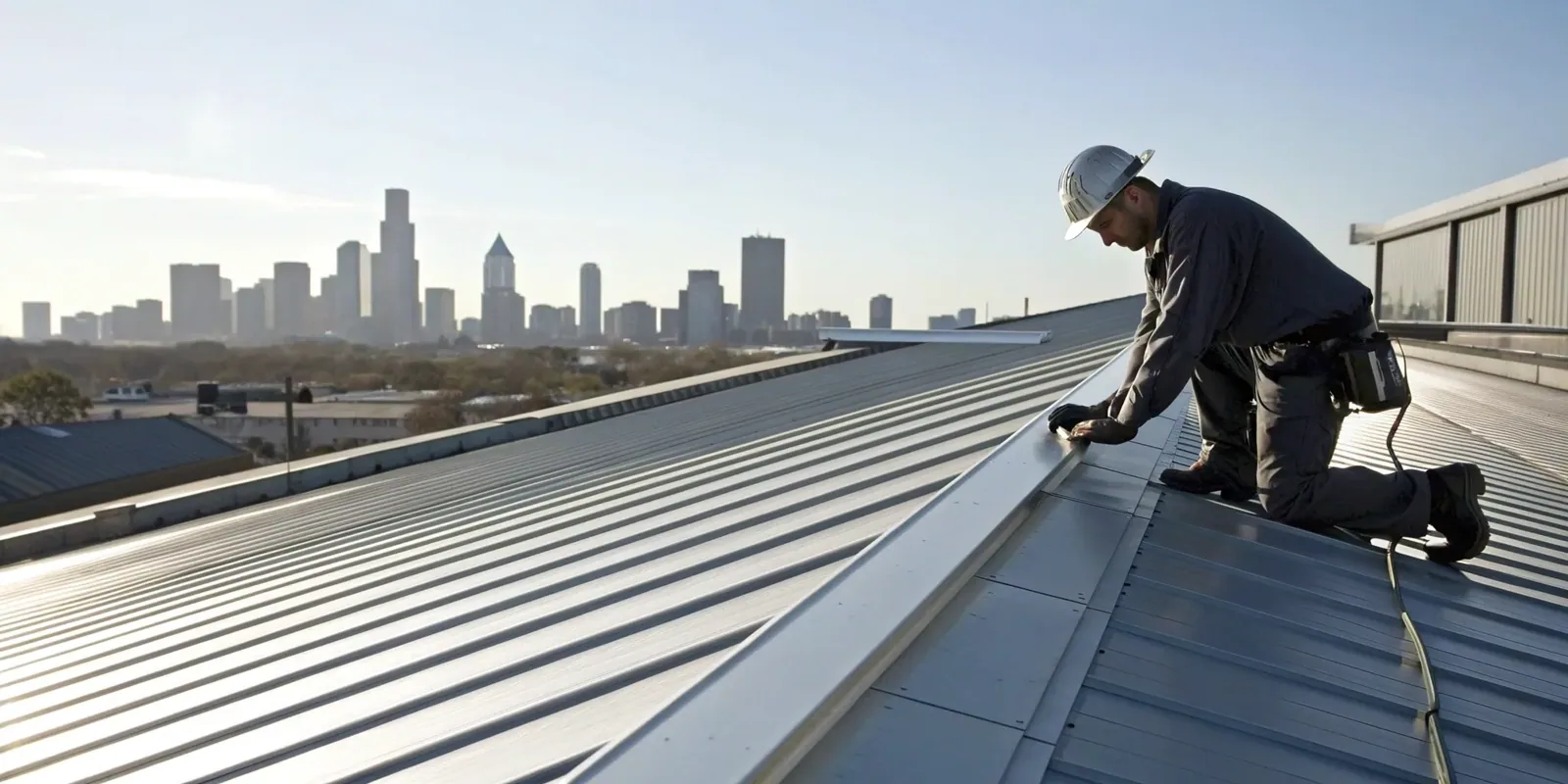
A buyer under contract has days, not months, to learn what a roof is worth, and the seller's file seldom answers the question. A survey for an acquisition or refinance in Cary, NC therefore works from the edges inward. We read whatever paper exists, walk every roof section, probe the seams, open the membrane at a few chosen points to see the substrate and record what we find in terms a deal team can price. The output is not a verdict on a building. It is a set of ranges: how much life each roof section probably has left, which repairs are due now and what reserve a lender or an investment committee should hold.
The seller's file can tell us a great deal if we know what to ask for. We request roof drawings, warranty documents, repair invoices, leak logs, tenant complaints, permits, past inspection reports and any insurance claims. We also ask about equipment changes, since rooftop units and new penetrations often explain a leak history.
Gaps are findings. A roof with no drawings, no warranty and no repair record is a roof whose history is unknown, and the survey says so. We mark each source by reliability, so the deal team can see which facts came from documents and which came from the roof itself.
Interviews fill some gaps. The property manager or maintenance lead usually remembers which roof leaks after which storm, which tenant complains most and which contractor was last on the roof. We take notes, mark each as recollection and then check it against the roof. Recollections that match the physical evidence get more weight in the survey, and those that conflict with it are reported as conflicts.
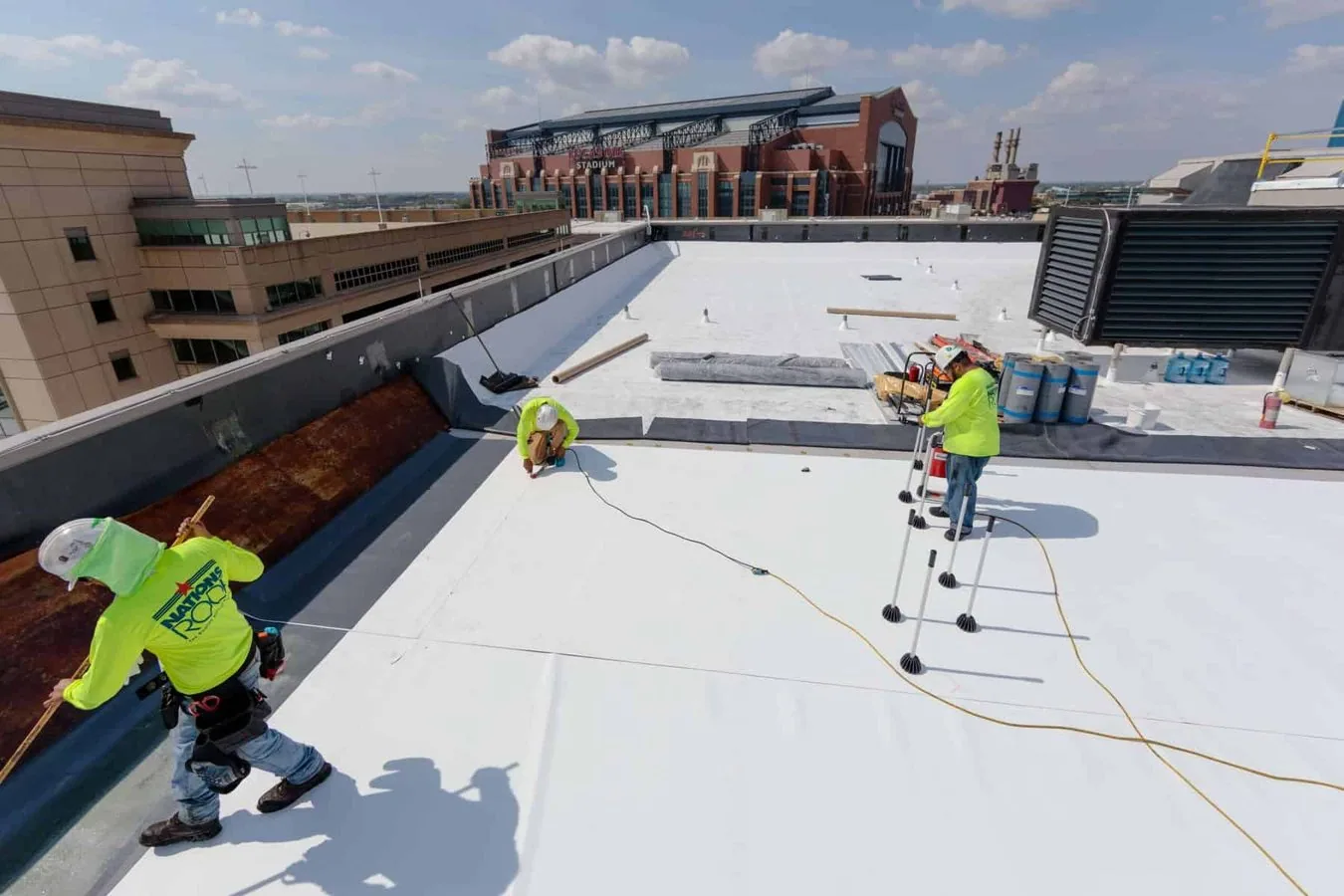
The walk is thorough and fast. We number every roof section on a sketch, photograph each with overview and close shots and check the details that fail first: field seams, membrane turns at walls, termination edges, drains, curbs and flashing at penetrations. An infrared moisture survey or a drone roof inspection speeds coverage on large or complex roofs.
Access is arranged through the seller or the property manager. Tenant notice, roof keys and fall protection are confirmed in advance, because a wasted morning costs a deal day. If a roof cannot be reached, the survey lists it as not inspected, with the reason.
The deliverable is built during the walk, not afterward. By the end of the day the deal team receives a short call with the headline findings: any active leak, any roof that looks near the end of life and any condition that could change the price. The written survey follows with the photos, tests and ranges, and the headline call is never changed without a note on why.
Visual condition tells part of the story. Tests tell the rest. A probe at a seam shows whether the lap is closed. A small test opening or core shows the layers beneath the membrane, the condition of the insulation and the deck, and whether water has been moving through the assembly.
We choose the number and location of tests by roof area and by what the walk showed. A roof with scattered patches and a stain pattern gets more tests than a roof with a uniform, dry surface. Each opening is patched the same day and recorded with a photo and a note. The survey states how many tests were run and where, so a reader can judge how far the results extend.
Moisture is the test result that moves price the most. Wet insulation changes a repair into a replacement, and the area of wet material sets the size of the job. When a scan and a core agree, the survey says so; when they disagree, it says that too and recommends the next test. A deal team can live with an unresolved question if it is named.
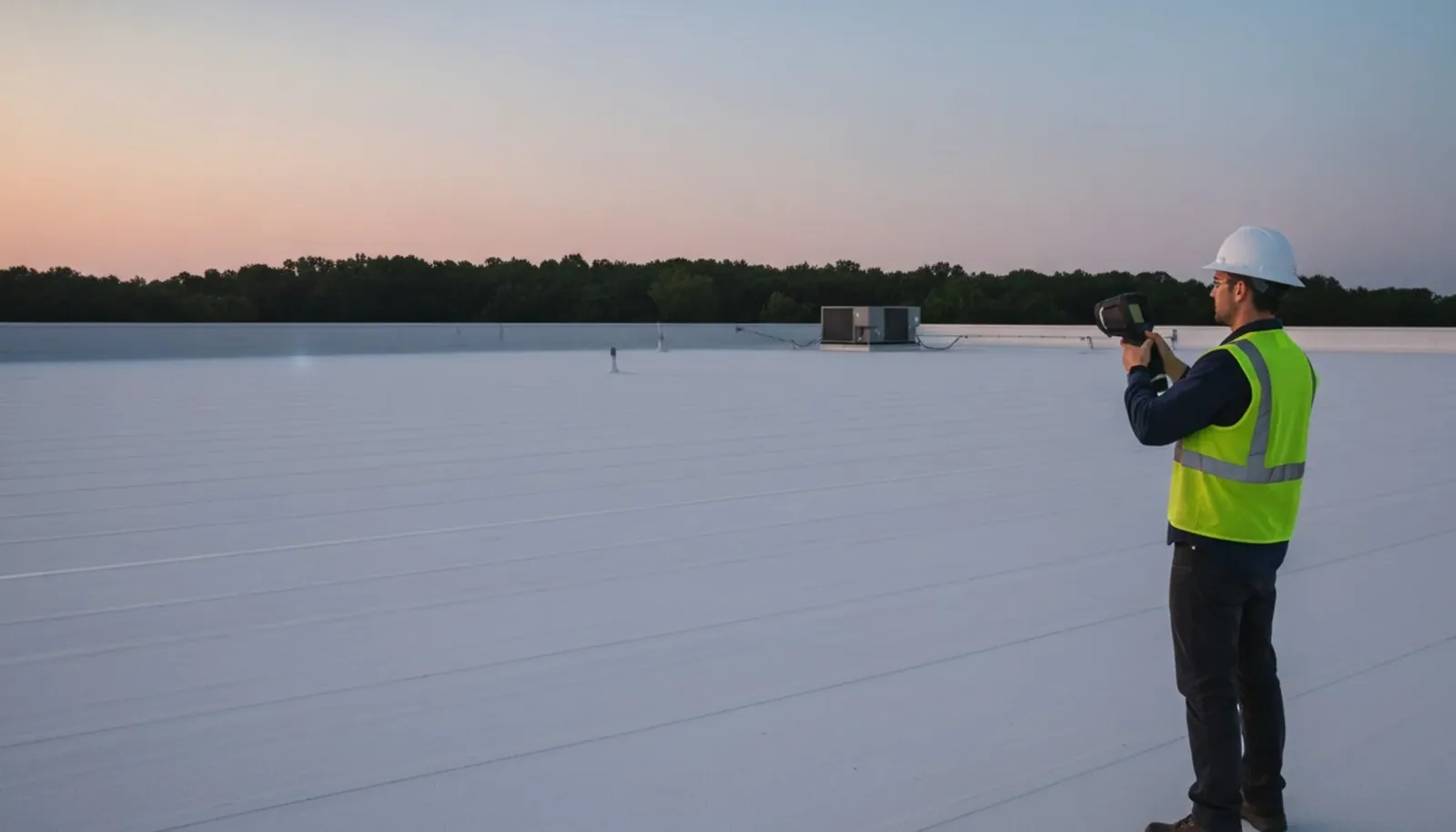
We state remaining life as a range for each section, with the evidence behind it. The immediate-repair list covers items needed now for watertightness. The reserve covers expected replacement or major restoration within the deal's holding period, expressed through scenarios and cost drivers instead of a single figure.
Scenarios help a lender. A roof with a dry assembly and sound seams may be a candidate for a coating or a recover, while a roof with wet insulation needs replacement. The survey lays out both and the conditions that decide between them. A roof capital plan picks up from there for owners who keep the property.
Repairs split into three groups in the deal summary. Items due before closing are ones the seller should fix or credit. Items due in the first year are ones the buyer should budget as part of the purchase. Items to watch are recorded with a recheck date. A roof condition report carries the detail behind each group, and the buyer can move it straight into a roof asset record after closing.
The park inventory in Cary covers office, retail, hotel, restaurant, flex-industrial and industrial properties. Woodlake Industrial Center has seven industrial buildings, and Park Overlook includes several flex-industrial buildings. Those are broad multi-building areas and tell us nothing about any one roof, so each building is surveyed on its own.
For a deal covering several buildings, we group the work by area, such as Woodlake Industrial Center or Apex Gateway, and report each building separately with a summary table across them. Several highway approaches reach these parks, which helps a survey team keep to a compressed schedule.
An investor holding a mixed portfolio often asks for a ranking across buildings. We provide a table that sorts roofs by remaining-life range and by consequence of failure, so the buyer knows which few roofs carry most of the exposure and which can wait.
A deal that plans a replacement within the hold period should budget for permit steps and any code-driven insulation or fire-rating changes, since the 2018 state building code family is the one listed as in effect. The survey flags the questions, and the deal team confirms them with the local office.
The deciding factor is access and roof count. A single roof can be walked and reported within a short deal window; a multi-building park takes longer.
Yes, at chosen points, with the owner's permission. Each opening is patched the same day and logged.
We survey by visual walk, probes and scans, and state the limits plainly. The remaining-life range widens when the substrate cannot be seen.
No. It covers the roofs in depth and fits into a wider assessment the deal team assembles.
They can support a lender's review. The survey lists conditions, tests and repair scope, and the lender sets its own requirements.
Arrange a roof walk with Commercial Roofing Cary. Send the property list, the deal timeline and the seller contact; we will plan access, run the tests and return ranges the deal team can use.
Roof leaking now? Call for emergency roof repair.
Or email [email protected].