
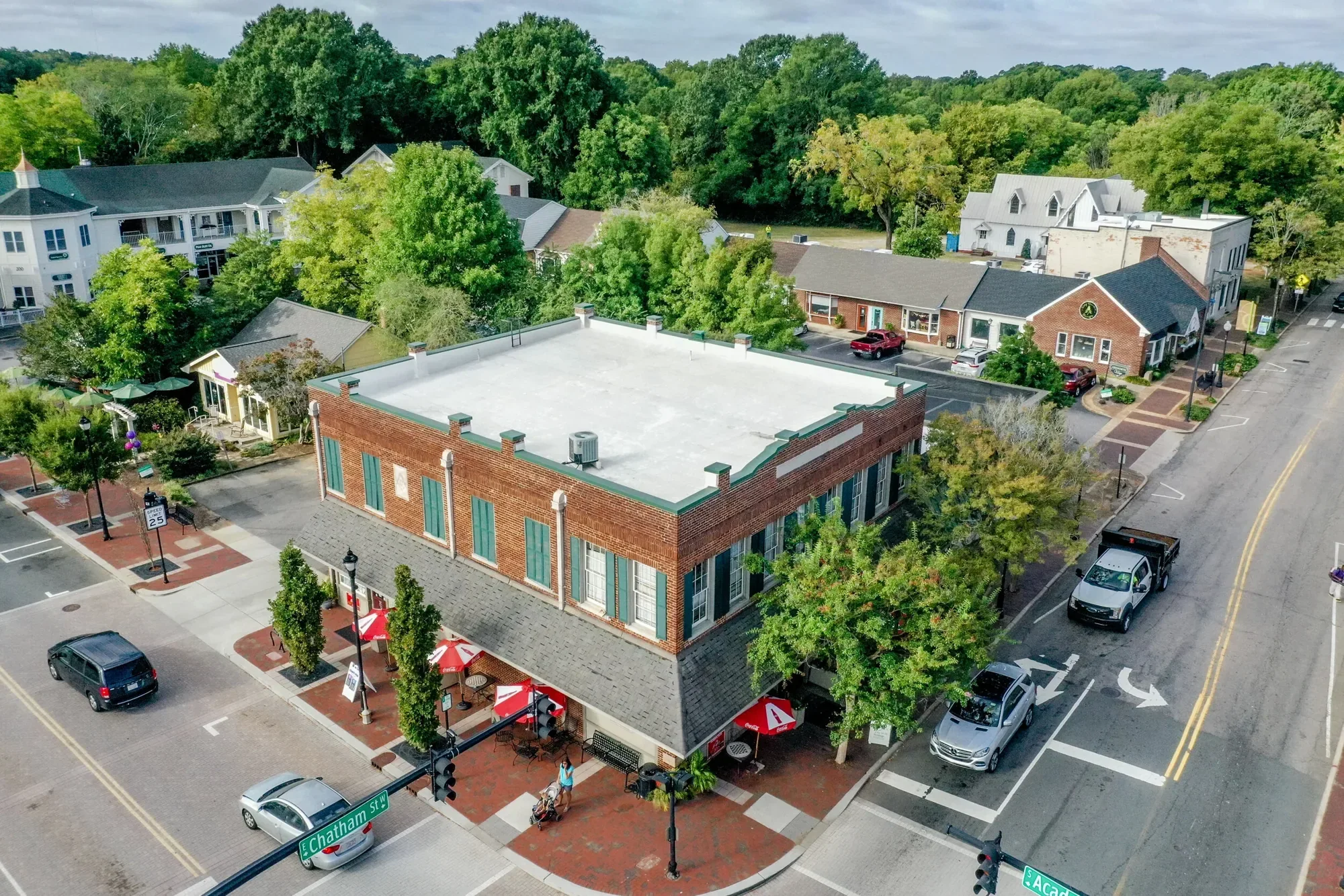
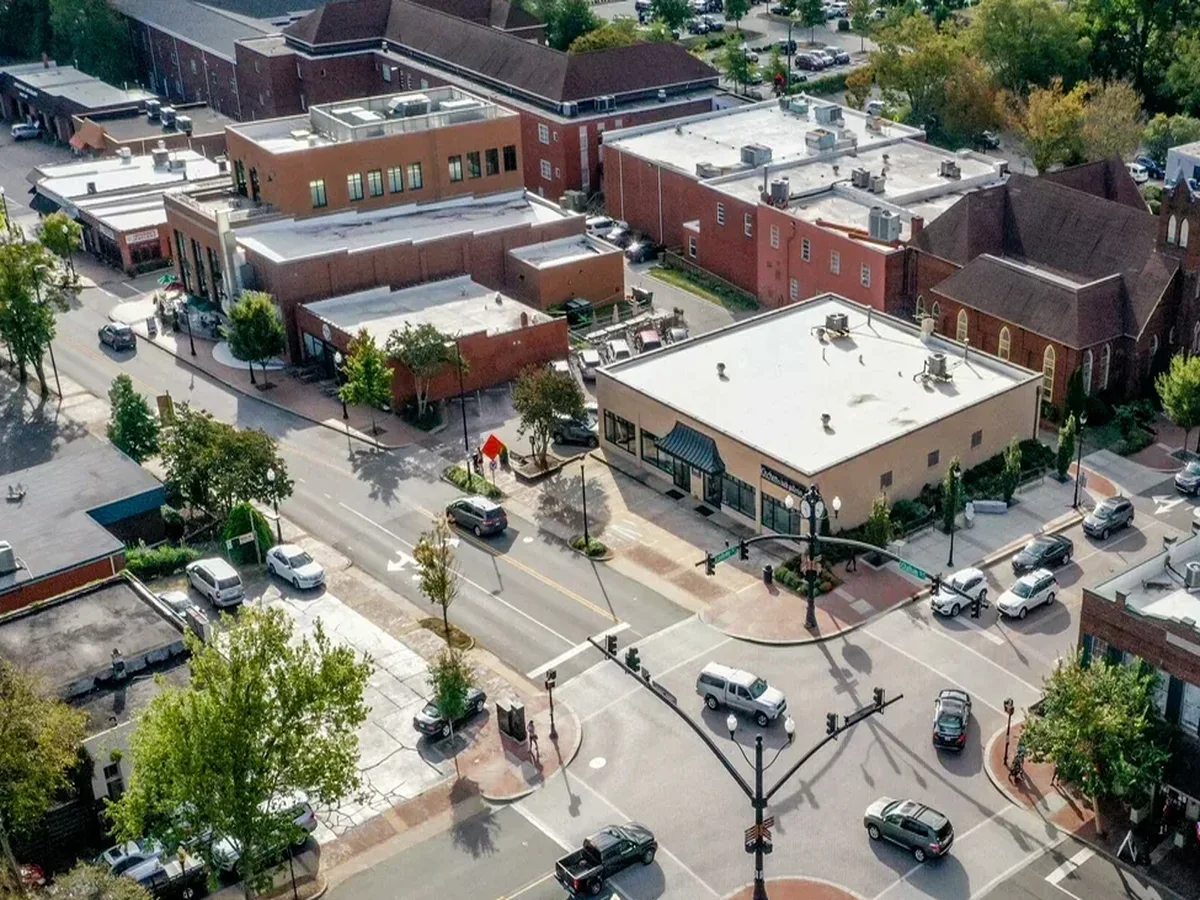
A hotel roof, a restaurant roof and an office roof can all sit in the same mixed-use park and still ask for three different sets of questions before anyone opens a seam. Crescent sits south of Tryon Road in Cary, NC, with Kildaire Farm Road on one side and Regency Parkway on the other, and retail, hotels, restaurants and offices surround the business park, so the roof work there is mostly a matter of matching the method to the use below. We start with the building type, because a guest room, a commercial kitchen and a leased suite each tolerate a different kind of noise, odor, dust and interruption, and the dry-in sequence has to respect that before the crew reaches the first lap line.
The first walk goes to whichever roof has the least tolerance for a delay, usually the one over a commercial kitchen or over guest rooms, since a leak there stops revenue in a way a stained office ceiling does not. We still walk the others in the same visit, because a park with several occupied property types needs one consistent condition record to compare them, and the record is how an owner decides what to repair now and what to schedule. On each roof we photograph the drains, the field seams, the membrane turn at every wall and the penetrations, then mark the findings on a plan that shows the roof zone, so a later visit can find the same detail without guessing. Nothing in that record claims a roof type or age for any property in Crescent; each building tells us what it has when we are on it.

A hotel roof usually covers rooms people are sleeping in, which turns the schedule into part of the scope. Tear-off, hoisting and fastening are the loudest steps, and they belong in the hours the property manager chooses, with the rooms directly below the work held back if the operator prefers. Entrances, pool decks and arrival drives stay clear of overhead activity, and the debris path is set before the first panel is lifted. On the roof itself we check the equipment curbs, the plumbing vent boots and the edge metal return, because a hotel carries a lot of exhaust and mechanical equipment through a membrane that has to stay watertight around each opening. Leaks over guest rooms are logged by room and date so the stain can be traced to a roof zone rather than to the nearest ceiling tile.
Grease and heat from a kitchen fan settle on the roof around the discharge, and some membranes soften or blister where that residue sits. When we inspect a restaurant roof we look at the surface around each exhaust fan for staining and for lifted laps, check whether a grease containment tray is in place, and confirm the curb and flashing are sound. A cracked boot or a failed clamping ring can pass water into the kitchen long before the membrane itself looks worn. If the existing system is not suited to the exposure, the scope names a grease-resistant alternative and the reason, and the repair boundary is drawn around the damaged area with photographs to show where it ends. Restaurant roofing is planned around service hours, with loud steps set outside the dinner rush.
Cary summers run hot, with a July daily high near 88.2°F and 32.9 days at 90°F or above, and the year brings 48.80 inches of rain. Those numbers are Cary's, and they explain why we pay attention to heat-aged seams, sealant along the termination edge and any low point that holds water after a rain. No station record explains why one building ponds, so we measure the low spot, trace its route to the outlet and compare it with repair history before choosing between a drain repair, a tapered cover board and a slope correction. An infrared moisture survey helps when the surface looks sound but insulation below may be holding water.
Crescent connects to US 1 and US 64 and has access to I-40, I-440 and I-540, which gives material trucks several ways in. The last stretch is still a parking lot, a service lane and a driveway shared with tenants, so we agree on the staging area, the crane or lift position and the delivery window before anything is ordered. Occupied properties next to one another can have very different hours; a restaurant that fills at noon and a hotel with an afternoon check-in time will not agree on a quiet period, and the plan records who was told what. For neighbors in the same corporate area, the same approach carries over to Regency Park and Crossroads Corporate Park.
When the existing insulation is dry and the deck is sound, a recover adds a new membrane over the old one and avoids most of the tear-off noise, dust and exposed deck time that make a hotel or restaurant owner nervous. The probe result decides whether that is possible: we take cores or test openings at several points, read the moisture in the insulation and look at the substrate condition before the recommendation is written. If one zone is wet and the rest is dry, the scope can replace the wet zone and recover the remainder, with a clean tie-in width where the two meet. A roof recover also changes the sequence on site: the crew works in sections, closes each section dry before moving on, and leaves rooftop equipment supported on curbs that were raised to suit the added thickness.
The closeout file holds the dated photographs of each roof zone before and after, the final scope, the product data for materials installed, a drawing of the repair boundary and a list of open items with a recommended order. Permit and inspection records join the closeout file, since the applicable local requirements under North Carolina's state building code family are confirmed for each project. A property manager responsible for several buildings can compare them using one format, which is also how roof condition reports are built for portfolios. When a repair becomes a larger decision, the file supports a commercial roof replacement scope without starting over.
Often yes, when loud steps are placed in hours the operator chooses and the rooms beneath the work are held back. We confirm the room list and the schedule before mobilizing.
Grease and heat from exhaust fans, mostly. Staining, soft membrane and clogged drains near the fan are the signs, and a containment tray cleaned on a schedule slows the damage.
Water travels along insulation, decking and wall cavities before it drips. We compare interior reports with the roof zone and use a test opening when the path is unclear.
Each property gets its own written schedule with the quietest hours, the staging area and a contact on site. Changes are recorded so everyone has the same version.
When the membrane is sound and dry and the seams can be sealed. A moisture survey and a probe result show whether the substrate supports a coating or needs replacement first.
Arrange a roof walk with Commercial Roofing Cary. We will record each roof zone, review the details above the hotel, kitchen and suite spaces, and send a scoped next step for the building.
Roof leaking now? Call for emergency roof repair.
Or email [email protected].