The roof above a kitchen carries more than rain: the exhaust fan throws warm, oily air onto the membrane every service day, and that film collects dust, softens some surfaces and hides the seams a crew needs to see. A leak above the dining room or the line is a problem at the busiest hours, so the first look is at the hood exhaust, the make-up air unit and the curbs that carry them. Cary, NC has restaurants spread across mixed-use areas such as Crescent, alongside retail, hotels and offices, and a restaurant roof there can share a membrane or a wall with neighbors. We trace each exhaust path, test the membrane near it, and find the repair boundary before the first tool comes out.
Cooking exhaust leaves a film that varies by fan and by menu. On some single-ply membranes the film can soften the surface over time, and on any roof it holds dirt that keeps seams hidden and repair materials from bonding. We look near the fan outlet for darkened or tacky areas, for blistering and for lifted welds, then probe the nearby seams. A scrape or a gentle solvent test shows whether the membrane has softened.
Cleaning comes before repair. The surface has to be free of oil, or the new patch will lift in a season. We mark the contaminated boundary, clean to sound material, and repair or replace only what the test shows is compromised. A commercial roof repair that skips this step tends to fail in the same place.
Drainage matters here as well. Grease and food debris can reach a nearby drain strainer, slowly closing the opening, so we clear the strainer, check the membrane turn into the bowl and look for staining that shows where water has been standing. A slow drain beside a kitchen is a leak waiting for the next heavy rain.
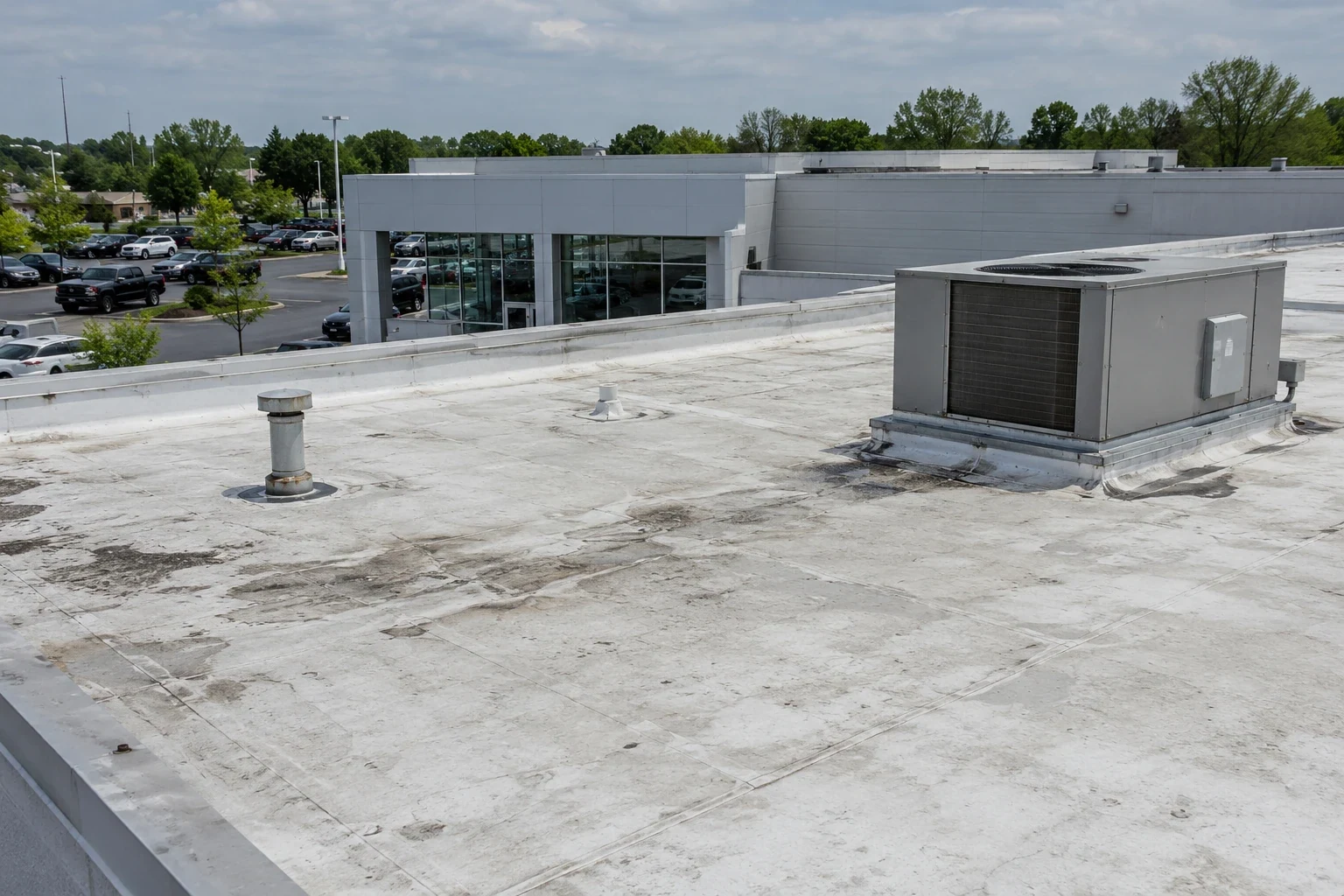
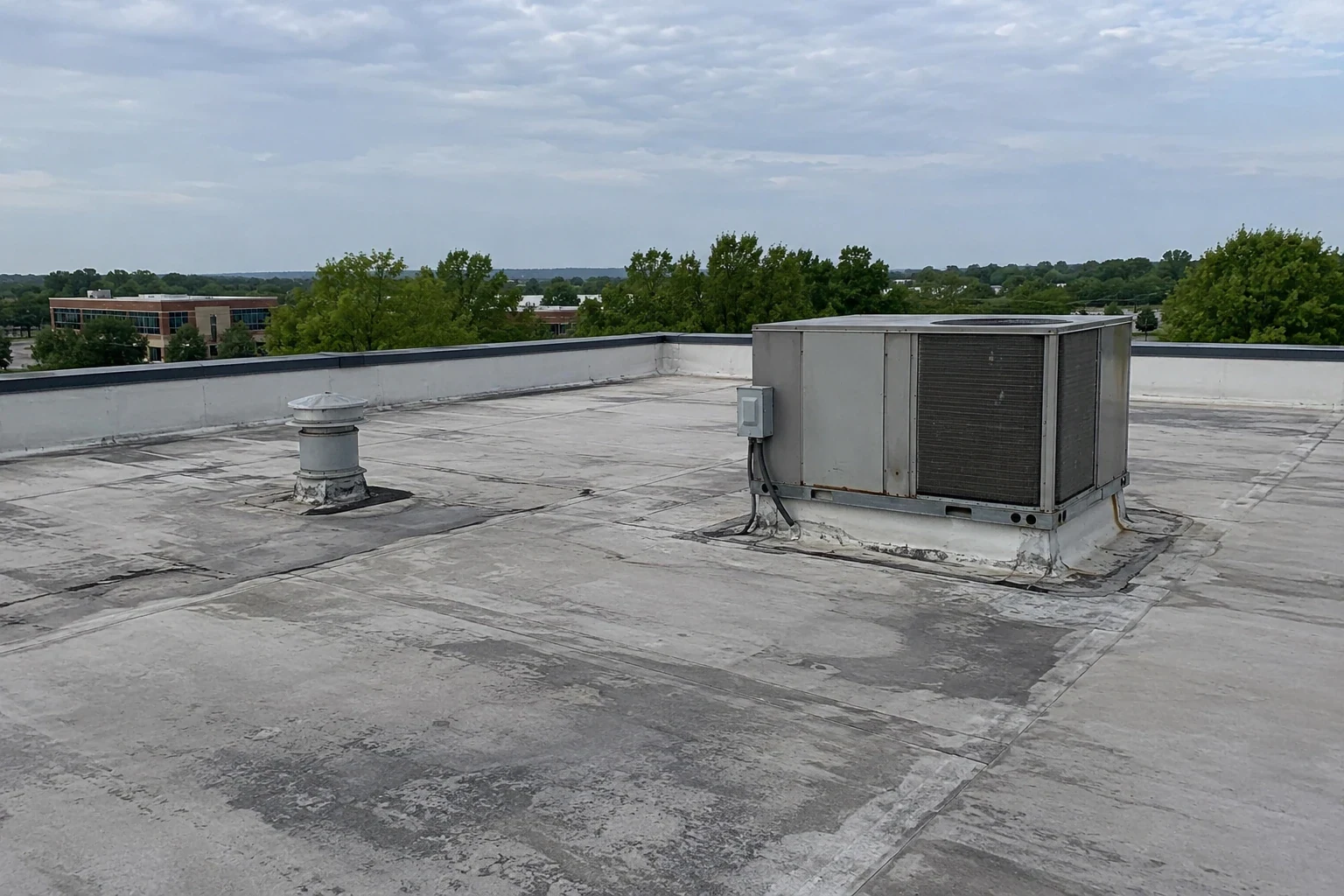
A kitchen exhaust fan sits on a curb that must be tall enough to keep water out and detailed with reinforced corners where the membrane turns up. The fan base needs a gasket or flashing that tolerates heat, and a grease cup or containment tray under the outlet stops oil from running down the curb. We check each curb for cracked corners, loose counterflashing, open sealant and missing straps.
Hoods, make-up air units and refrigeration condensers often crowd a small roof, leaving little room to work. Curb and support repair is planned with the layout of the whole roof in mind, so a new curb does not leave a pocket where water cannot drain, and a service technician can still reach every fan without stepping on a seam.
A restaurant has hours when a roof crew's noise, smells or dust would be costly: lunch, dinner, and any private event. Adhesives and primers have odors that can enter make-up air intakes, so we protect or temporarily cover the intakes and choose products accordingly. Hot work near grease is avoided; welding of single-ply seams uses heat guns under controlled conditions, and the area is kept free of combustible residue.
Most small restaurant repairs can be done in the morning before prep, or on a closed day, with the dry-in finished before service. At Aerial Center Executive Park in Morrisville, hotels and property-management services sit close by, and Fenton is a walkable district of dining and shops, so work in either has to account for pedestrians. Our occupied-building sequence covers the hoist, the barrier and the cleanup.
Delivery trucks and dumpsters often occupy the same rear lane the crew needs. We ask the manager which hours the lane is free, stage materials on the roof when possible, and keep the hoist away from the walk-in cooler door.
One leaking curb can be repaired. Repeated leaks around the kitchen, wet insulation under the fan zone, or a membrane that has softened across a wide area point toward a larger decision. We take a test opening, read the layers and photograph the findings, then explain which part of the roof has to be replaced and which can stay.
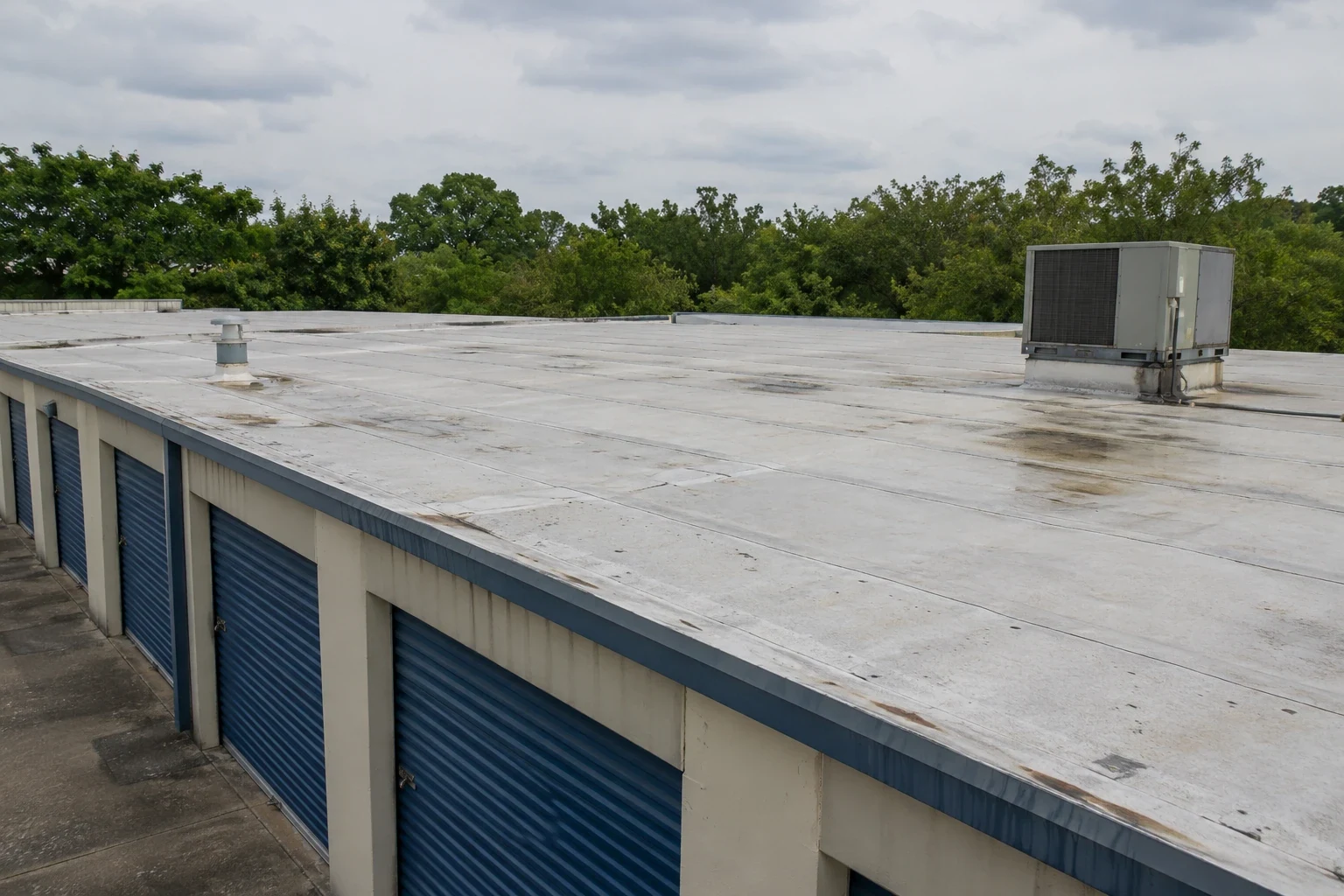
A small flat roof over a kitchen warms from below and bakes from above; Cary's 32.9 days at or past 90°F and its 48.80 inches of precipitation keep that stress constant. Where a full replacement is the answer, roof replacement is sequenced so the kitchen stays dry throughout. Where only the equipment zone is damaged, the report limits the work to that zone.
A roof near cooking exhaust benefits from a membrane that resists oils and fats. PVC roofing is often chosen for that exposure because its formulation resists many animal and vegetable fats, and a reinforced walkway keeps technicians off the seams. Other systems can work with the right detailing and a grease containment plan, and we explain which suits the roof we find.
We compare the existing assembly, the insulation moisture and the repair history before recommending anything. The proposal states why the system was chosen, what it will look like at the fan zone and how the tie-in to the old membrane will be made if only part of the roof changes.
The owner keeps a plan with the exhaust curbs, units and penetrations marked, photographs of each detail before and after, the materials used and the cleaning boundary. A hood-cleaning contractor or a refrigeration technician can use that plan to avoid walking across a repair.
That record is useful on a property near MacGregor Park, where the adjacent commercial village includes eateries, as well as in any strip with several kitchens. The same format applies to a hotel roof with a banquet kitchen or a shopping center with several restaurant tenants.
Short repairs are scheduled before prep or after service, with the dry-in complete before the line fires up. For longer jobs we agree with the manager on which exhaust fans can be covered and for how long, and the plan keeps intakes protected from fumes.
Oil on the surface prevents bonding. A patch laid over a greasy membrane lifts at its edge, so the area is cleaned back to sound material first. We also check that the fan outlet is not discharging onto the same spot, since a fresh patch would be soiled within weeks.
A tenant who shares a roof with others has to coordinate with the landlord. We mark the shared drains, walls and zones, and the restaurant's equipment is recorded separately so responsibility is clear. If a neighboring tenant's leak starts above the restaurant, the roof plan shows the path, which helps both parties agree on who repairs what.
Wind and hail show up first at exhaust fan covers, hood caps and edge metal, so those are the items we check after a storm. Loose covers and bent curbs let rain into the kitchen and can put grease on the roof.
Mechanical changes can need their own permits, and fan height and clearance rules can apply. We list the curb and fan details in the scope and confirm the local requirements before work starts.
Arrange a roof walk with Commercial Roofing Cary. We will trace the exhaust paths, test the membrane near them and send a scoped plan timed around your service hours.
Roof leaking now? Call for emergency roof repair.
Or email [email protected].