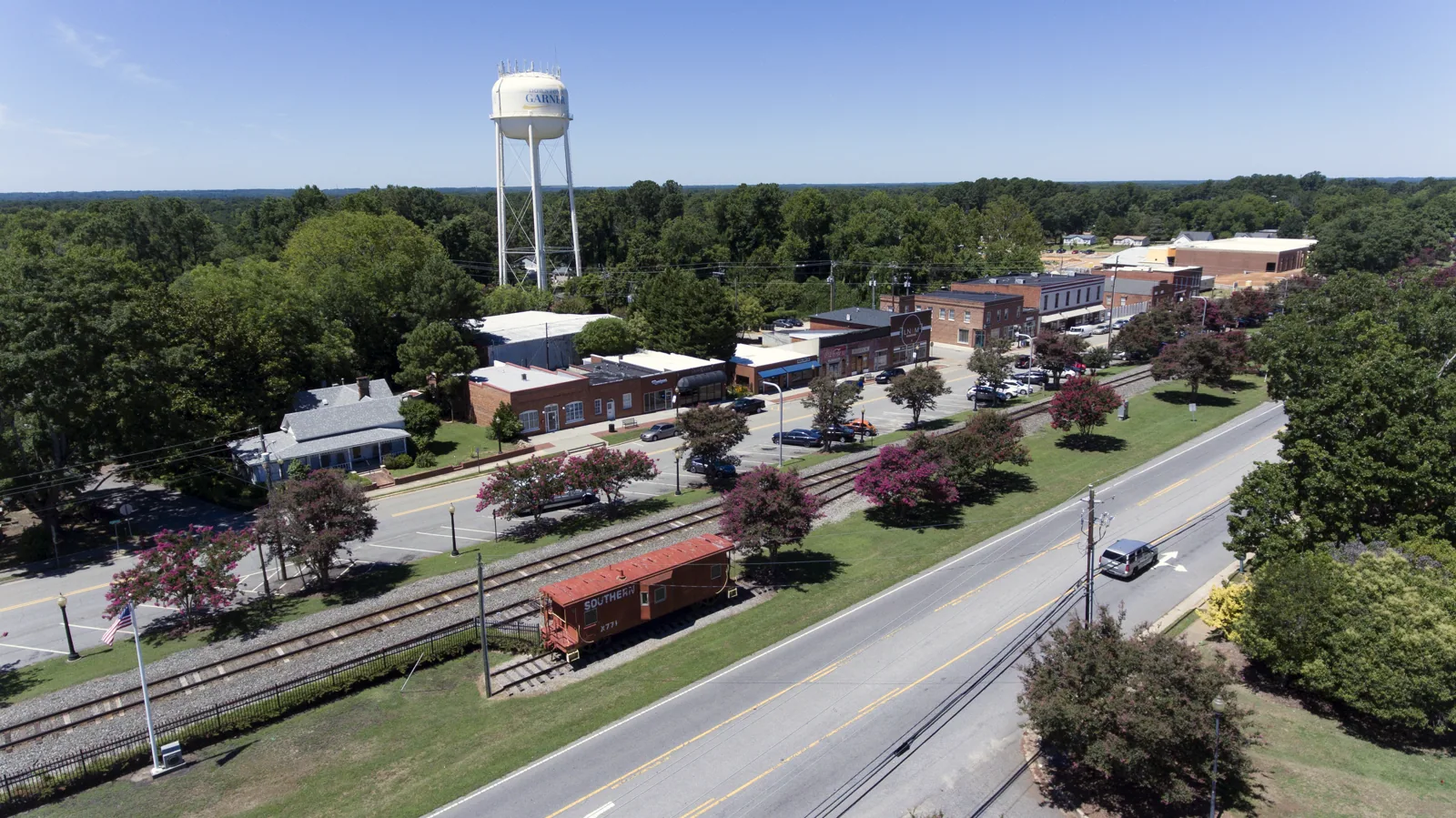
Standing water that lingers near a dock-door canopy usually means more than a clogged drain, since the low point may come from deck movement, a tapered insulation board that stops short of the outlet or a sump set an inch too high. Technology, advanced manufacturing, life sciences, logistics and retail are among Garner's sectors, and I-40 and US 70 are its major routes. That suggests the range of buildings a manager might oversee, from distribution space to storefronts, without telling us what any roof is made of. We walk each roof, measure where the water goes and decide from the evidence whether the finding calls for a correction or a larger scope.
On a wide low-slope roof, water follows the shape of the deck, and the deck moves. Framing deflects under load, insulation compresses where equipment sits and fasteners back out of boards that were laid flat. Any of these can create a shallow dish that holds water for a day after rain. Cary-area rainfall, passing over a roof with a low spot, softens the membrane at the dish and speeds the breakdown of seams around it.
We mark the area, measure its depth and trace the route to the nearest outlet. The cause decides the remedy: clearing a drain, resetting a sump, adding an outlet or installing tapered insulation to give the area a fall. Our ponding water roof repair scope states which of those the evidence supports, with photographs of the water before and after.
After a correction, we return after the next significant rain to confirm that the water leaves within a reasonable time. The second visit is brief, but it closes the loop: the photograph of the dry roof joins the photograph of the wet one, and the file shows that the remedy worked.
Logistics space brings trucks, forklifts and long operating hours, and the roof above has to be worked around all of them. We ask where the dock doors are active, which bays hold temperature-sensitive or damage-prone goods and where a hoist can stand without crossing a truck lane. Dust and debris from tear-off cannot fall into an open dock, so catch protection and a debris route are planned before the first panel comes off.
Warehouse roofs tend to have long runs of membrane with few penetrations, which makes field seams and perimeter details the main places to read. A warehouse roof that leaks at one bay is probed along the whole seam run, since a failure often extends beyond the visible stain. We also check the roof edge for lifting, because wind loads concentrate there.
Roof-mounted equipment over a dock area deserves a separate look. Exhaust fans, makeup air units and conduit runs concentrate foot traffic and flashing details near the same loading edge, and a failed boot there can drip onto stored goods within hours. We check each penetration and recommend protection where a leak would reach product.
A retail center carries many tenants, many rooftop units and many parapet turns, and each of those adds a detail to be read. Retail is one of Garner's sectors, and a shopping center can accumulate units added at different times, mastic patches from different repairs and flashings of several materials meeting at the same wall. We count the penetrations on a shopping center roof, number them on the plan and probe the termination at each.
Tenant calendars drive the sequence. Large-format stores, restaurants and service shops have different hours, and customer entrances cannot be blocked for long. We divide the work by roof section, protect the walkways below and schedule noisy tasks around opening hours. A written schedule goes to each tenant through the manager.
The sequence at a retail center also follows the weather. Sections are opened only when the forecast supports drying them in, and material is staged where it does not block fire lanes or customer parking. If a tenant reports a leak during the project, the crew checks whether it comes from an open section or an older defect.
Garner is served by I-40 and US 70, which matter to a roofer because material deliveries, crew vehicles and disposal trucks all depend on predictable access. Insulation, membrane rolls and cover board arrive on large trucks that need turning room and a staging point, and that point has to be agreed with the manager before the first delivery.
We schedule loads to match production on the roof so nothing sits long in the open. Material waiting overnight is covered and secured, and disposal is timed to the tear-off. For emergency repair, the first visit prioritizes stopping water: locating the entry, sealing it and protecting what sits below. Permanent work follows when the roof is dry enough to test, and the emergency roof repair record goes into the same file as the planned work.
The answer comes from the roof's own evidence: how much insulation is wet, how many repairs sit in the same zones, how the seams respond to probing and how many years the assembly can reasonably carry. A single contained wet area favors selective repair. Wet zones in several places, or repair failures that recur, favor replacement planning.
When replacement is the better path, the scope depends on the substrate and the building. EPDM is one of several low-slope options, and we compare it with others on seam method, repairability and cost. Owners with space in Raleigh or Knightdale can request the same condition scale for each building, so spending can be ranked across the group.
Timing completes the picture. A planned replacement scheduled ahead of a lease renewal or sale gives the manager room to compare bids on equal scopes, whereas a replacement forced by a failure leaves little room. The condition record is what lets the manager choose the first path.
The deciding factor is the cause of the low spot. A blocked or high outlet calls for clearing or resetting. A dish created by deck deflection or settled insulation needs added fall, usually tapered board, or an extra drain. We measure depth and extent first, then tell the manager which fix the measurements support.
Usually, with phased work. Dock doors that must stay in use are protected with catch framing, hoisting is moved away from active lanes and debris is routed to a chute or a staging area that does not cross traffic. We confirm those points with the operator and mark the plan with the doors that stay clear.
In writing, through the manager, with the dates, the hours of noisy work and the doors affected. Tenants with rooftop equipment need to know if a unit will be paused. We supply a one-page schedule for each phase, so the notice reflects the actual sequence of work.
No. Regional hail history sits in the weather records for the whole Triangle, and it is context only. A replacement decision rests on this roof's bruising, moisture and age. We inspect for impact marks and test for wet insulation before saying anything about the storm.
A roof plan, photographs of each defect, moisture findings, repair history and an estimate of remaining service life for each zone. Add the scope and cost range for any work the report recommends. A lender can then see what the roof needs and when.
Invite Commercial Roofing Cary to walk the roof with you, review the ponding, seams and access plan, and receive a scoped next step for the building.
Roof leaking now? Call for emergency roof repair.
Or email [email protected].