
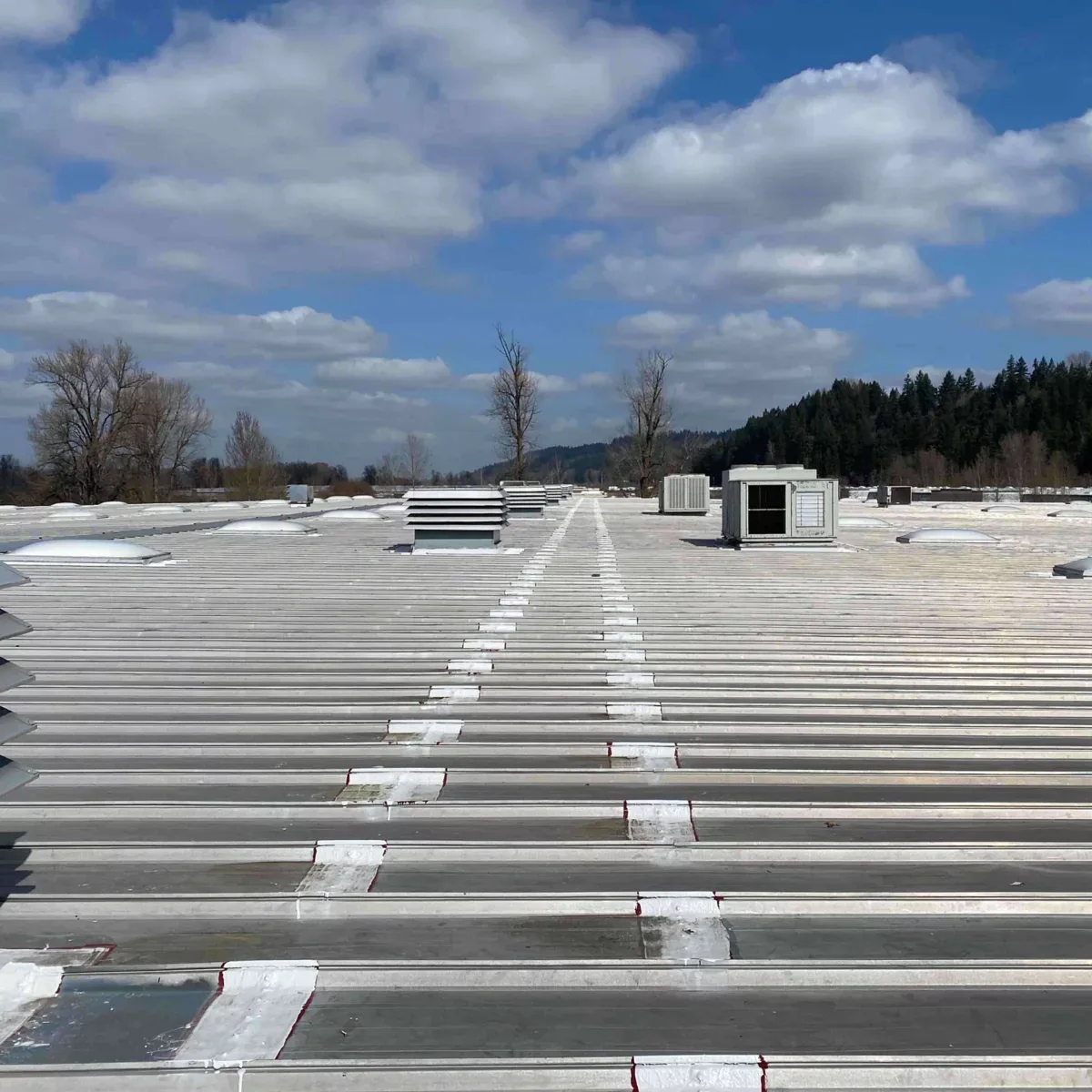
Two days after the last rain, a shallow pool that still sits beside a drain is reporting something about the roof's slope, its drain or its deck, and the pool itself is only the visible end of that report. Commercial Roofing Cary traces ponding on commercial roofs in Cary, NC from the low point back to its cause before proposing any repair. We measure the depth, follow the route water should take to the outlet, check the drain body and the membrane turn into it, and look at the deck beneath. Only then do we decide whether the fix is a drain detail, a slope correction or work on the membrane that the water has already been wearing.
Water on a flat roof after a heavy rain is normal, and it should drain within a short time as it moves to the outlets. Water that remains in place long after the rain has stopped, or that returns to the same places every storm, is a finding. We photograph each pool with a tape or a reference object showing depth, mark its outline on the roof plan and note the weather and the time since rain. A pool that is a quarter inch deep and shrinking is different from one that is two inches deep and unchanged.
Staining on the membrane outlines past ponding. A ring of dirt or algae after the water has dried shows where it stood, and we use those marks when the roof is dry on the day of the walk. The records from several visits then show whether the pool is growing, which would point to a deck that is continuing to deflect or a drain that is closing.
Each cause leaves its own signs. A drain that is blocked or partly crushed holds water around its bowl and drains slowly when cleared. A drain set above the surrounding membrane, perhaps because layers were added after it was installed, leaves a ring of standing water around it regardless of how clean it is. A roof with too little slope holds water along a broad area between drains. A deck that has deflected under load or lost support makes a depression that holds water in a pattern that follows the structure.
We clear and flush each drain, check the clamping ring and the membrane turn into the bowl, verify that the flange is secure and look at the line below where access allows. We then measure the roof surface against the drains with a level or a string line to see where it falls and where it does not. The finding is written in plain terms: the pool at this drain is a drain-height problem, the pool in this bay is a slope problem, the depression in that corner follows the deck.
A drain-height correction can be as simple as resetting the drain body and rebuilding the membrane turn, or as involved as cutting in a new sump with tapered insulation around it. A slope correction uses tapered insulation, crickets behind curbs and saddles between drains to carry water to the outlets, and it is installed under a new membrane, so it is a recover or a replacement scope. A deck repair needs a structural opinion and sometimes a support, and it may need to be done before any roofing work. An added scupper or overflow drain can reduce depth when the primary drain is blocked.
Each option costs differently and affects the roof differently, so we price them separately. We also say what each one does not fix. Resetting a drain does not remove a depression in the deck, and a tapered layer does not fix a crushed leader. The drain and scupper repair scope and the tapered insulation and cover board scope are written to match the cause found on the walk.
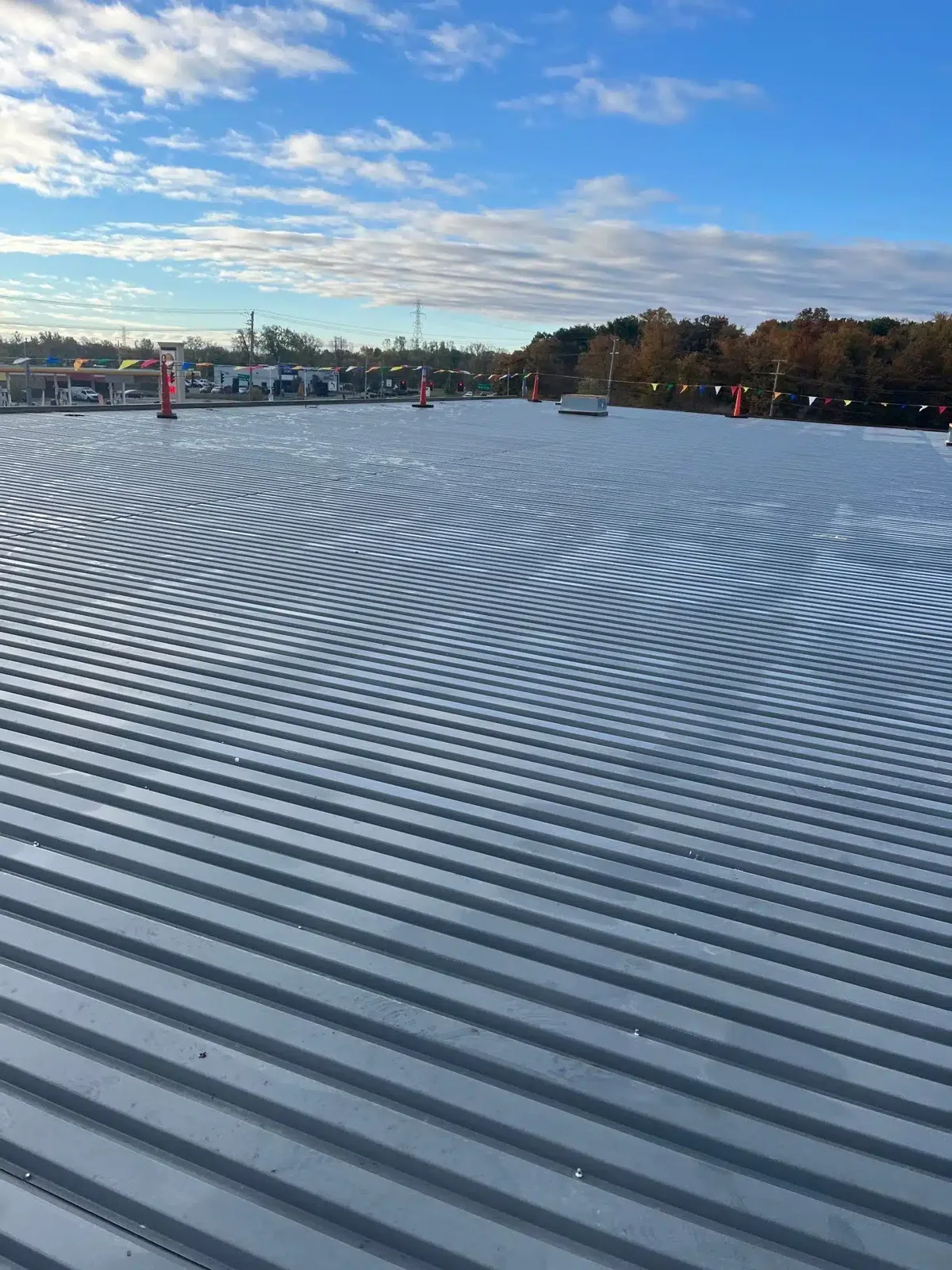
Standing water holds dirt and algae, concentrates ultraviolet and heat on the surface under it, and stresses seams that run through the pool. Some membranes tolerate ponding better than others, and some manufacturers limit warranty coverage for ponded areas, so the manufacturer's requirements matter when a roof is replaced. On aging roofs we check the membrane under ponded areas for blistering, softening, seam separation and granule loss. Where the surface is sound, we clean it and correct the drainage cause. Where it is worn, a section is replaced or a new layer is installed.
In winter, standing water freezes, and the ice can lift or stress seams and push against drain bowls. Cary's wet year means ponded areas collect rain repeatedly. A depression that holds water through a hot summer and a wet spring ages the membrane faster than the surrounding field.
Seams that run through a pool deserve a probe at every lap. A seam failure inside a ponded area lets water reach the insulation directly, and the pool then keeps feeding it. We mark open seams, repair them before any other work and note whether the water has already reached the layers beneath, using a moisture meter or a test opening where the stain suggests it.
Cary's corporate-park inventory includes office, retail, hotel, restaurant, flex-industrial and industrial buildings across several named areas, so ponding shows up in many forms. A flex building like those at Park Overlook, where multiple flex-industrial buildings sit together, may have low-slope roofs with several drains, and an industrial campus like Woodlake Industrial Center, with seven buildings, brings several roofs to compare. A building count is not evidence of any roof condition, so we measure each building on its own. Heat plays a part too: a pool of water on a dark membrane warms and cools through large daily swings in a Cary summer.
The record contains a roof plan with pools outlined and measured, photographs from the same positions at each visit, the drain checks, elevation readings, the cause assigned to each pool and the correction chosen. Permits for larger changes follow the state building code, and local requirements are confirmed. If the roof is a candidate for a seam repair or a recover, the drainage findings guide that scope as well.
The same record supports a decision about flashing at drains and curbs, where ponding often meets a termination. Each visit adds a line, so the owner can see whether a pool has shrunk, grown or stayed the same since the last correction.
Shallow water that clears within a short time is normal on many flat roofs. Water that persists or returns to the same spot each storm is logged as a finding.
Sometimes. If the drain was blocked, flushing restores flow. If the drain sits high or the slope is short, water will still collect and a correction is needed.
Manufacturers set their own limits on ponded areas, and the language varies by product. We read the warranty terms with the owner when a roof is replaced.
A structural opinion is needed before roofing. We document the depression with measurements and photographs so the engineer can see it.
It corrects slope where the layout allows, but it cannot fix a crushed leader or a deflected deck. Those are scoped separately.
Contact Commercial Roofing Cary to arrange a roof walk after the next rain. We will review the observed low points and return a scoped next step for each cause.
Roof leaking now? Call for emergency roof repair.
Or email [email protected].