
A probe drawn along a field seam finds in seconds what a visual walk can miss, because a lap that looks closed from standing height may have no bond at all under the edge. Commercial Roofing Cary repairs open and weak seams on commercial roofs in Cary, NC, and the work begins with the probe: we run it along every lap line in the affected zone, record where it enters and how far, and photograph each open section with a scale reference. Only then do we choose between a reweld, a rebond, a cover strip or a larger section repair, because the choice depends on how much of the seam is gone and why.
A seam can fail from the inside edge, where moisture or contamination kept the bond from forming, or from the outside edge, where heat and movement have pulled it open. A probe lifts the edge gently and reveals a gap, a cold weld, a wrinkle or contamination under the lap. We also check intersections where three layers of membrane meet, because a T-joint is harder to seal than a straight lap and is a frequent point of failure. Fastener rows at the lap edge are inspected for backed-out plates that hold the seam open.
The result is a map: seams that pass the probe, seams that show partial bond and seams that are open. The map sets the repair boundary. A single open inch is a spot repair. A run of open laps across a bay points to something larger, such as a shrinking membrane or a deck that moves, and we say so in the report.
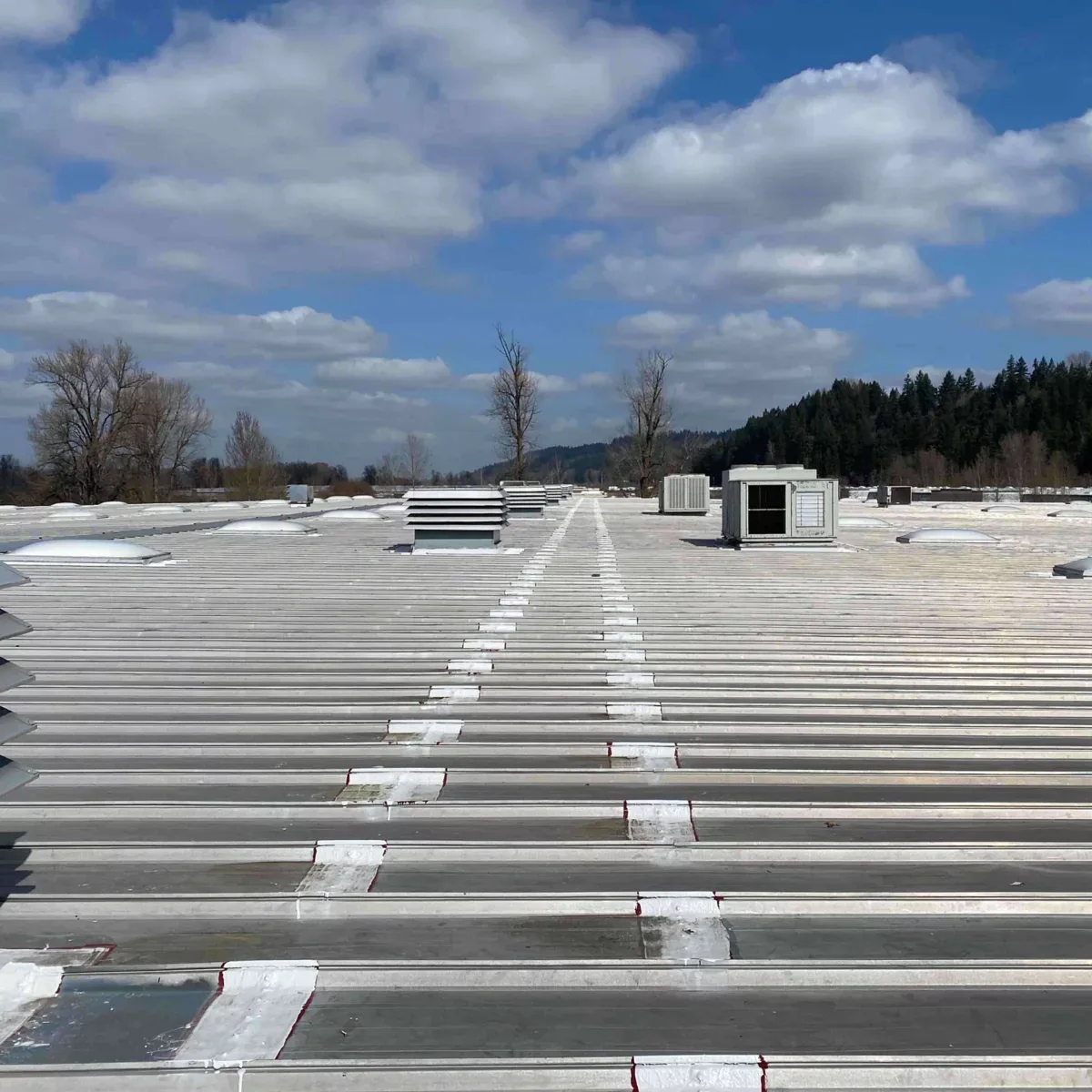
Heat cycling expands and contracts a membrane every day through a Cary summer, and a seam that was not fully fused at installation, or that has aged, can open under that movement. Ponding on a seam adds stress, and foot traffic across a lap can break a weak bond. Some seams open because the membrane has shrunk and pulls at its edges, and others because a contaminant such as dirt, oil or moisture was present at the time of welding.
We look for patterns. Seams that open along one direction of the roof may follow the way the membrane was rolled out. Seams that open near rooftop units may show the effect of vibration or foot traffic. Seams that open at the low edge of a pool point to ponding water as a contributor.
The repair has to match the seam. Thermoplastic membranes such as TPO and PVC are repaired by cleaning the surfaces and hot-air welding the lap, sometimes with a cover strip of compatible material where the original lap is too narrow. EPDM seams are repaired with splice adhesive and tape or a cover strip after cleaning and priming. Modified bitumen laps are re-adhered with heat or cold adhesive, with attention to the granule surface and the edge. Each system has its own preparation, and the wrong product on the wrong membrane may look fine and have no grip.
Weather matters to the method. Welding needs clean, dry surfaces, and adhesives need suitable temperatures. We choose the day, protect the work area and, where conditions are poor, install a temporary cover and return for the permanent repair. After each repair we probe it again.
Where three laps meet, the membrane stacks up in layers and the weld has to pass over an edge. These T-joints are the hardest places to bond and the most common places to find a pinhole or a tail of unbonded material. A proper repair at a T-joint uses a prefabricated patch or a cut piece with rounded corners, welded or adhered so that no sharp edge lifts. We clean the area, mark the patch, install it and probe the perimeter of the repair.
Patches with square corners tend to peel, so we round them. Patch size extends well past the defect onto sound membrane in every direction, and the edge of each patch is checked after it cools or cures. These small choices determine whether a repair lasts through another season of heat cycling or opens again at the next rain.
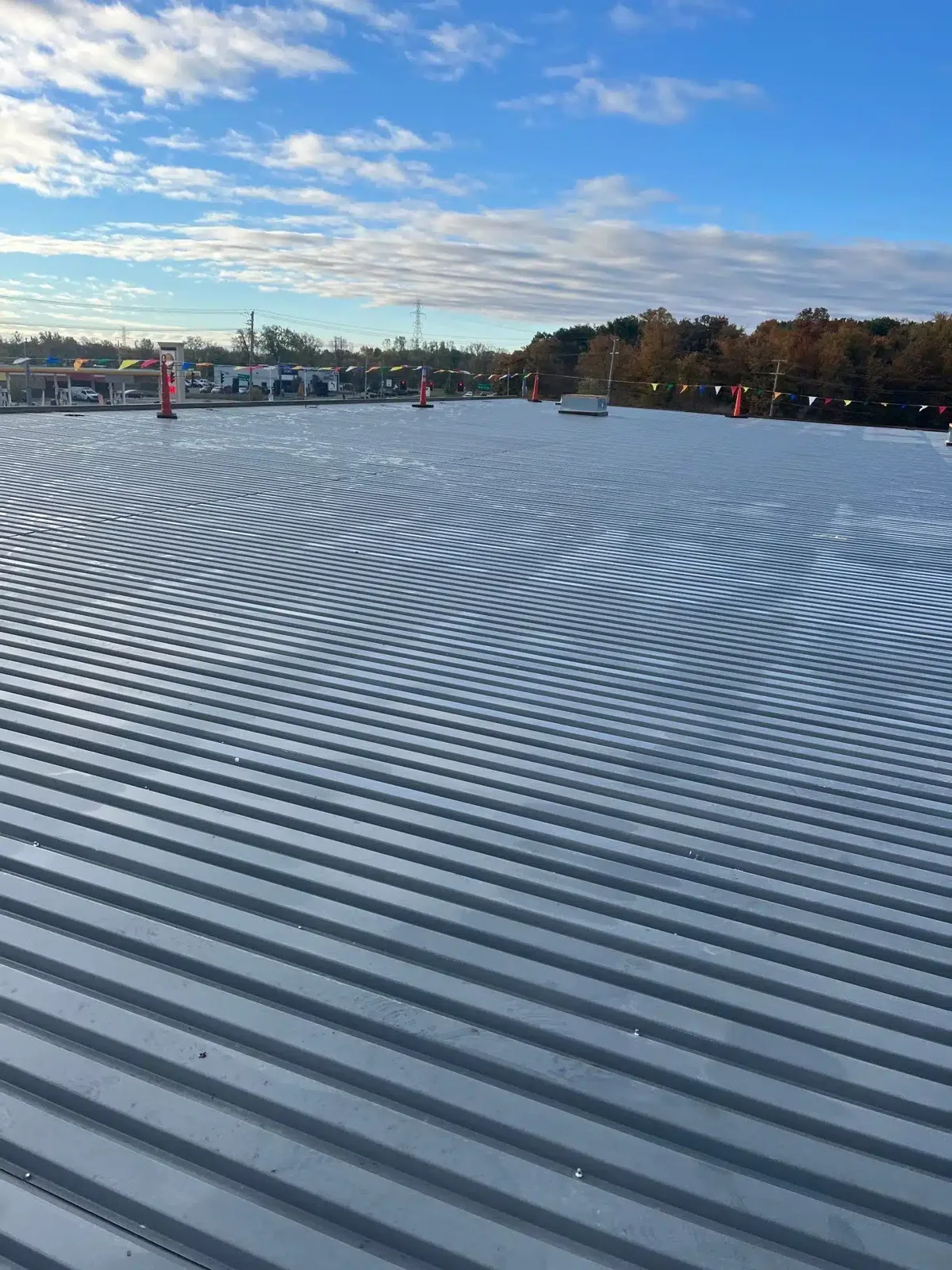
If the membrane is sound, dry and flexible, repair of individual seams is usually a sound choice. If it is brittle, shrunken or contaminated, a weld may not take, and the repair boundary grows. Where seams are failing across a large area, a cover strip along every lap, a membrane overlay or a replacement section may cost less than hundreds of separate fixes. Wet insulation under an open seam is a second reason to expand the boundary, since water that entered through the seam may have soaked material that now needs to come out.
We present the comparison with the same assumptions: the cost of repairing the seams found, the cost of a larger section and the cost of replacement, with the evidence for each. Owners with older roofs sometimes find that the probe map shows the end of the membrane's repairable life, and we state it plainly when it does.
Seam work is often a chain of small repairs spread across the roof, so access planning matters. We walk the roof in a set order, mark every defect with paint or tape before starting and work in a pattern that avoids walking on fresh repairs. Interior areas below get notice if work is near a known leak, and any area that cannot be completed in a day is covered before the crew leaves. Walk pads protect the membrane on the route between the access point and the work area, and equipment is staged to avoid ponded or soft areas.
If rooftop units operate nearby, we coordinate with maintenance staff so that exhaust and heat do not interfere with welding, and so that nobody services a unit across a freshly repaired lap. The schedule is shared with the manager the day before.
The roofs of Cary's corporate parks vary with use. Crescent, a mixed-use business park south of Tryon Road, surrounds retail, hotels, restaurants and offices, and Regency Park is a corporate park near the US 1 and US 64 routes with access to I-40, I-440 and I-540. A park name tells us nothing about the roof membrane, so each building gets its own probe map. Larger repairs follow the state building code's permit path, and local requirements are confirmed.
The record has the roof plan with seams mapped as pass, partial or open, photographs of each repair before and after, the method and materials used, probe results after the work and open items. When flashing is involved, the flashing failure record is cross-referenced. Owners can use the map to see whether the same seams open again, which is the earliest sign of a broader condition.
Only if the membrane is clean, flexible and able to fuse. Brittle or contaminated material needs a cover strip or a section repair.
The probe map shows the count for your roof. It differs with age, installation quality and exposure, and we do not predict it without testing.
Yes. Each repair is probed and photographed, and the results go into the record.
Usually because the cause remains: movement, ponding or contamination. We look for the cause during the walk and address it with the repair.
It can be, when the substrate is sound and the strip bonds well. The record notes it so later visits can check it.
Contact Commercial Roofing Cary to arrange a roof walk. We will probe the seams, review the observed laps and return a scoped next step with the repair boundary marked.
Roof leaking now? Call for emergency roof repair.
Or email [email protected].