
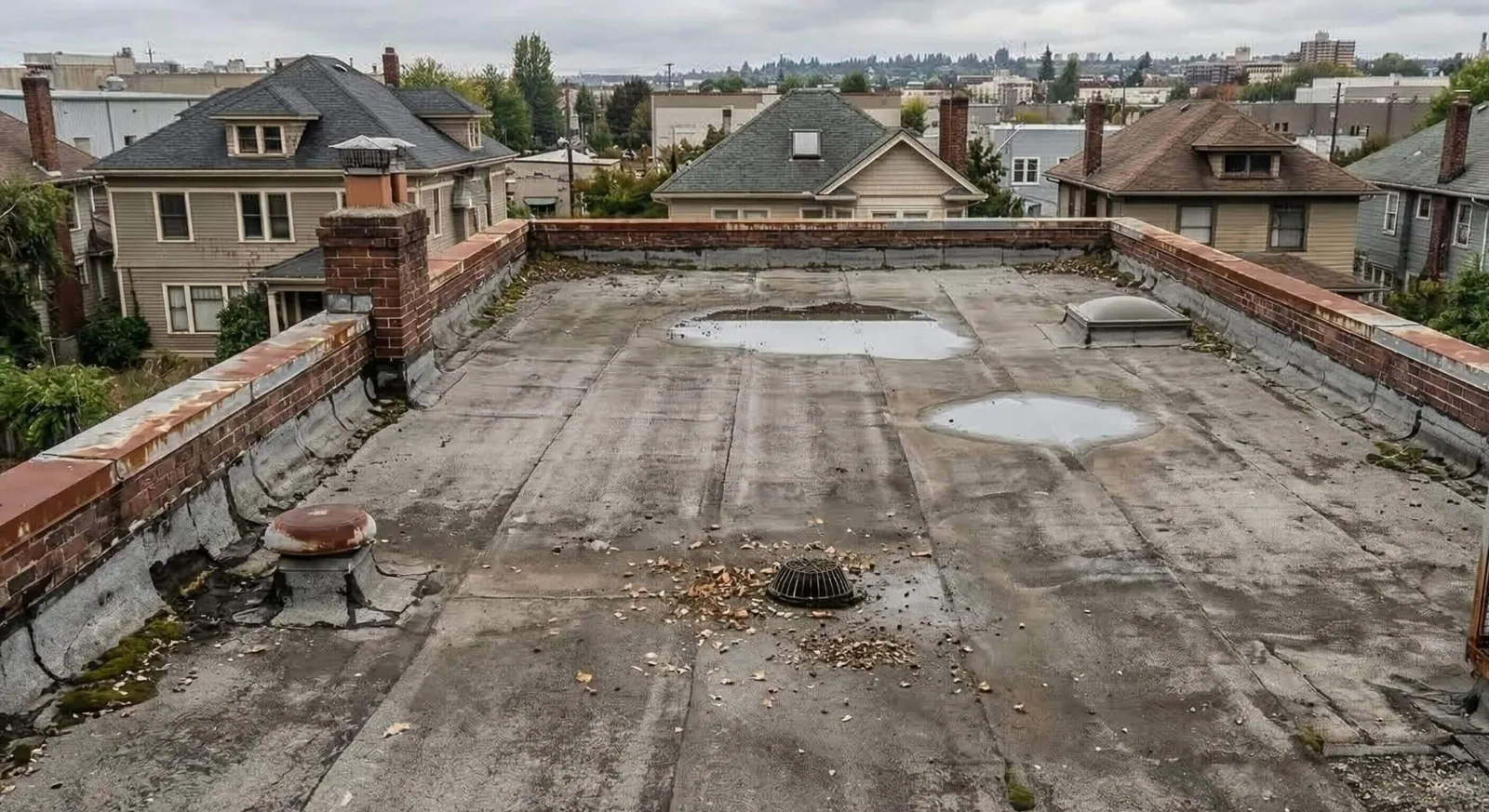
A termination bar that has lost its sealant line along a block wall will let water in without a single tear in the field of the roof, and a manager looking at an intact membrane may conclude that nothing is wrong. Commercial Roofing Cary repairs failed flashing on commercial roofs in Cary, NC, from wall terminations and curb flashings to pipe boots and drain collars. We start at the transition where the membrane turns up, test each termination edge by hand and by probe, and trace the water path before we choose a repair, so the new detail closes the actual opening instead of sealing the nearest crack.
Flashings fail where movement, water and several materials meet. A wall termination joins the membrane to masonry or metal that moves differently from it. A curb flashing joins a rooftop unit's base to a roof that expands and contracts around it. A pipe boot is a small piece of rubber exposed to sun and heat for years. A drain collar joins a clamping ring and a membrane turn. In each case, the weak point is the edge: sealant that has shrunk, a termination bar with loose fasteners, a membrane edge that has pulled away from the substrate, or counterflashing that no longer sheds water.
Mixed-material details fail early when the products were not compatible to begin with. A sealant that was never meant to adhere to a particular membrane can look intact and have no grip on the surface at all. We check adhesion by pressing and lifting the edge, not by looking at the bead.
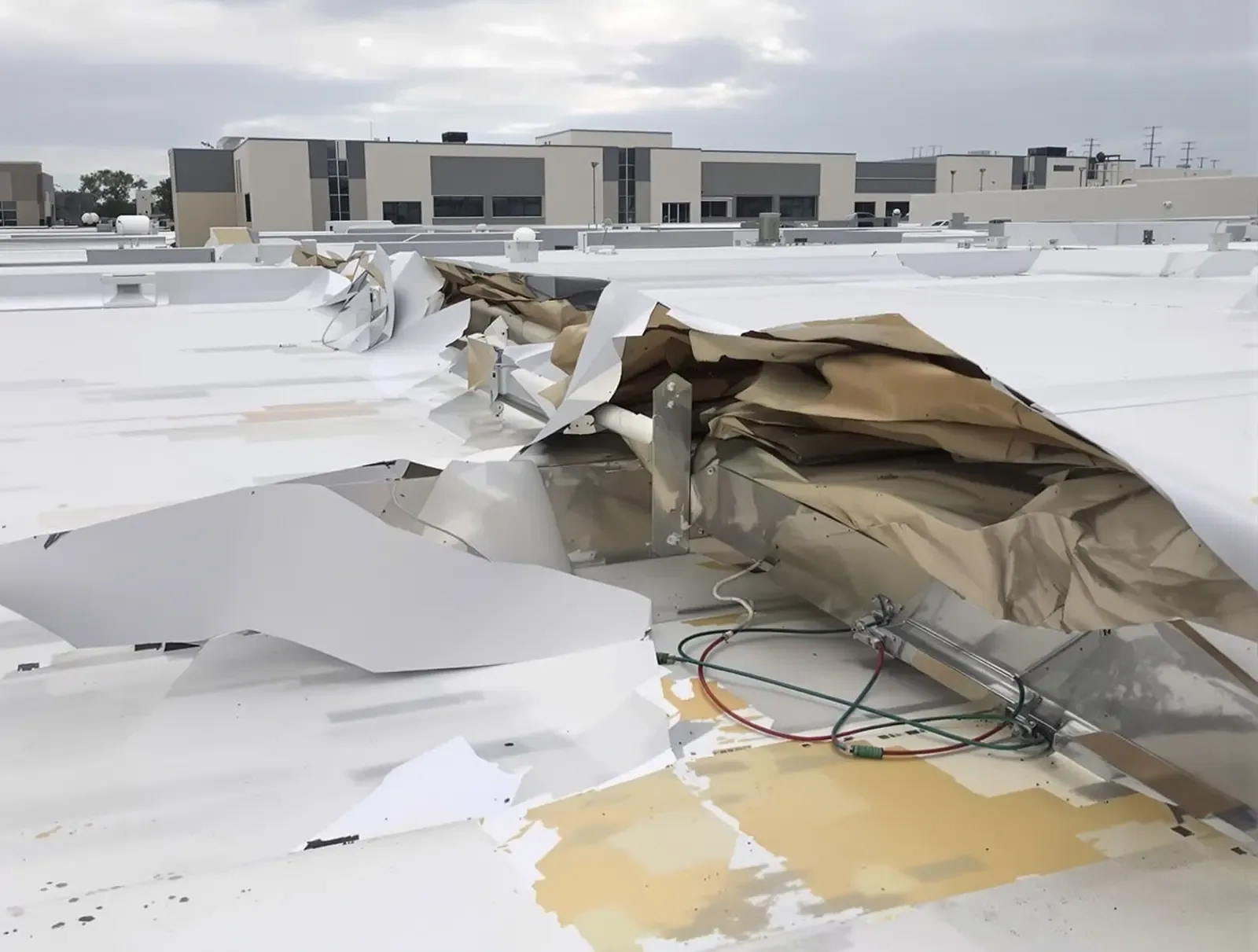
We compare the interior leak location with the roof plan, then examine every flashing in the zone above and uphill from it. Water can travel along the underside of a membrane, along a deck flute or through an insulation joint before it appears, so the first flashing that looks bad is not always the one that leaks. We probe terminations along their full length, check the fastener spacing and the condition of the sealant joint, look for cracks in masonry or in the wall surface above the flashing, and test the corners, where flashing is hardest to make tight.
If a hose test is appropriate and the building can accept it, we apply water in stages, starting at the lowest suspect point and working up, with someone inside watching. This isolates the entry without guessing. The result is a named detail, with a photograph and a location on the plan, instead of a general area.
Corners and intersections get extra time. Where a wall meets a curb, or a parapet turns a corner, the membrane has to be folded or cut and rebuilt, and a reinforced corner or a prefabricated piece is often the only way to make the detail tight. A seam in the wrong place at a corner can leak even when every straight run is perfect. We look at how each corner was built, photograph it from two angles and note whether a reinforced piece is present.
The sequence is the same at a wall, a curb or a penetration. We remove failed sealant and loose material, expose sound substrate and confirm that it will hold fasteners. We clean and prime the surface as the membrane manufacturer requires, install new flashing membrane with reinforced corners, set the termination edge with fasteners at proper spacing, and seal the top with a material compatible with both the flashing and the wall. At curbs, we install a membrane turn that rises to the height the system requires and cap it with counterflashing where the detail calls for it.
Drain collars are rebuilt with a new clamping ring where the old one has corroded. Pipe boots are replaced rather than patched when the rubber has cracked, since a patch over a degraded boot fails again quickly. Where a penetration has been abandoned, we remove it or seal it permanently. Each reflashed detail is photographed before and after, with a scale reference, and the tie-in width where new material meets old is recorded. The photographs show the termination bar spacing and the sealant joint at the top, so a later visit can tell whether movement has reopened the same edge. They also show the condition of the wall surface behind the flashing, since a cracked or crumbling substrate shortens the life of any new termination.
Reflashing is enough when the surrounding membrane is sound, dry and able to bond with new material. If water has traveled under the membrane and wetted insulation, the repair boundary grows to include the wet area, and the scope may include removal of wet insulation and replacement with dry material. If the membrane near the flashing is brittle, cracked or shrunk, the new flashing will not hold, and the boundary moves outward to sound material. Our proposal states which case we found and how we know, with probe results and test-opening photographs.
Repeated flashing repairs at the same location point to a larger problem: a wall that is moving, a curb that is too low, or a drainage condition that floods the detail. We flag the pattern with the dates of earlier work. A flashing damaged in a storm is handled the same way, but the record adds the event date, and wind damage repair adds a check of the perimeter metal.
A flashing goes through a wide daily and seasonal swing in Cary, and sealant softens, shrinks and cracks under that cycling. Sun exposure ages rubber and some membrane materials, and heavy rain tests every joint. Heat-aged flashing is one of the first things to show wear on an older roof, so it is the first thing we check after the summer.
Installation conditions matter as much as the climate. Sealants and primers need dry, clean surfaces and moderate temperatures, so we choose the work window and, in poor weather, use temporary protection with a plan for the permanent repair.
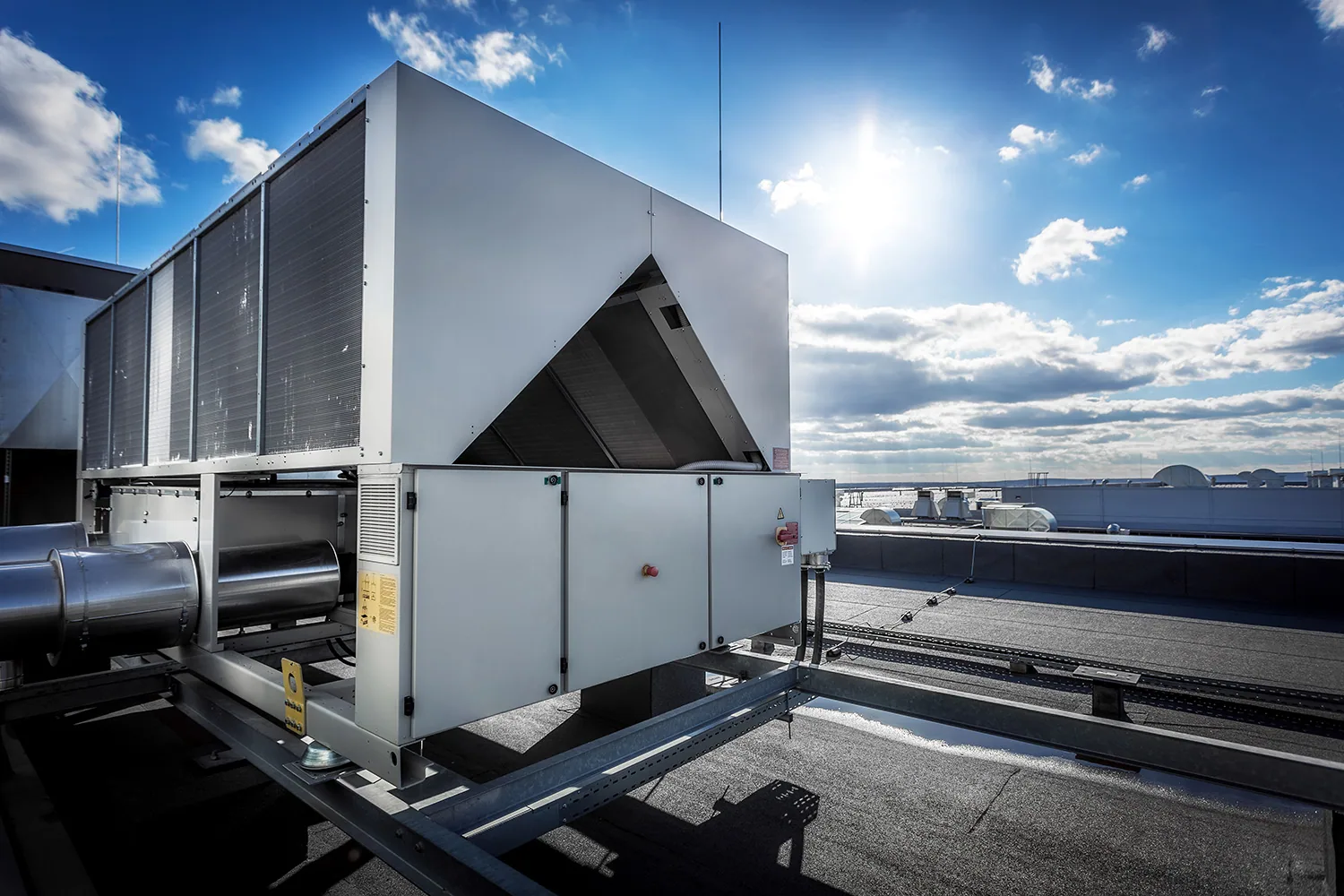
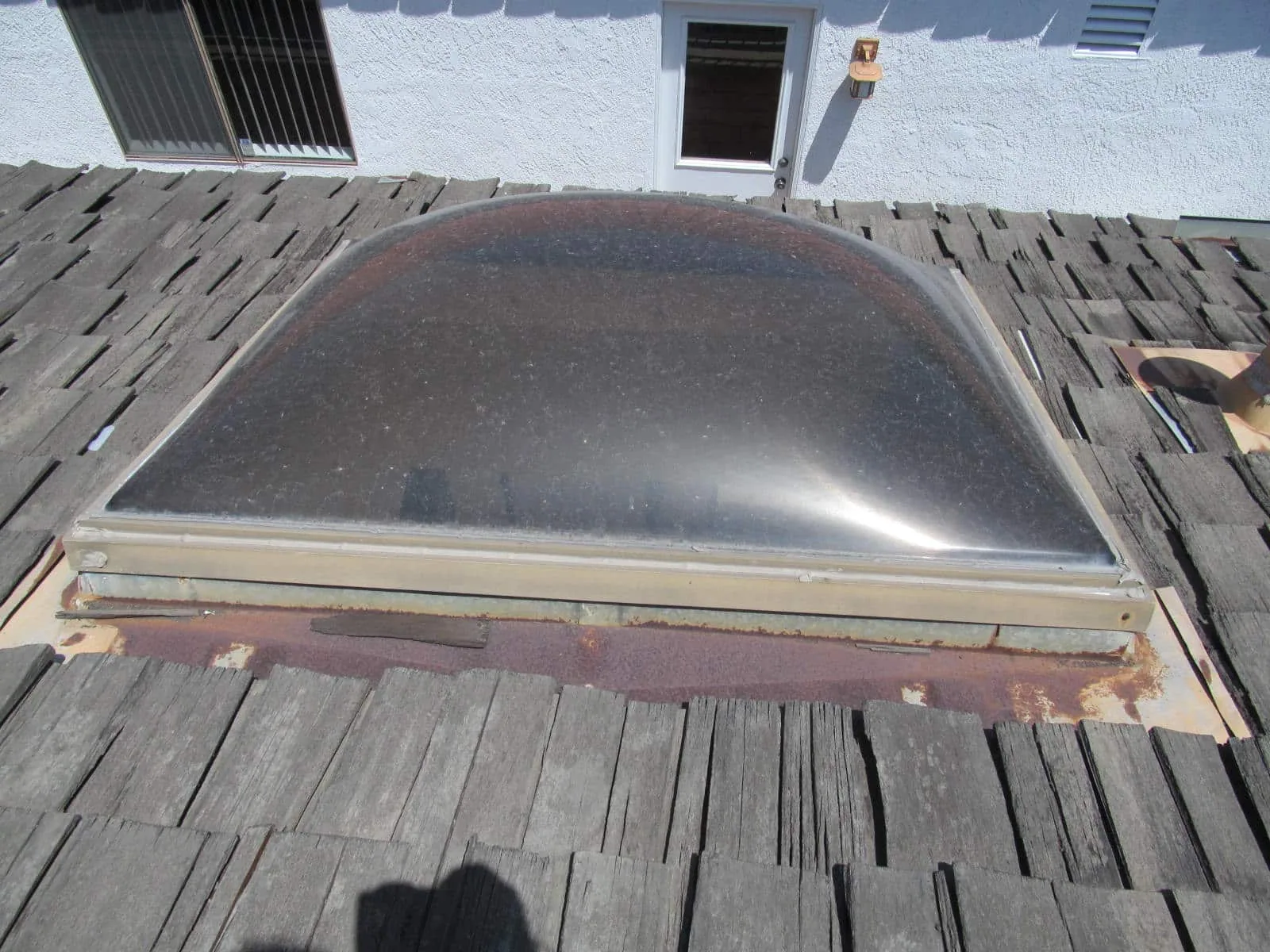
Aerial Center, a multi-building office park along Aerial Center Parkway in Morrisville, and Fenton, a mixed-use district with offices, shops and dining, are two settings where active tenants sit below the roof. Rooftop units, parapets, skylights and mechanical screens appear on many types of buildings, and each adds terminations. We do not infer a roof detail from the setting, so each building gets its own walk. Larger flashing work follows the state building code's permit path, confirmed locally. A membrane puncture beside a flashing and skylight and penetration flashing are repaired in the same visit when the evidence supports it.
Only when the flashing is otherwise sound and the surface will bond. Failed flashing usually needs new membrane, fasteners and a proper termination.
We compare the interior report with the plan, probe each termination uphill of it and, where appropriate, run a staged water test.
The pattern means the cause is not the sealant. We look at wall movement, curb height and drainage.
Replace, when the rubber has cracked. A patch on a degraded boot fails again.
They are built to last when the detail and substrate are sound, and each is logged so it can be inspected on later visits.
Contact Commercial Roofing Cary to arrange a roof walk. We will review the observed terminations and return a scoped next step with each failed detail named.
Roof leaking now? Call for emergency roof repair.
Or email [email protected].