
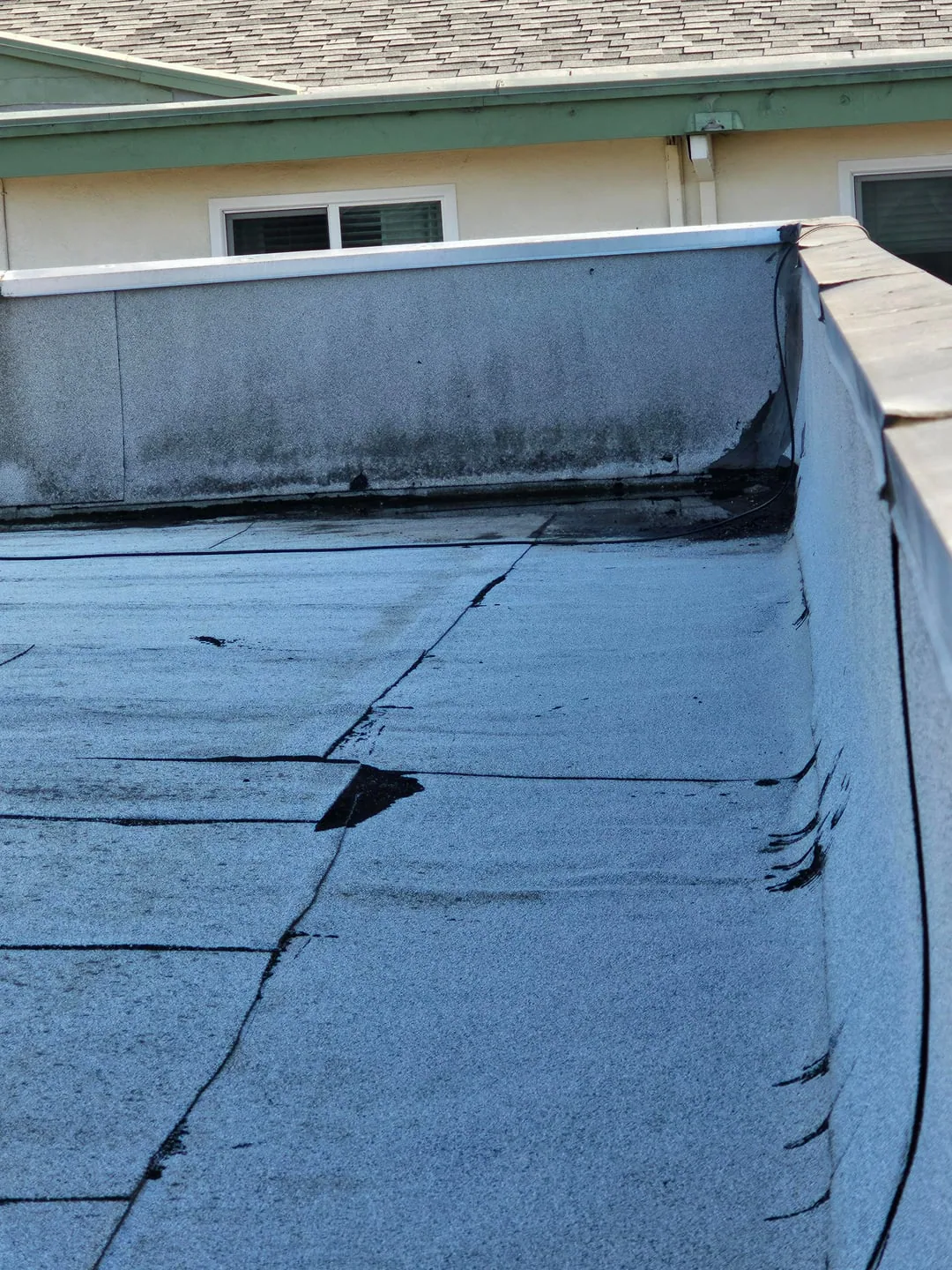
A ladder foot set on an unprotected membrane can leave a puncture the size of a coin and a leak that does not show for months, because the water has to find its way through insulation before it reaches a ceiling. Commercial Roofing Cary repairs punctures and traffic damage on commercial roofs in Cary, NC, beginning with a full search of the work area. We locate every break, test the insulation beneath it, prepare the surface to the substrate condition it actually has and install a patch that fits the membrane, so a small opening is closed once and does not return as a larger repair.
Rooftops are workplaces. Technicians service units, contractors run lines, antenna crews drill and carry, and someone drops a tool or drags a pallet. Heat softens many membranes, so a boot heel that leaves no mark in cool weather can scuff or cut a surface in summer. Tree limbs, windblown metal and fasteners from other work can also pierce a membrane. Foot traffic on an unprotected path wears the surface through repeated passes, and a worn strip becomes a thin strip and then a split.
The pattern of damage tells its own story. A line of scuffs from a hatch to a unit points to a service route. A cluster of punctures near a curb suggests recent work. Random cuts across a field may point to debris. We record the pattern because the fix is not only the patch but also the habit that created the damage, and a walk pad or a changed route can stop it.
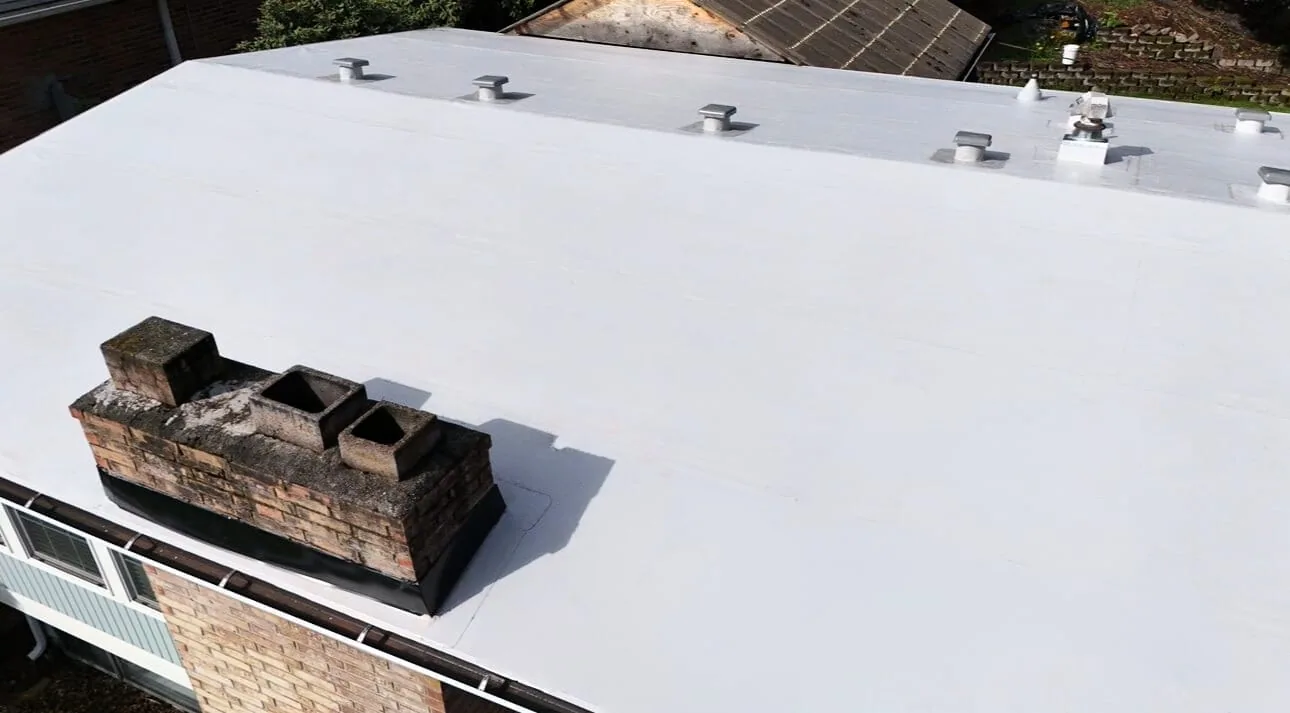
We start with a close visual sweep in raking light, which shows dents, cuts and gouges that flat light hides. We check around every curb, hatch and unit, along walk routes and at spots where debris collects. Probes and moisture meters help where water may have entered: a reading above the surrounding area suggests wet insulation, and a test opening confirms it. Infrared scanning can map a larger area when the roof is dry, and we mark suspect locations on the membrane before we cut anything.
Each puncture is numbered, photographed with a scale reference and marked on the roof plan. The numbers stay the same from visit to visit, so a manager can see whether a mark from last season has been repaired, has been walked over again or has become a leak. We classify it by size and depth: a scuff that has not reached the reinforcement, a cut through the membrane, a hole through the membrane and the insulation. The classification sets the repair and the cost.
A scuff that has not breached the membrane may only need cleaning and a protective layer, or no repair at all if the thickness remains sound. A small cut is cleaned, the area is roughened or primed as required, and a patch with rounded corners is welded or adhered, extending well past the damage onto sound material. A larger hole needs the damaged membrane cut out and replaced with a section, with the insulation below checked and, if wet or crushed, replaced to a dry, flat surface before the patch goes on. Thermoplastic membranes such as TPO and PVC are patched with welded pieces, while EPDM uses adhesive and cured patches.
Materials must match. A patch of the wrong chemistry may stick for a month and then peel. We check the roof type, confirm compatibility, prepare the surface as the manufacturer requires and probe the patch edge afterward.
A puncture that has leaked for some time may have soaked the insulation under it. Wet insulation loses thermal performance, holds weight and can corrode the deck, so patching the membrane over it traps water. We open the area, measure the extent of the wet material, remove it and replace it with dry insulation of the same type and thickness. The boundary of the removal is marked with photographs, and the patch extends beyond it onto dry, sound membrane.
If moisture is widespread, the report says so and presents the options: a larger section repair, a recover where the assembly allows or a replacement. NOAA normals for the Cary station record 48.80 inches of annual precipitation, so openings admit a lot of water over a year, and the cost of waiting grows with each storm.
Once a puncture is repaired, the route that caused it is addressed. Walk pads of a compatible material go down along the paths between hatches and equipment, and around units where technicians kneel. Ladder feet get pads or are set on plywood. A sign at the hatch tells visiting trades to stay on marked paths. These measures cost little compared with a repair, and they protect the warranty position of the membrane, since manufacturers often expect protection on service routes. Cary's summer heat makes the protection more useful, since a heated membrane marks more easily.
Rooftop equipment fills the commercial buildings of Cary's corporate parks, including the Weston Parkway corridor beside Lake Crabtree and Crossroads Corporate Park at the I-40, US 1 and US 64 crossroads. Every rooftop unit is a reason for someone to be on the roof. A building's type does not tell us its roof condition, so we walk it. Larger work follows the state building code's permit path, confirmed locally. A hole beside a termination is handled together with flashing failure work, and impact marks after a storm are sorted with hail damage findings.
The record holds the roof plan with each puncture numbered, photographs before and after, the size class, the insulation findings, the patch material and size, and the probe check of the finished edge. If a trade contractor was working on the roof at the time of the damage, the date and the trade are noted without blame, because a neutral record is more useful for assigning the cost than an argument. Owners who track roof access with a sign-in sheet can match it to the log, which turns a vague dispute into a simple lookup.
We also record the interior side: the room, the ceiling tile or the stored goods that were exposed, and the date the leak was first seen. That detail lets a manager see how long water was entering and whether the repair closed the interior symptom. When the interior symptom returns, the first question is whether the patch failed or a second opening exists, and the record makes the answer faster to find.
It can be if water is entering. Even a dry puncture should be patched before the next storm, since it is a path into the insulation.
Large enough to extend onto sound membrane in every direction, with rounded corners. The size is recorded in the report.
They reduce it along service routes and at kneeling points. Pads must be compatible with the membrane.
Color may differ on an aged membrane, but chemistry and thickness are matched so the bond holds. We note any visual difference.
Call us, with photographs if possible. We record the date and area so the repair can be assigned fairly.
Contact Commercial Roofing Cary to arrange a roof walk. We will review the observed damage and return a scoped next step with each puncture located and classified.
Roof leaking now? Call for emergency roof repair.
Or email [email protected].