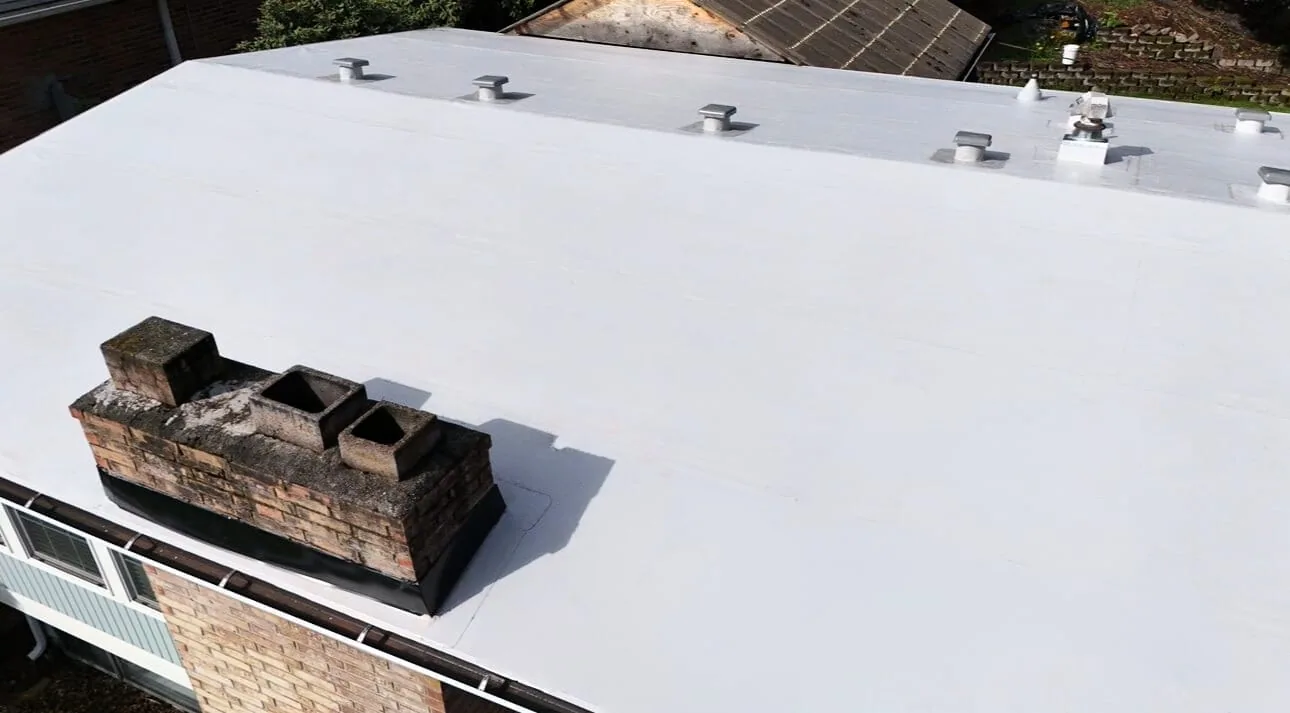
An edge metal return that has lifted half an inch after a windy night looks like a cosmetic problem from the parking lot, and from the roof it looks like the start of a path for water and for the next gust. Commercial Roofing Cary repairs wind damage to commercial roofs in Cary, NC, beginning with the perimeter, where uplift loads concentrate, and moving inward along the membrane. We photograph the lifted detail, probe the surrounding seams and fasteners, dry in what is open and mark the repair boundary before anyone sets a patch, so the work addresses the way the roof actually failed.
Wind pulls hardest at corners, edges and projections, because air flowing over the roof speeds up and lowers pressure at those locations. The first signs are therefore at the termination edge, the coping and the edge metal return. A cap that has lifted at a joint, a cleat that has pulled from its base, or a gutter that has separated from its fascia lets wind enter beneath the membrane. Once air gets under a membrane edge, the field can flutter, and fasteners or adhesive that held for years begin to let go.
We check the perimeter in a continuous sweep, then examine the field for ridges, wrinkles and billowing that indicate lost attachment. A rooftop unit or a skylight curb can also be a starting point, since a loose cover or a displaced flashing gives wind a way in. Debris on the roof is recorded, along with any membrane puncture it caused, because a piece of metal that traveled across the surface can have punctured the membrane some distance from where the wind found its way.
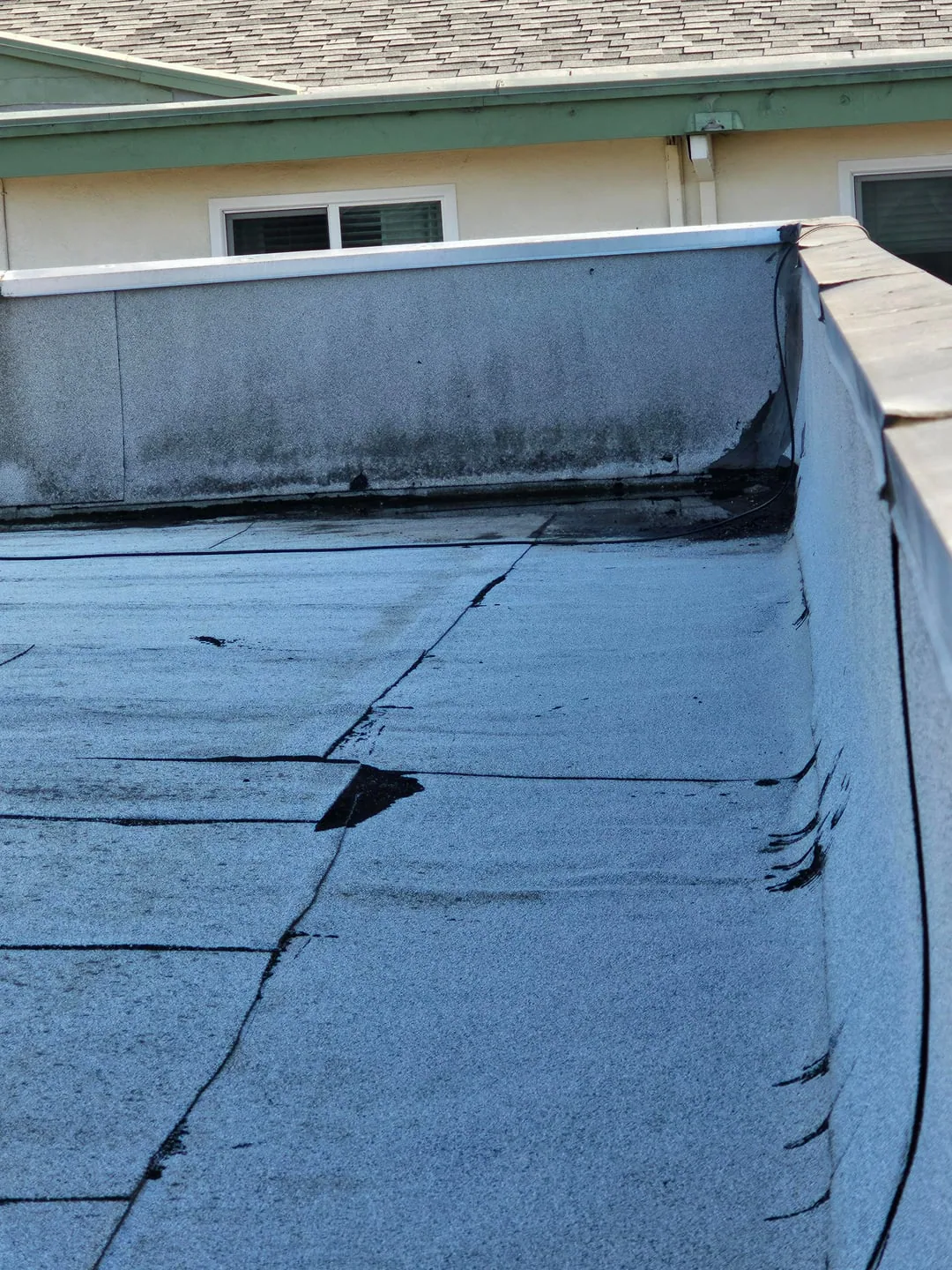
The two look similar from a distance and call for different repairs. A lifted edge is a failure of the metal and its attachment; the fix is to reset, replace or re-secure the run, with new sealant and compatible fasteners set into sound substrate. A loosened fastener in the field means the membrane attachment has lost holding power, and the question is how many others have too. We probe the membrane at intervals, check fastener heads and plates by touch and, where the system allows, pull a few to see how they sit in the deck.
If a mechanically attached single-ply roof shows several loose plates in a row, the repair boundary grows beyond the visible damage. In a fully adhered system the test is different: we look for areas that sound hollow or lift when pressed. The aim is to find the extent of lost attachment before closing the roof, because a patch over a loose area only moves the failure to its edge.
Rooftop equipment gets the same scrutiny. A unit panel blown open, a vent cap displaced or a flue cover missing can admit rain far from the perimeter, and each is a small repair if caught early.
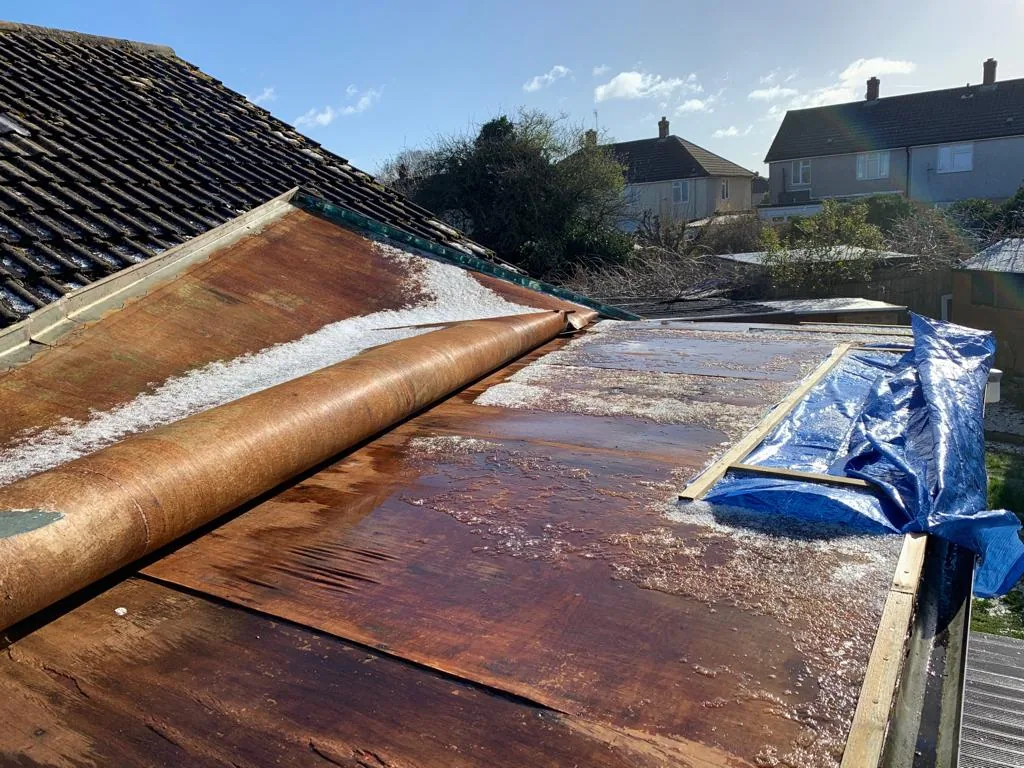
The first visit protects the building. If wind has opened the membrane or torn flashing, we cover the opening with temporary material, secure it against the next gust and photograph the condition before and after. Loose metal is removed or fastened so it cannot become debris. Interior areas below the opening are checked, and the manager receives a list of rooms that need attention. Emergency calls are answered at any hour, and the dry-in is entered as its own record with the date, the materials and the area covered. Photographs of the loose metal before it was secured go into the same record, because once it is fastened down the original condition cannot be seen again. The manager receives the list of rooms to check that same day.
The permanent repair follows once the roof is dry enough to accept it. We prepare the surface, repair the substrate where fasteners have lost grip, rebuild failed flashing, replace damaged membrane and set edge metal with the correct fastener spacing and sealant. Every step gets a photograph, and the tie-in width at the border of new and old material is noted so a later visit can find it.
Regional weather records for 1950 to 2005 list wind damage, hail and tornado reports across the Raleigh forecast area, which is background for the region and not a finding about Cary itself. Business parks such as Crossroads Corporate Park and the Eastern Cary Gateway planning area show the variety of building types a post-storm walk might cover. A building's exposure depends on its own height, shape and surroundings, which we assess on the roof.
We also use the regional record to set a habit. After a severe-weather day, the roof is walked, edges and curbs are checked, and the results are added to the file. In a wet, hot Cary year, a roof with a weakened edge faces both heavy rain and heat cycling soon afterward.
The boundary follows the evidence. A single displaced coping run may need only that run, its cleats and the membrane beneath it. A torn membrane corner may need a new corner with reinforced detailing and a weld or adhesive bond extending onto sound material. A widespread loss of attachment may need a recover or a replacement section, which we price next to the repair. Larger work gets its permit path confirmed locally before the crew mobilizes. For roofs that have been damaged more than once, a replacement may cost less over time than repeated repair, and we show the comparison with the same assumptions.
Tie-ins deserve a note of their own. Where new membrane meets old, the tie-in width, the lap direction and the sealing method determine whether the repair stays closed through the next storm. We record the width, take a photograph with a scale reference and mark the location on the plan. If the old membrane at the border is too brittle to take a bond, the boundary moves outward to the first sound material, and the proposal states how far and why.
The record lists the event date as reported, the weather, the roof plan with numbered findings, photographs, probe results, temporary work, permanent work and open items. It separates damage that appears to come from the event from wear that was already present, such as aged sealant. Owners who work with an adjuster can pass the same file along. Storm damage roof repair and edge metal and coping work follow the same sequence of photograph, dry-in and documented repair.
Wind loads run along an edge, so a visible failure often has weaker neighbors. We walk the full run and test the fasteners.
Sometimes. The substrate must be sound and the material able to take a bond. Otherwise a section is replaced.
A temporary cover is placed and secured first, with photographs. The permanent work follows when conditions allow.
Yes, in the record. Fresh tears and displaced metal are listed apart from weathered surfacing or aged sealant.
The assembly's rating comes from its listing and installation. We follow the manufacturer's attachment requirements and record the fastener pattern used.
Contact Commercial Roofing Cary to arrange a roof walk. We will review the observed details, dry in what is open and return a scoped next step with the repair boundary marked.
Roof leaking now? Call for emergency roof repair.
Or email [email protected].