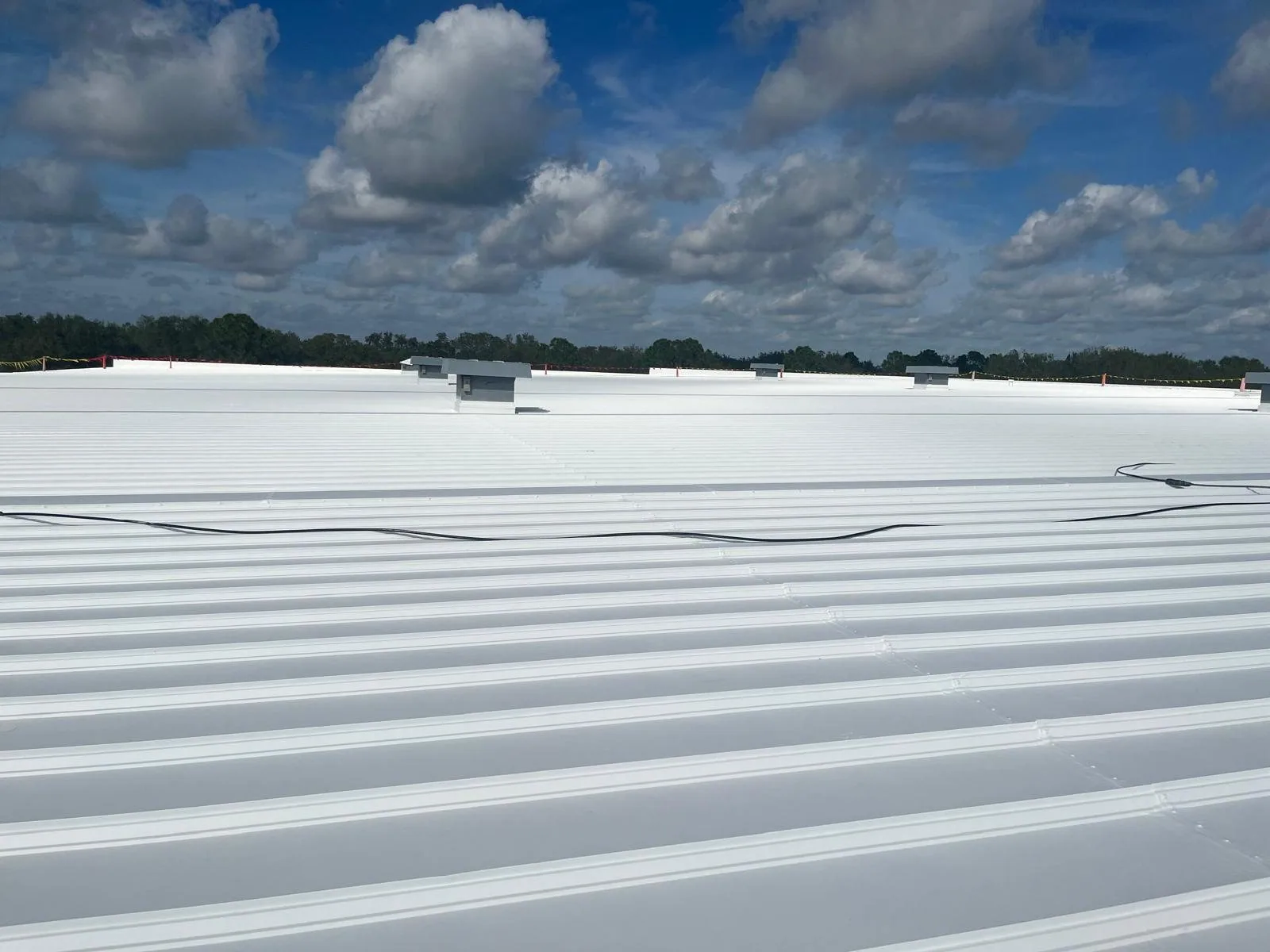
An acrylic coating is a water-based product, and that single fact shapes where it works well and where it should be left alone. It cures by losing water, so it needs a dry surface, a rain-free window and drainage that does not leave pools sitting on the film. On a roof that drains freely, it forms a bright, reflective layer over a sound substrate, seals fasteners and seams and slows the weathering of the surface beneath. On a Cary, NC roof we check how water moves, what the old surface is made of and how well it will hold a coating before we put acrylic in the scope.
Acrylic coatings are reflective, flexible within a normal range and bond to many existing roofing surfaces, including aged bitumen, smooth metal, spray foam and some single-ply membranes. They help hold surface temperature down in summer and protect the substrate from ultraviolet light. They do not repair a failed seam, replace lost insulation or correct poor slope, and they do not tolerate long periods of standing water, which can soften the film and cause blisters.
That limit matters in Cary, where the NOAA normals record 48.80 inches of annual precipitation. A roof that dries within a day of rain is a suitable candidate. A roof with persistent ponds is usually better matched to silicone or to a drainage correction first. Our survey measures where water collects and for how long before the system is chosen. A pond that clears within a day is treated as normal drainage, while one that lingers is measured and photographed so the owner can see the depth before any coating is priced.
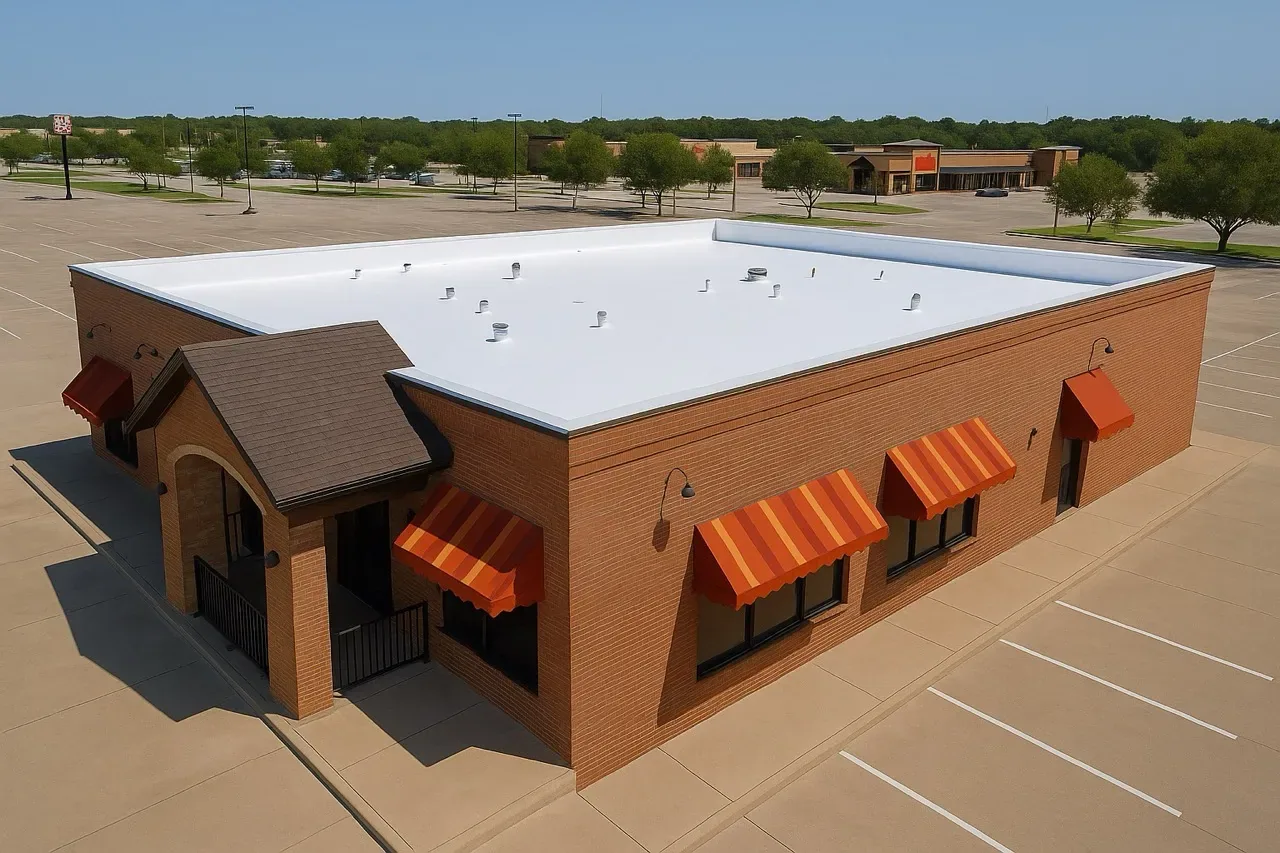
The first test is moisture. Infrared scans and moisture meters find wet insulation, and test openings confirm what the instruments suggest. A wet roof cannot be coated, since trapped water will blister the new film. The second test is adhesion: we clean a small area, apply the proposed coating and check the bond after cure.
We also read the surface. Chalked membranes, oxidized asphalt and old coatings each need different preparation, and some contaminated surfaces need a primer. Heat-aged seams, lifted laps and cracked flashings are marked for repair, because a coating can follow roof contours but cannot hold a split seam closed. The Cary station records 32.9 days per year at or above 90°F, so heat-stressed laps and sealants are among the details we look at first. Photographs by roof zone become the starting record for the work.
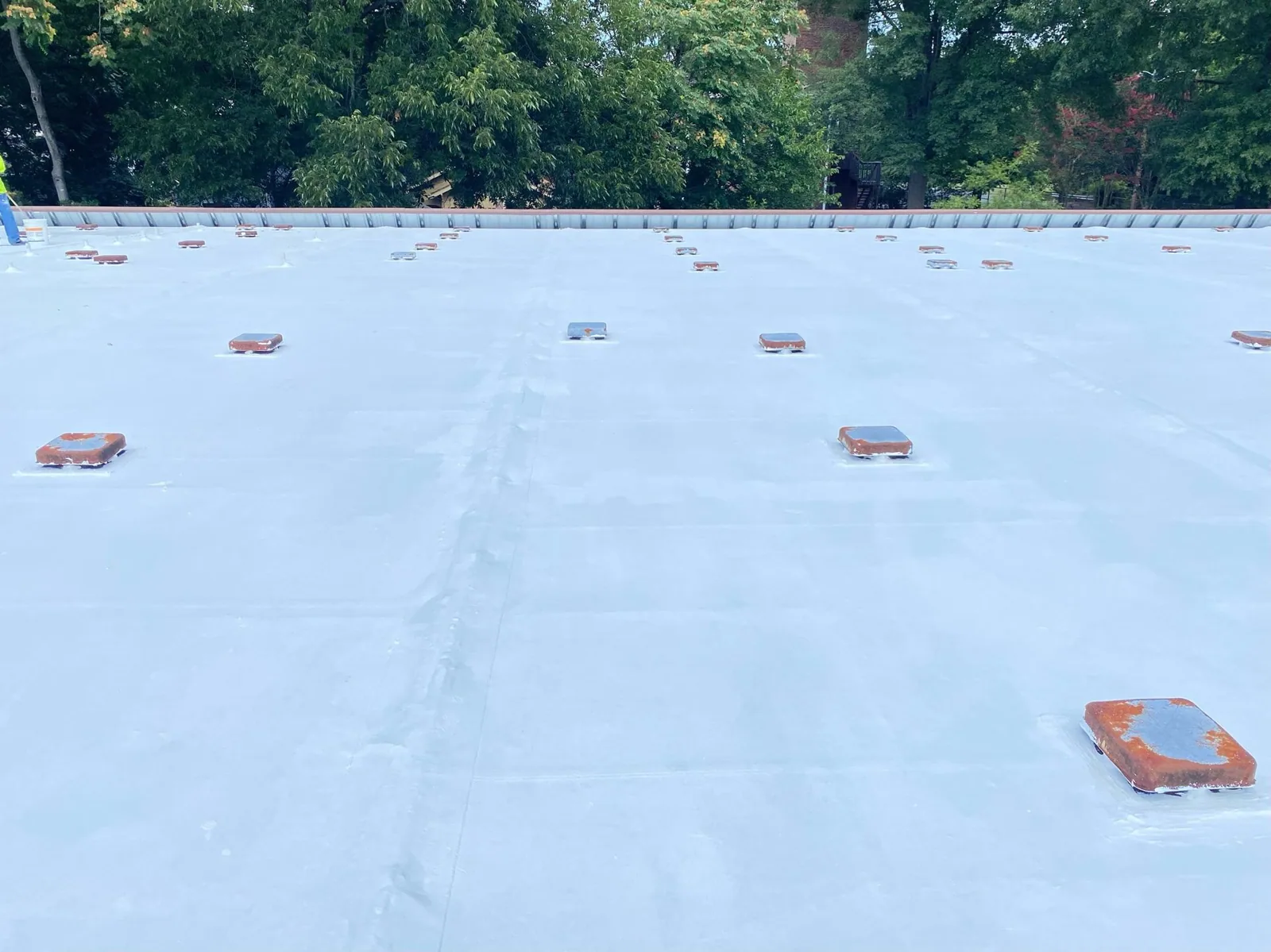
On a bitumen roof, we also look for oil bleed from the asphalt, which can stain a white coating yellow, and we use a stain-blocking primer where the test patch shows discoloration. On metal, acrylic needs a rust-inhibiting primer over any exposed steel, and fasteners get a sealant and a fabric reinforcement before the field coat so they do not telegraph through.
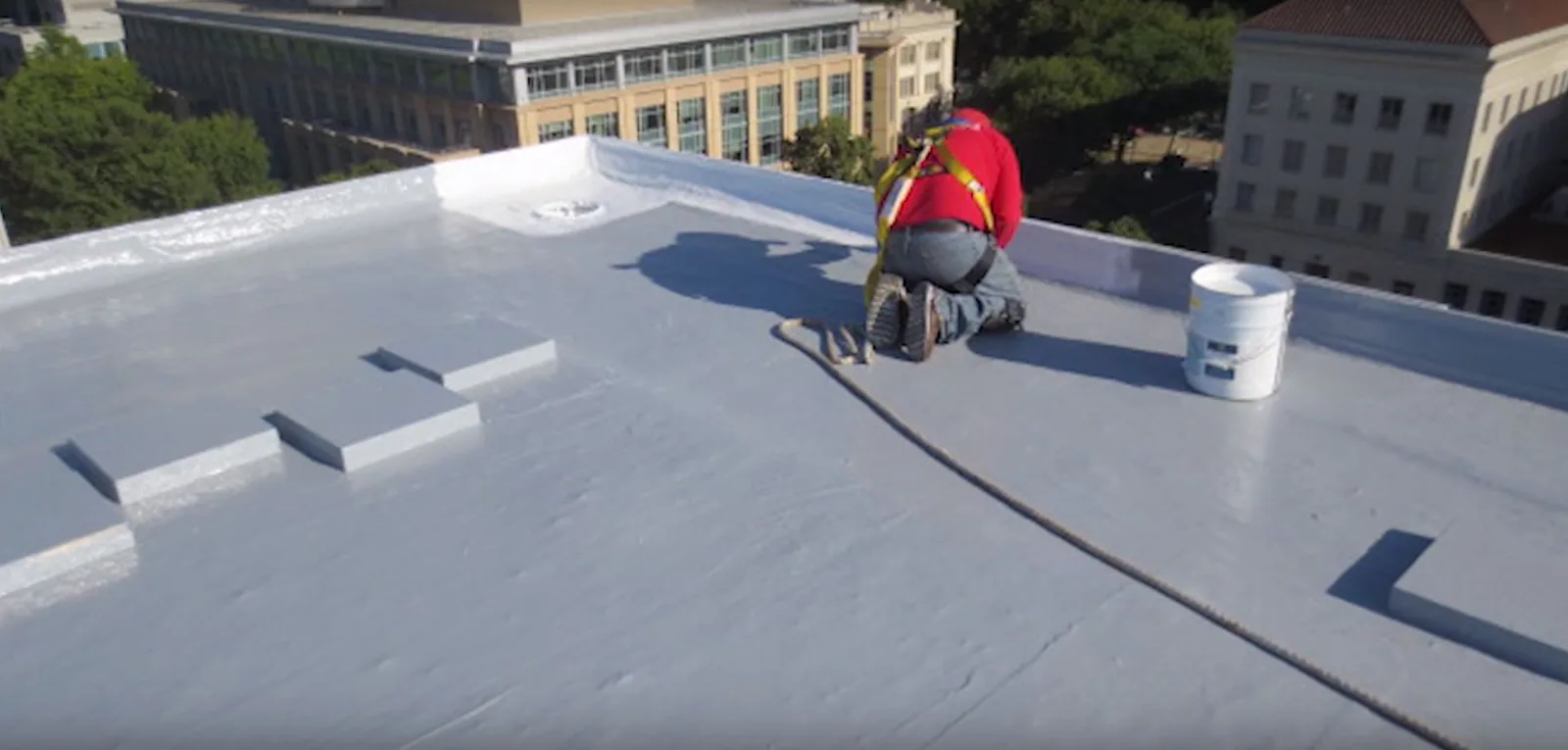
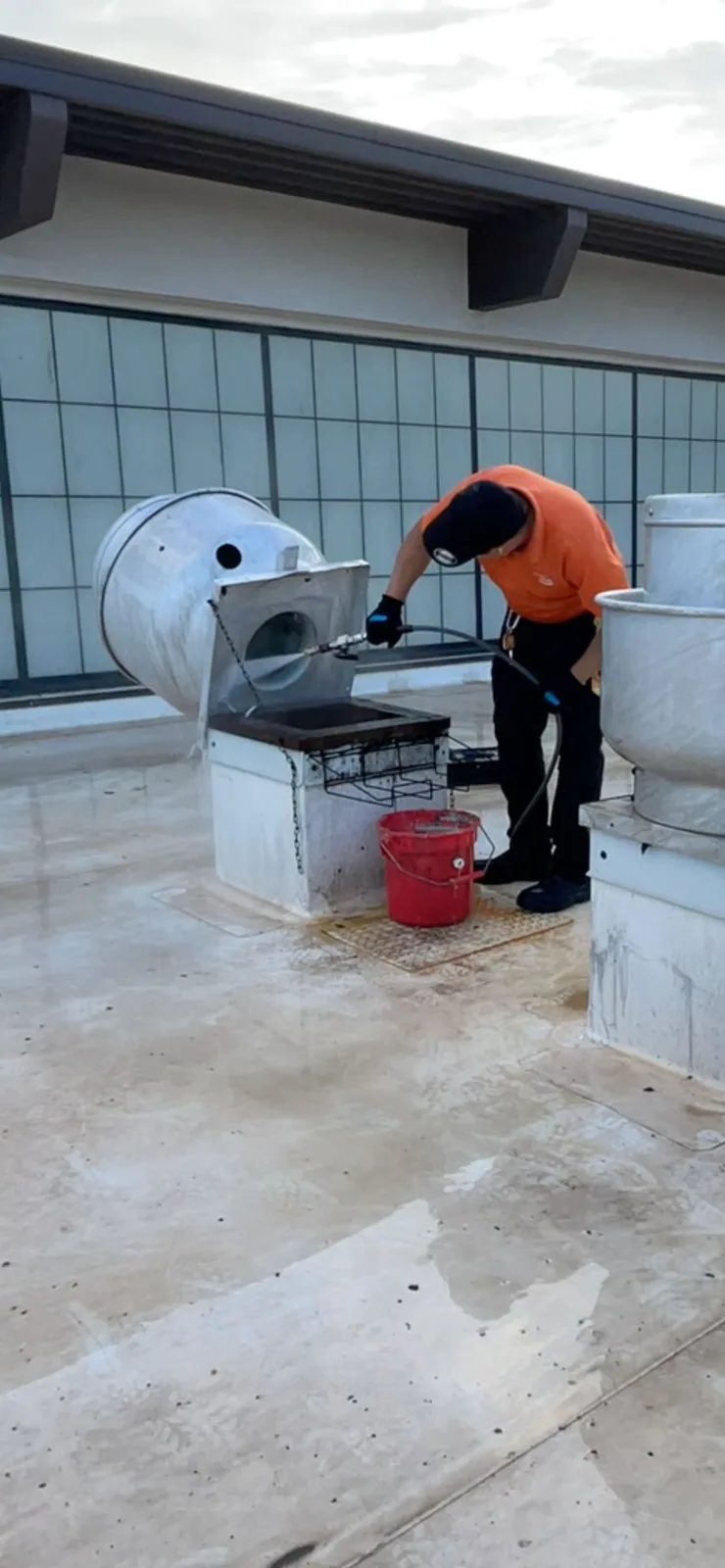
The roof is cleaned by pressure washing and allowed to dry. Repairs are made in sequence: seams are sealed or welded, fasteners are replaced, flashings are rebuilt, and cracks and blisters are cut and patched. Penetrations, curbs and drains receive reinforcing fabric set in a base coat. Primers are applied where the surface requires them.
The field coat is applied in two or more passes at the specified coverage, with the second coat running perpendicular to the first to close pinholes. Weather windows are important: acrylic needs time to cure before rain, and dew and cool nights can delay curing. We watch the forecast through the afternoon, stop early when rain threatens, and protect uncured areas. Final inspection checks film thickness, edge coverage and drains before the roof is released.
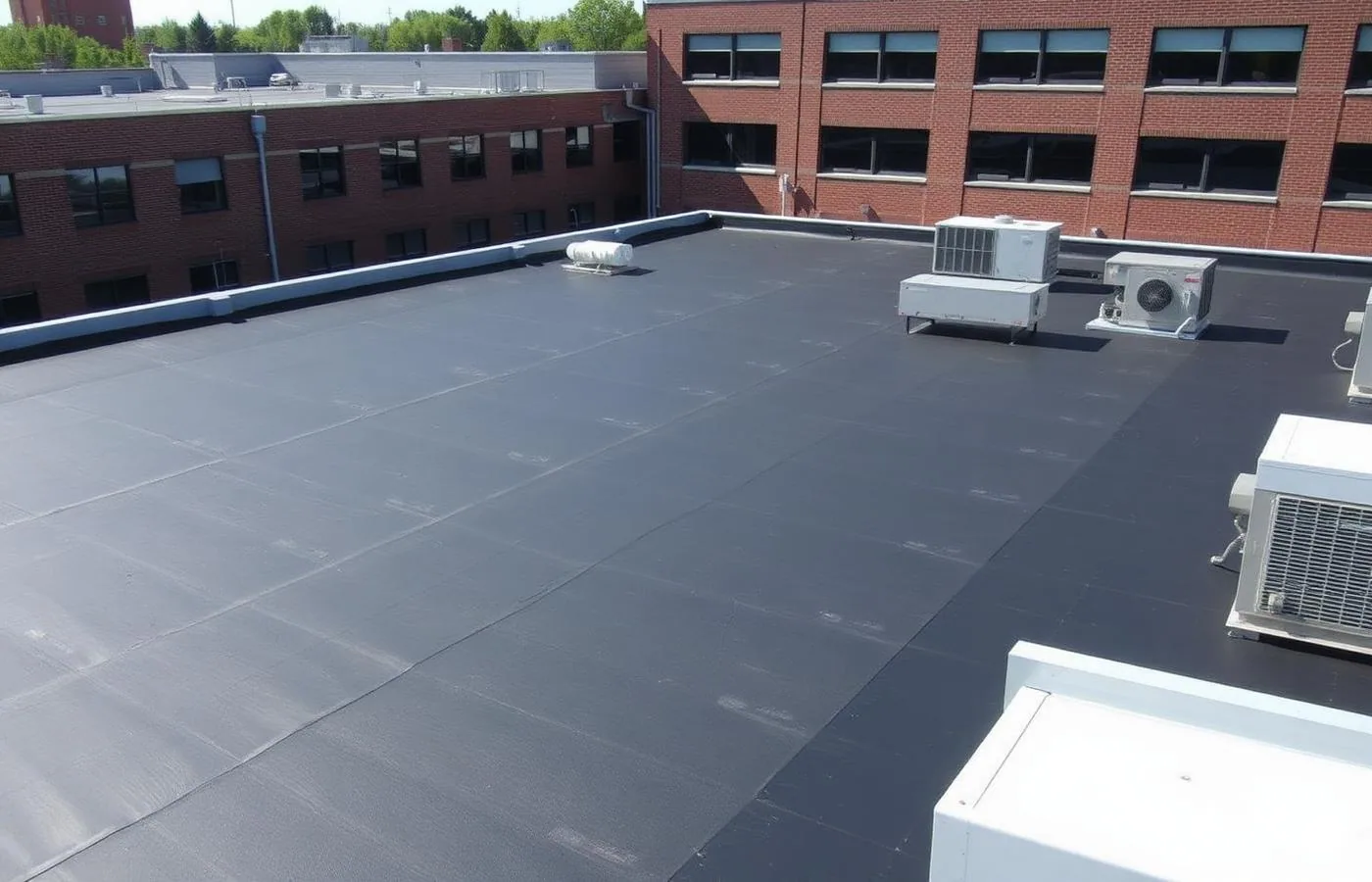
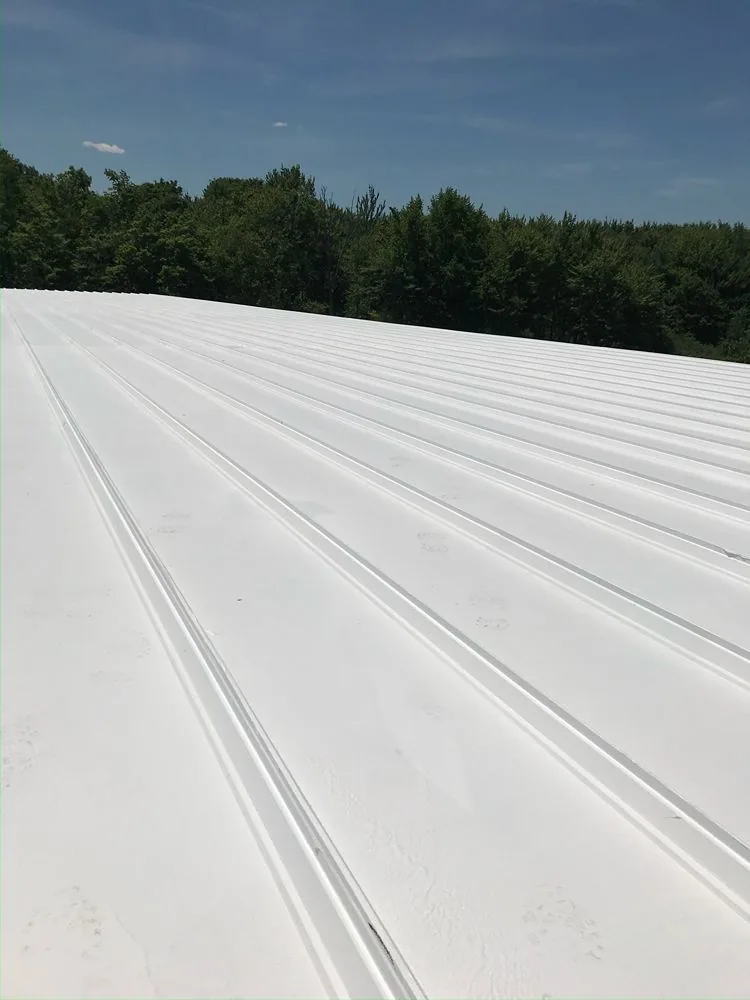
Commercial buildings around Knightdale, about nine miles from Raleigh, include clean technology, healthcare, technology and manufacturing sectors. Zebulon, served by US 64 and US 264, lists life sciences, advanced manufacturing and distribution among its sectors. Those sectors describe local industry and not roofs, so we look at each building directly and decide on a coating only when the existing surface and drainage support it. A modified bitumen roof with intact plies and lost granules is one natural candidate, and a smooth-surfaced metal roof with sound panels is another.
A distribution building and a small clinic ask different things of a coating. The first may have long, low-slope fields with few penetrations, while the second may have many rooftop units and tight access.
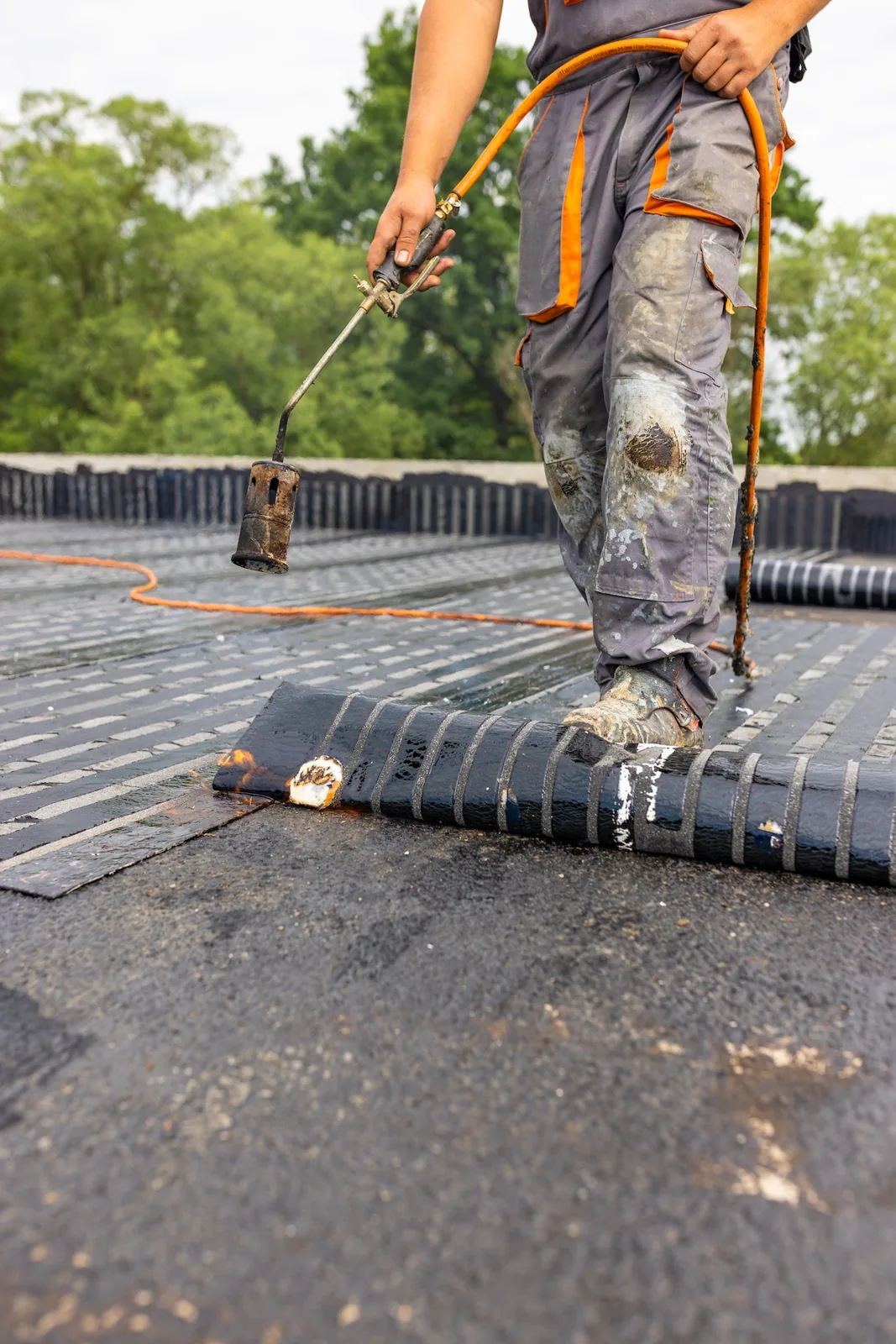
A coating extends the service life of a sound roof, but it is not a cure for an old one. When infrared surveys show widespread wet insulation, the plan moves to replacement. When the roof is dry but tired, a coating restoration may be sufficient. A recover adds a new membrane over a dry roof when a coating cannot bridge the defects. We write the three paths side by side, with the assumptions each one carries, so the owner sees what is being bought. Timing is part of the comparison. A coating job usually goes faster than a tear-off and leaves the existing roof in service, which suits an owner who needs to keep a building running while a capital plan is built for the later replacement.
Acrylic is water-based, so odor is lower than with solvent products, but the work still affects the building. Pressure washing runs water to drains and downspouts, so outlets are screened and the discharge points are checked before the first wash. Spray application can drift, and we mask vents, skylights, glass and parked vehicles in the wind path. Tenant HVAC intakes are located on the roof plan and covered or shut down in agreed windows.
Coated roofs are slick while wet and soft while curing, so we post the roof as closed to service staff until the film has set. If a technician must reach a unit, we lay temporary boards or walkway pads along the route. Material is delivered in sealed pails and staged at one location. Debris, empty pails and washed-off dirt leave with the crew each evening, which keeps tenant entries and loading areas clear.
The closeout shows coating coverage, test results, repairs and any area excluded from the work. A maintenance plan schedules inspections and cleaning. Coatings wear from the surface, so a periodic recoat is part of the plan. State building code amendments apply to permitted work, and we confirm the local requirement at the start.
No. It needs a dry surface and reasonable temperatures to cure. We schedule around forecast rain, dew and cool mornings, and stop early when the window closes.
Trapped moisture in the substrate, ponded water or application before the surface was dry. We find wet areas first and keep the coating out of places that cannot dry.
White acrylic reflects sunlight and lowers roof surface temperature compared with dark surfaces. Whether that changes building energy use depends on insulation, equipment and usage, which we do not promise.
It is washed, dried, repaired and primed as the surface requires. Seams, flashing and fasteners are corrected first, and a test patch confirms adhesion.
Yes, after cleaning and an adhesion check. Acrylic typically bonds well to itself, so a maintenance recoat can renew the film before the underlying roof is exposed.
Contact Commercial Roofing Cary to arrange a roof walk. We will scan for moisture, test adhesion and send a scoped next step for the building.
Roof leaking now? Call for emergency roof repair.
Or email [email protected].