Above a hangar floor, the roof spans a distance with no interior column to interrupt it, and the aircraft below cannot be moved for a drip. That clear span means the roof deck, the purlins and the trusses carry the building's weight in a way that smaller buildings do not, and it also means a leak lands on a wing, an engine cowling or a maintenance stand. We begin a hangar roof assessment by looking at how water leaves the roof, at the gutters and the edge near the hangar door, and at the long runs of panel or membrane that cross the span. Cary, NC is near RDU International Airport, and its business areas along Weston Parkway, and neighboring Morrisville, sit close to the airport, which makes the question of how to roof around aircraft a practical one for properties in those areas.
The door header is the place where a hangar roof meets a moving structure. Large doors, whether sliding or bi-fold, open along a track and seal against a frame, and above them the roof edge and wall flashing must shed water away from the opening. If the flashing at the header fails, water drips into the doorway, across the track and onto the floor.
We inspect the edge metal return above the doors, the sealant at the termination, the gutter that catches runoff and the downspouts that carry it clear of the apron. Thermal movement is greatest across a long hangar front, so expansion joints, panel laps and fasteners get a second look. A standing seam metal roof is a common choice for a clear span, and its clips and seams are checked for movement.
Translucent panels and skylights over a hangar floor give daylight, and they also add edges that move differently from the metal around them. We check the sealant and fasteners at each one, and note any crazing or yellowing in the panel itself.
Aviation buildings care about foreign object debris: loose screws, scraps of metal, bits of membrane and fasteners can damage engines and tires. A roof crew working over a hangar or beside a ramp needs a strict debris plan. We use magnetic sweepers, catch trays, closed trash bags, tool tethers and end-of-shift walks of the ground below, and we log them.
In Morrisville, the North Carolina Army National Guard's 449th Combat Aviation Brigade occupies about 35 acres, and any aviation property nearby raises the same debris questions. For such work, military installation roofing practices on base access, badging and escorts are used as a model for scheduling and site rules.
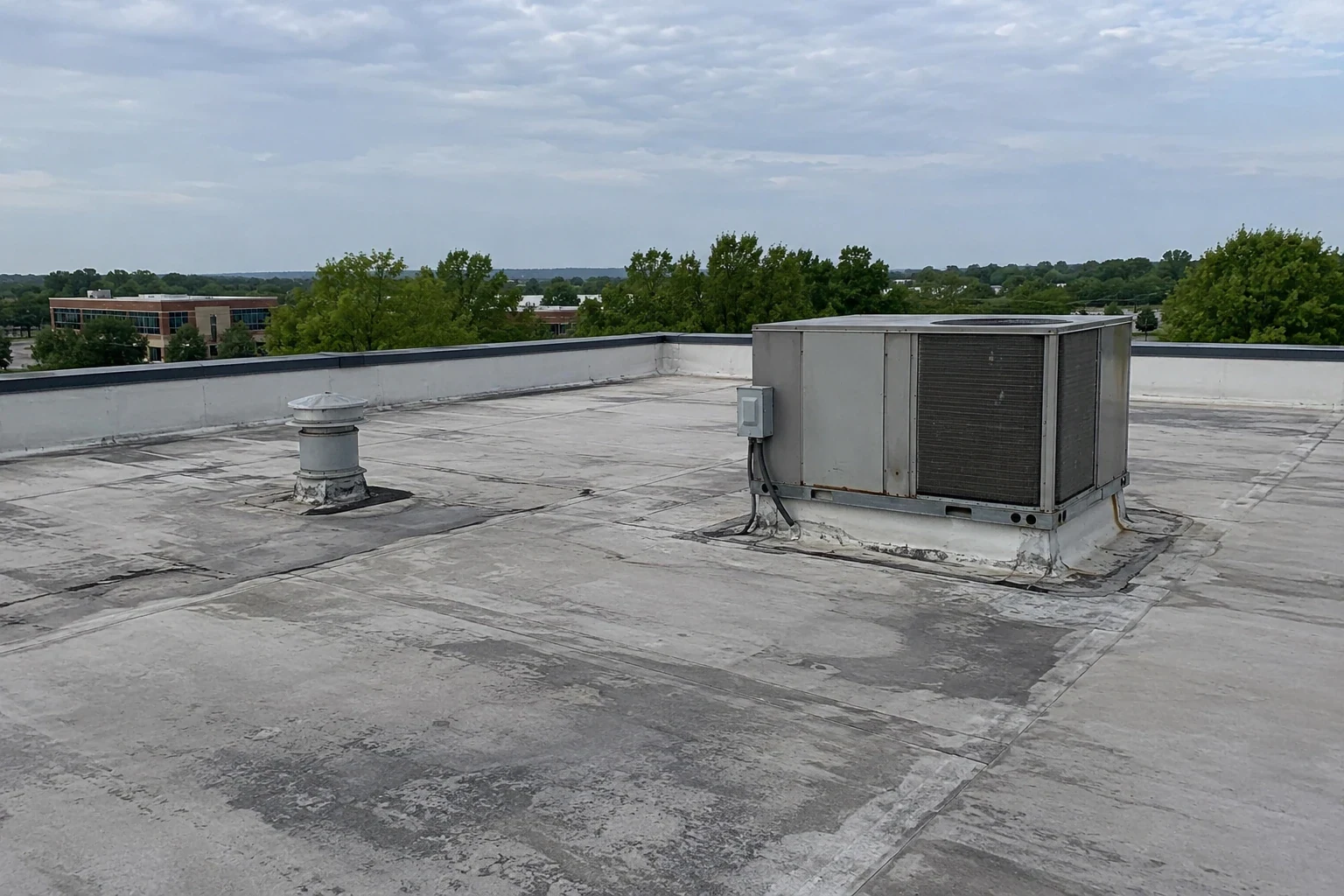
A hangar inspection records the panel or membrane condition along each bay, the state of every skylight or translucent panel, the gutters, the penetrations for fire suppression and ventilation, and the condition of the deck underneath where it can be seen. We also note any signs of past leaks: stained insulation, rust on purlins or marks on the ceiling.
With a clear-span roof, a deflection check along the length can reveal ponding or sagging even when a drain is clear. Heat and water both work on a hangar roof, since Cary averages 48.80 inches of precipitation a year and reaches 90°F on 32.9 of its days. We pair the walk with a drone roof inspection when the span makes a full walk impractical.
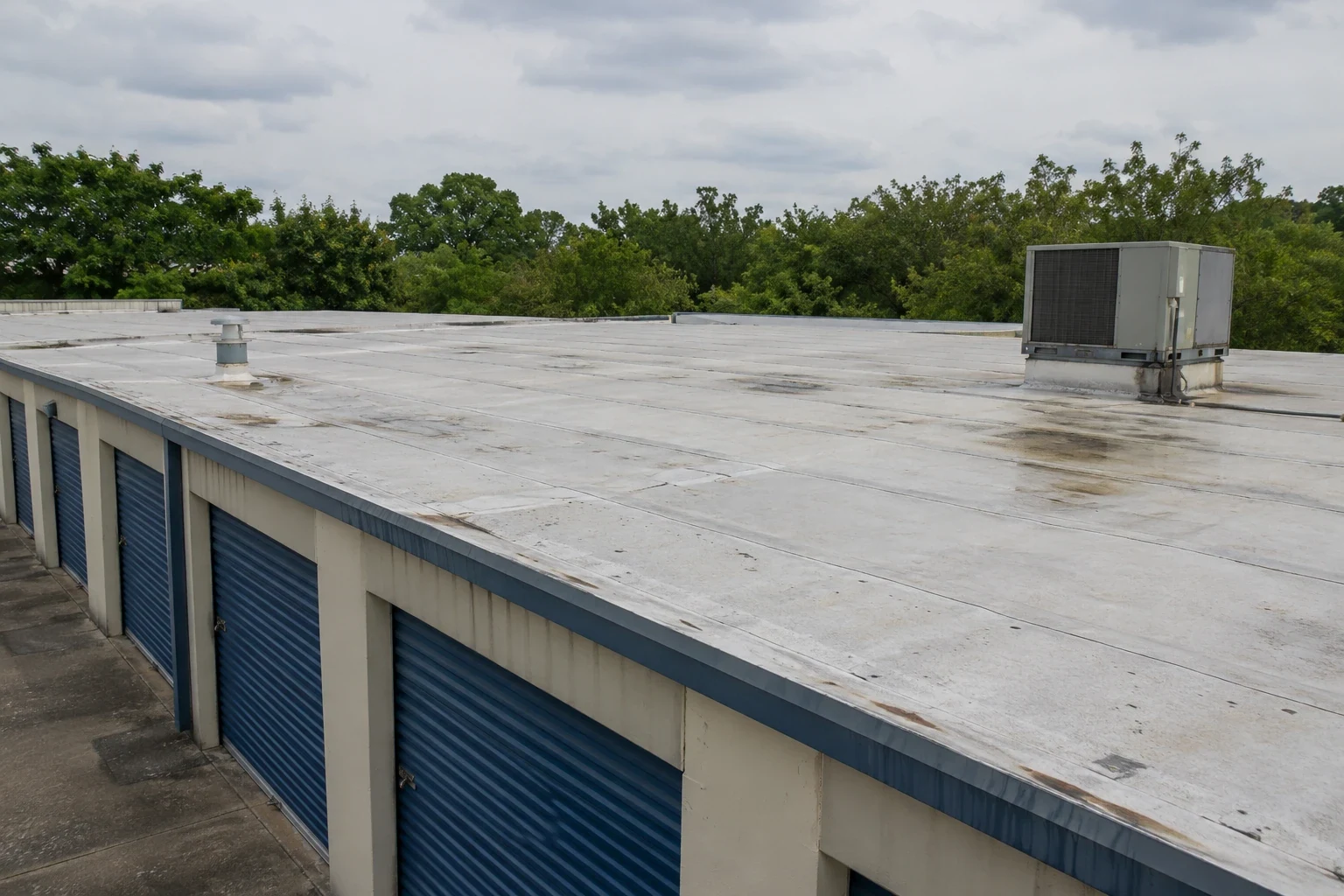
Aircraft are moved or covered before work starts above them, according to the operator's rules. We do not control the aircraft, so the schedule is built with the hangar manager: which bays are empty, when the covers go on and what happens if a storm interrupts the work. The roof opening is kept small, closed with a temporary seal at the end of each shift, and checked at the beginning of the next.
Where a retrofit is chosen, the new roof is placed over the existing one in sections, which keeps a dry layer overhead during the work. A metal roof retrofit reduces tear-off debris above the floor, though it requires a structural review of the added load. We note what the framing can carry before the design is final.
Fall protection on a long, low-slope or metal roof also shapes the sequence. Edge systems, tied-off lanyards and clear rules for who walks the roof are set before work begins, and the plan names the path crew members take from the ladder to the work area.
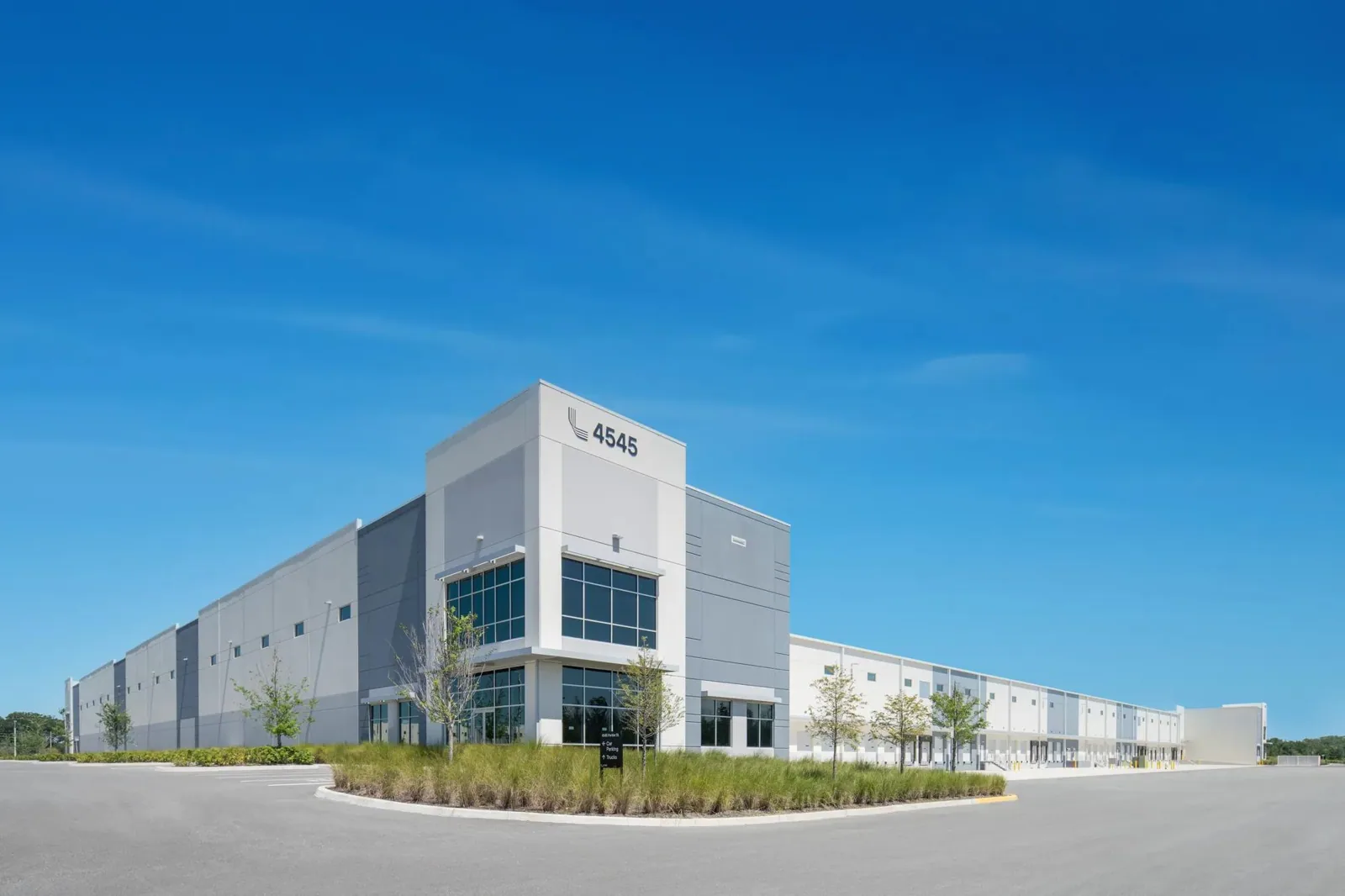
Fire suppression piping, foam systems, lighting, cranes and door operators belong to other trades. A roof crew works around them, flashes the penetrations they require and records any damage found, but does not adjust them. Where roof work needs a system to be isolated, the owner's maintenance staff or the system contractor does that, and we agree on the window.
Guard facilities near Cary include the Durham headquarters of the 30th Sustainment Brigade, about 18 miles west-northwest in a straight line, and the 60th Troop Command in Raleigh, about 10 miles east. Roofing on buildings of that kind follows the Unified Facilities Criteria where they apply, with base access, badging and escort procedures set by the installation. The state fire marshal's office shows the 2018 code family as current, and permit rules are confirmed per project.
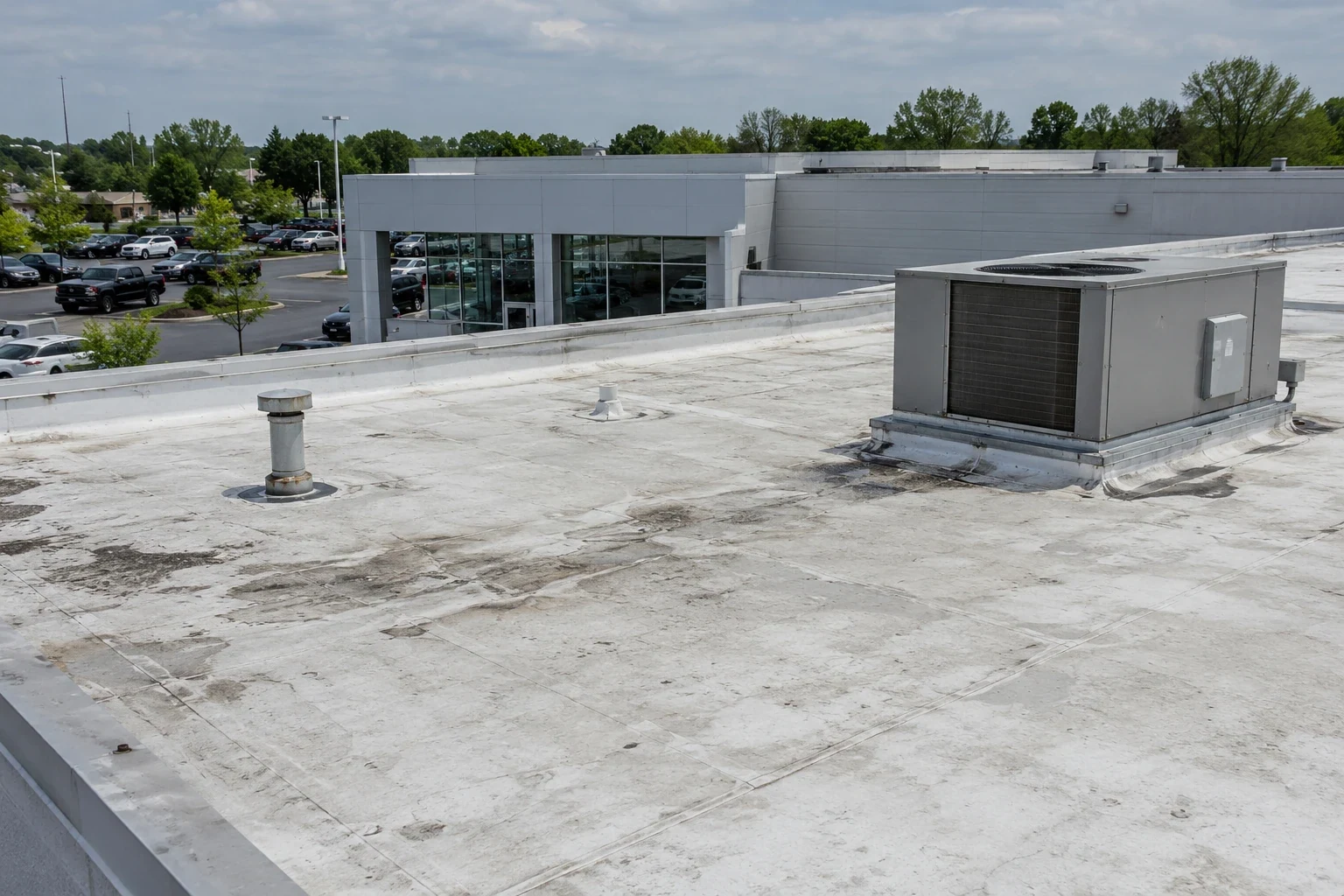
The manager receives a roof plan with bay numbers, photographs of the door headers, gutters, penetrations and panel laps, the materials used and the repair boundary completed. If a storm passes, that record shows which details have been inspected recently and which have not.
Aviation owners near Morrisville and Weston Parkway can use the same format. It also fits a National Guard armory or a flex-industrial building, where large doors and open floors raise similar concerns.
Because a clear-span roof covers a large and valuable interior, the plan also lists the checks that follow a hard rain or wind event, so staff know which details to look at first and which can wait for the next scheduled visit.
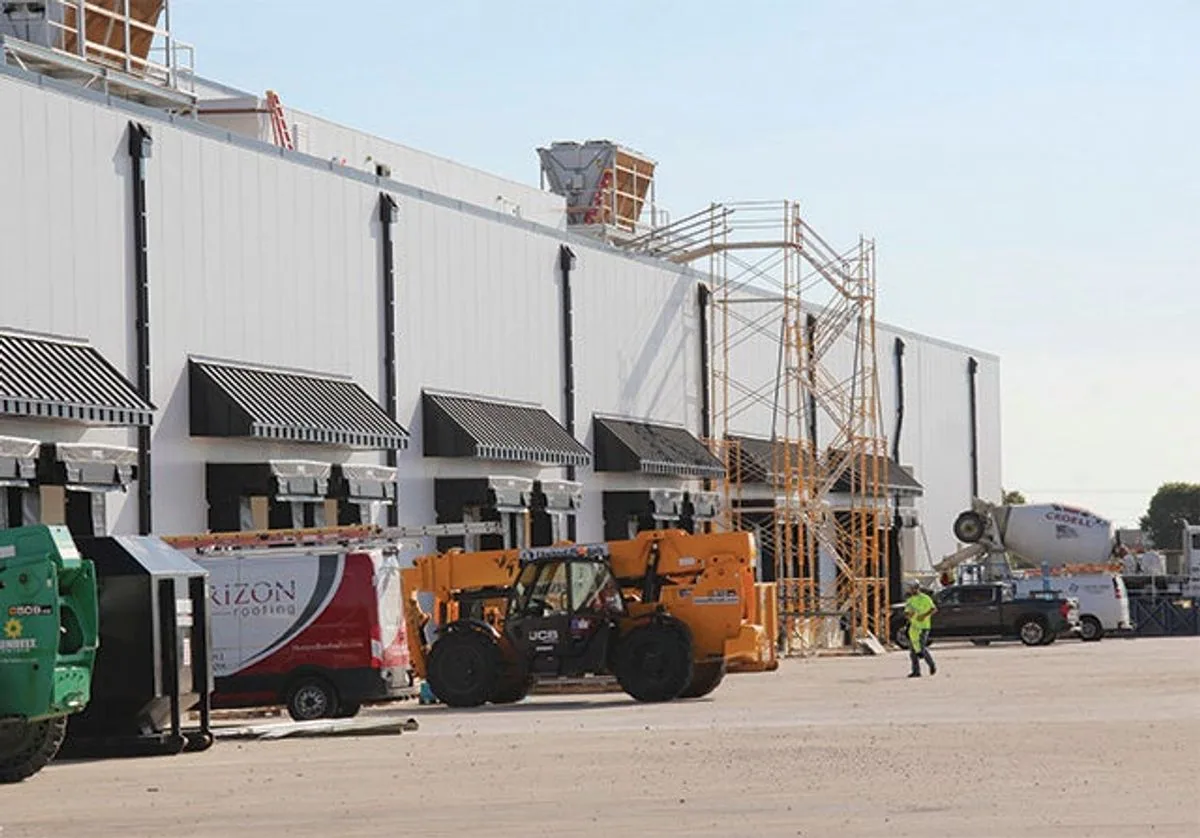
Only if the operator approves and protection is in place. Usually the bay is cleared or covered first, and the roof opening is kept small enough to close at the end of the shift.
Records from National Weather Service Raleigh list hail, tornado and damaging-wind reports for 31 counties between 1950 and 2005. That is regional context, and it supports checks of door-header flashing, panel fasteners and edge metal.
It maps the surface, locates open laps and staining and reduces time on the roof. Findings are then confirmed by hand where a repair is planned. Images are labeled by bay and panel run, so a repair crew can find each point from the ground.
A long metal panel expands more over its length, so fasteners, clips and seals work harder. We look for backed-out screws, open laps and cracked sealant along the whole run. Sealant that looks intact from the ground can be split at the surface, so the close walk matters.
Not as a requirement, but the habits of badging, escort and tool control are sensible anywhere. The owner sets the site rules, and we follow them.
Arrange a roof walk with Commercial Roofing Cary. We will inspect the panels, the gutters and the headers, set a debris plan with your team and send a scoped proposal.
Roof leaking now? Call for emergency roof repair.
Or email [email protected].