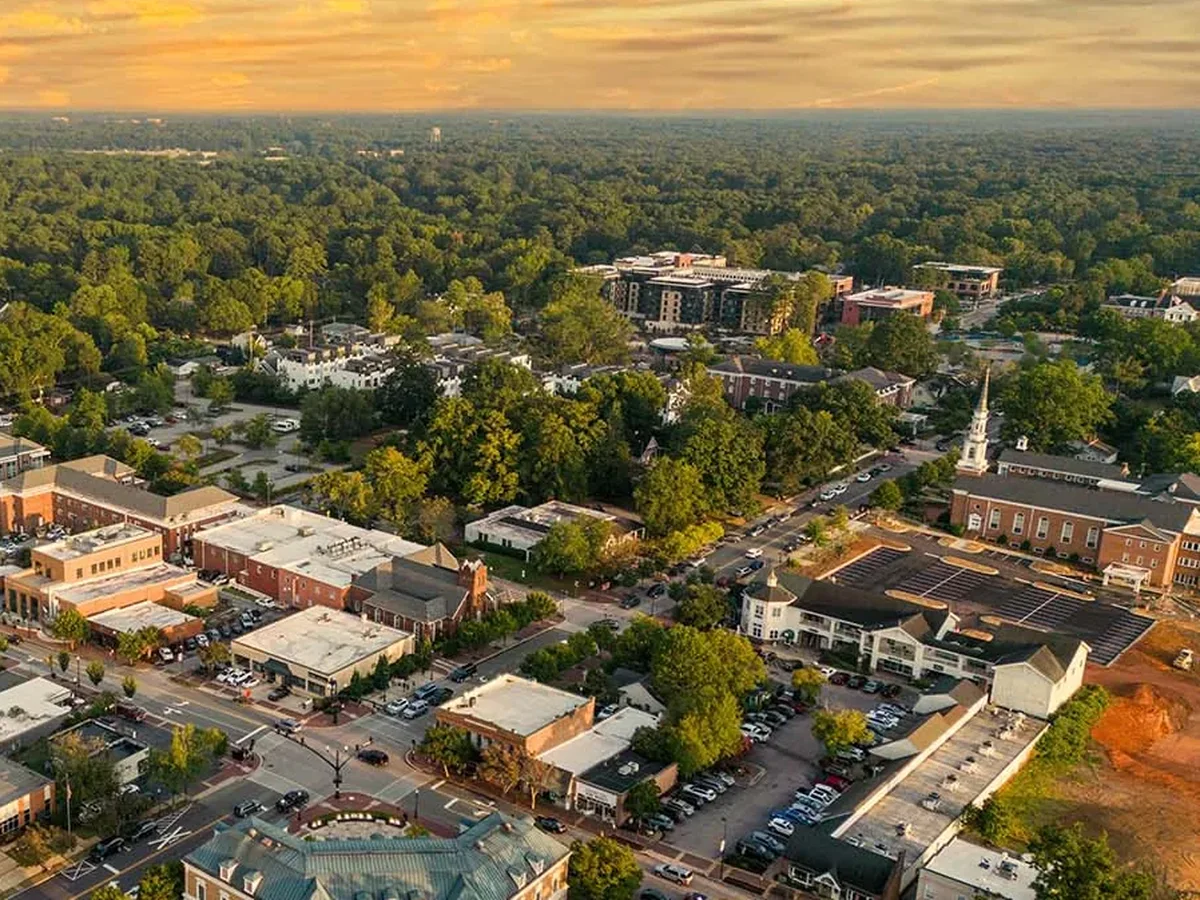
A long field seam on a production building can open at the lap line a few inches at a time, and the first sign a manager sees may be a damp patch in a corridor a hundred feet from the entry. CSL Seqirus, FUJIFILM, Amgen and Genentech are among Holly Springs employers, and biotechnology, information technology, clean technology and advanced manufacturing are among its sectors. That tells us the kinds of buildings a manager may be responsible for, not anything about a particular roof. On the roof itself we start at the access point, follow the seams and trace the water to its outlet.
Water entering at a seam moves along the top of the insulation, drops through a fastener hole or a deck joint and appears wherever the interior finish gives it a place to show. That distance can be considerable on a wide, low-slope roof, which is why a stain tells us only that the roof above is worth reading. We probe the lap line along its full length, look at the seam edge for lifting or contamination and check whether the weld or adhesive was formed on a clean surface.
Cary-area summers run hot, and that recurring heat is a fair reason to read the seams first. A seam that has opened in one spot invites a local correction. Seams opening in many places suggest the membrane is near the end of its range, and repeating small repairs begins to cost more than the work it postpones.
The edge of a seam tells the story better than its center. Dirt, moisture or a skipped weld pass at the time of installation leaves a thin channel that water can follow, and we mark where that channel starts. When the seam can be probed along its length, the report names the lap line, the distance affected and the likely cause, so the repair addresses the failure and not just the opening.
A building that runs several shifts does not have a quiet week, so we ask the manager which hours are least sensitive and which areas below hold equipment that cannot tolerate dust or water. Deliveries are scheduled against truck traffic and dock use, and the hoist is placed where it does not cross a loading lane. We split the roof into sections small enough to open and dry in during one working period.
Each night the open edge is sealed and the drains are protected, so an unexpected storm finds a closed roof. If tear-off turns up wet insulation or soft decking beyond the approved boundary, work stops for photographs and a scope review, and the next section stays closed until its timing and price are settled. This is the practical difference between an occupied building reroofing plan and a plan written for an empty building.
Safety planning is part of the sequence. Fall protection is tied off to attachment points confirmed before work, edges are guarded where the roof is open and a competent person walks the roof each morning to check the previous day's closeout. Visitors and tenants are told which doors are affected by overhead work and which routes remain open.
Rooftop equipment brings technicians, and technicians bring foot traffic that compresses insulation and scuffs the membrane along the same routes every visit. A cover board beneath a new membrane spreads that load and also protects insulation from hail, and walk pads along the access path keep the wear off the seams. These are small line items that change how the roof ages.
Regional hail, tornado and damaging-wind history from the Raleigh weather service, spanning 1950 to 2005 and 31 counties, is not a record of any one roof. It does support the case for a firmer substrate and well-secured edges. At the perimeter we check metal returns, fasteners and sealant, since wind finds the edge first.
Where insulation is already wet, a cover board does not fix it. The wet board is removed back to dry material, and the transition is tapered so water does not collect at the new edge. The test openings that located the wet area are patched the same day and recorded.
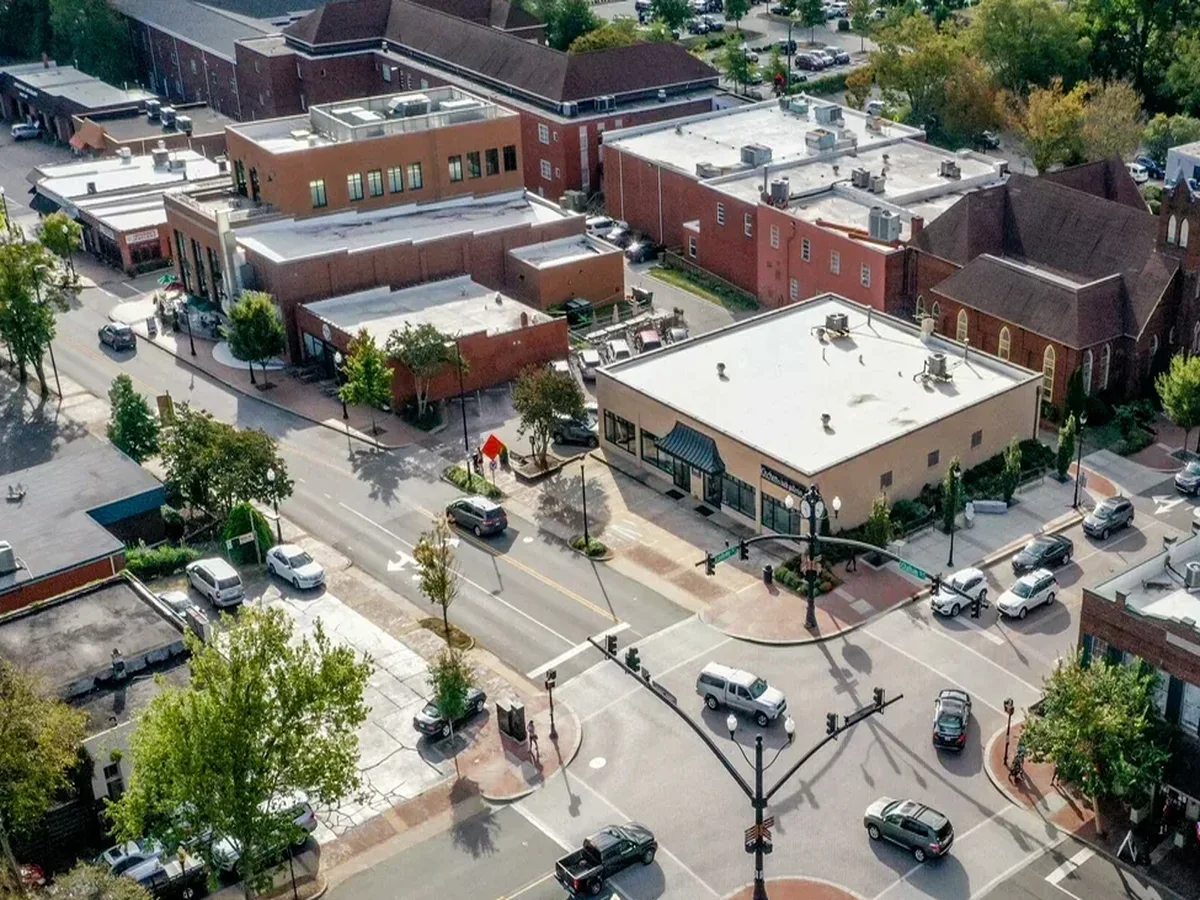
On a building with large air-conditioning loads, the surface of the roof is worth a deliberate decision. A white or light-colored membrane or coating reduces heat absorbed at the surface, and the choice sits within a replacement or restoration scope. We explain how the surface works rather than promise a saving, and the scope sets the membrane, the insulation level and the cost drivers side by side.
A TPO membrane is one common reflective option for low-slope roofs, with welded seams that can be probed and repaired. Before recommending any surface, we check that the substrate is dry, since a reflective layer over saturated insulation hides the problem and does not solve it. North Carolina builds under the state code family, and local requirements are confirmed for each permit.
A roof plan with numbered penetrations, dated photographs, probe results and a list of repairs keeps the history from living in one manager's memory. When an employer expands a line, adds equipment or changes tenants, the record shows where new curbs went in and how they were flashed. Our roof capital plan uses the same record to estimate remaining service life and suggest a replacement window.
Owners with buildings in Fuquay-Varina or Garner can keep the same format across towns, so condition and cost compare on equal terms. A drone pass can supplement the walk on large roofs, but it does not replace probing and moisture testing, and the report says which method produced each finding.
Warranty papers, product data and the closeout photographs belong in the same file. If a manufacturer later asks for proof of installation details, the manager can answer from documents and does not have to reconstruct what the crew did.
The deciding factor is how widespread the failures are and whether the insulation beneath is dry. A few separated seams on a membrane that is otherwise supple can be reinforced. Seams opening along many lines, or repeat failures at repaired locations, point to replacement. We show the pattern on the roof plan.
Often it can, with planning. The roof is opened in small sections, intakes and equipment below are protected, and noisy or dusty tasks are timed to the manager's windows. If an area below cannot tolerate exposure, that section is scheduled for a shutdown. We confirm the plan in writing before the first day.
A cover board protects the insulation from foot traffic and impact and gives the membrane a firmer base. For a roof with regular technician visits, that protection extends the life of the assembly. We price it separately so the manager can see the cost and the reasoning.
Impact bruising, torn sheet and bent metal point to a recent event, while shrinkage, crazed sealant and worn fasteners point to age. We photograph and chart both, then write them as separate lines. That makes a claim cleaner and keeps maintenance items out of the storm scope.
A drone pass is enough to sort roofs for urgency and to document visible ponding, debris and displaced covers. Anything involving seam strength, hidden moisture or flashing integrity needs a walk and, often, an infrared survey and test openings.
Invite Commercial Roofing Cary to walk the roof with you, review the observed details and the schedule constraints, and receive a scoped next step for the building.
Roof leaking now? Call for emergency roof repair.
Or email [email protected].