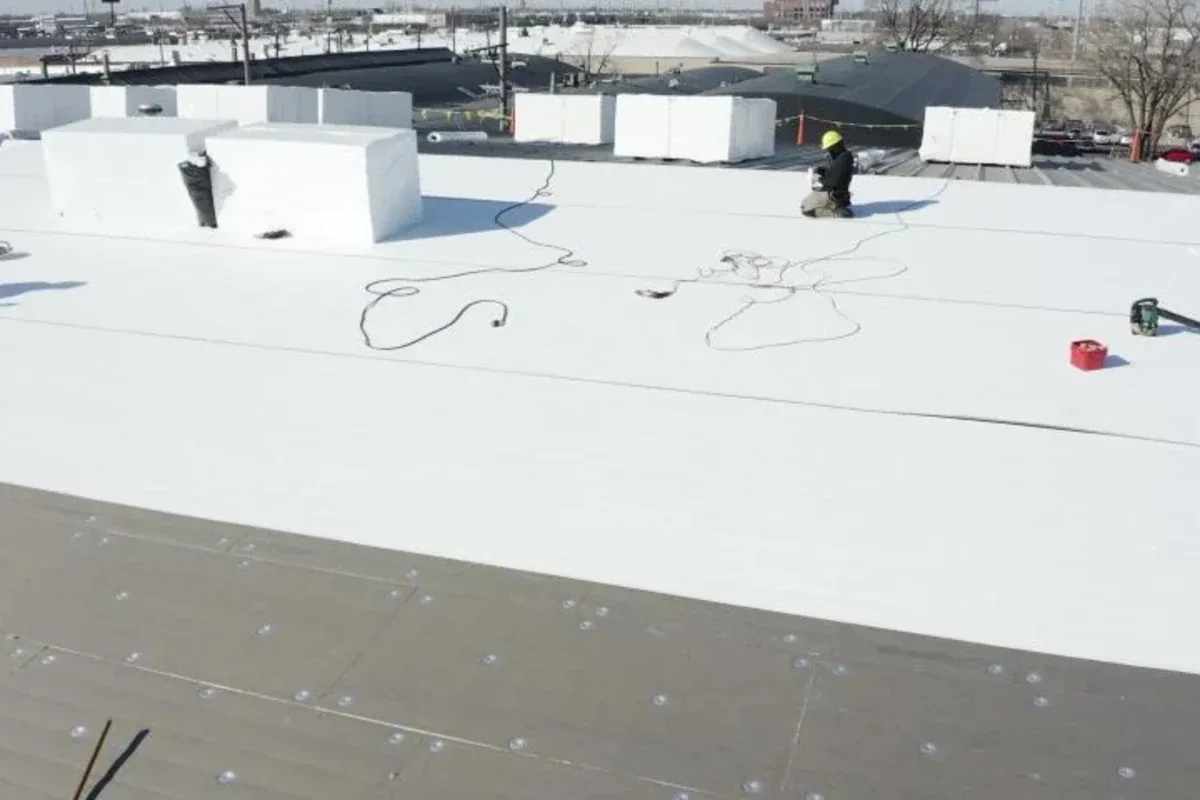
With a Johns Manville roof, the insulation under the sheet deserves as much attention as the sheet. The company makes single-ply membranes in TPO, PVC and EPDM, builds modified bitumen and built-up systems, and supplies polyisocyanurate insulation boards that sit beneath many of them. A roof that carries one of those assemblies is a stack: deck, vapor control where designed, insulation, cover board where specified, then the membrane. A leak shows at the top, but the damage often sits two layers down. In Cary, NC, we begin with the stack, since a repair that ignores the layers beneath the sheet buys months instead of years.
We read the stack from a test opening, a core or an exposed edge. The cut shows the number of layers, the board thickness, the attachment method, the condition of the deck and whether any layer is wet. Insulation that has absorbed water loses much of its value and can weaken the surface that carries the membrane.
Moisture scans guide the openings. An infrared moisture survey finds areas that hold or release heat differently, and a core at the suspect spot confirms what is there. The record shows where the scan and the core agree and where they do not, so the scope rests on both.
Attachment gets its own note. Boards can be fastened to the deck, adhered with a bonding agent or set in hot asphalt, and the membrane can be fastened through the boards or adhered over them. A mechanically attached sheet shows fastener lines when it flutters in wind; an adhered one shows as a smooth surface that can hide a failed bond. We press and tap the surface to hear hollow spots and record the attachment method in the section notes.
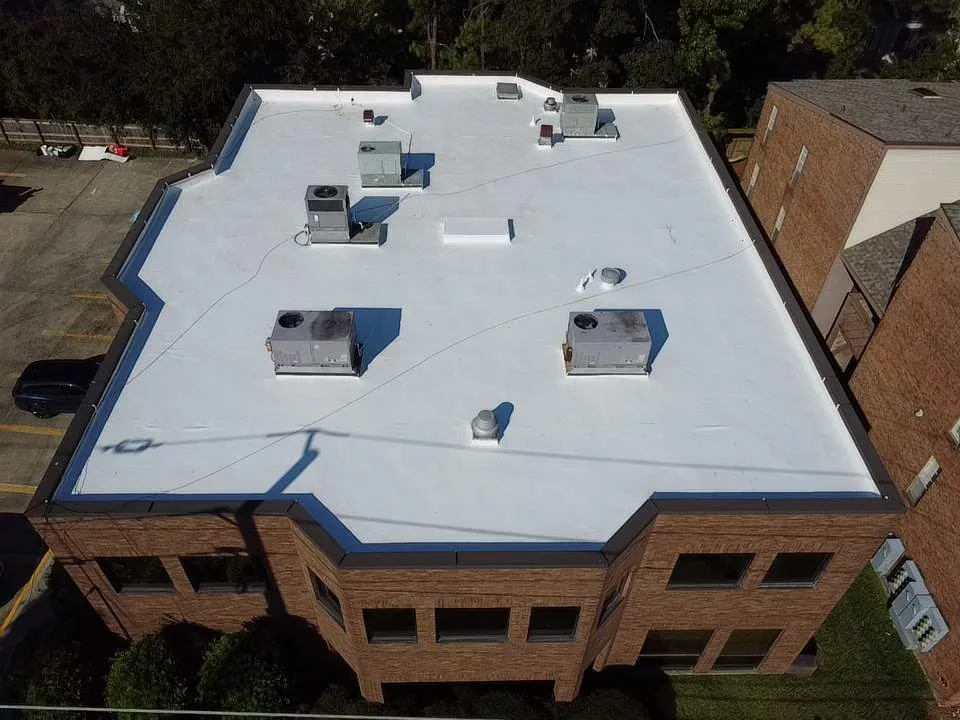
TPO, PVC and EPDM each age in their own way. Welded sheets show open seams and dirty, chalked surfaces; rubber shows shrinkage at flashings and pulled splices. We probe laps, inspect termination edges, check the flashing at every curb and pipe and look for ponding that has left a ring on the sheet.
Repairs use compatible material. A TPO patch goes on TPO, a PVC patch on PVC and an EPDM patch on EPDM, welded or spliced to a clean, dry surface. Where the surface is contaminated with oil or grease, we clean it with the cleaner the system calls for before anything is bonded. The tie-in width and the method are recorded for the next visit.
Cover board is an easy layer to overlook. A rigid board over the insulation gives the membrane a firmer surface, resists foot traffic and hail, and protects the insulation during later repairs. If a roof has it, the repair method accounts for it; if it does not, the report raises it as an option when the roof is next opened.
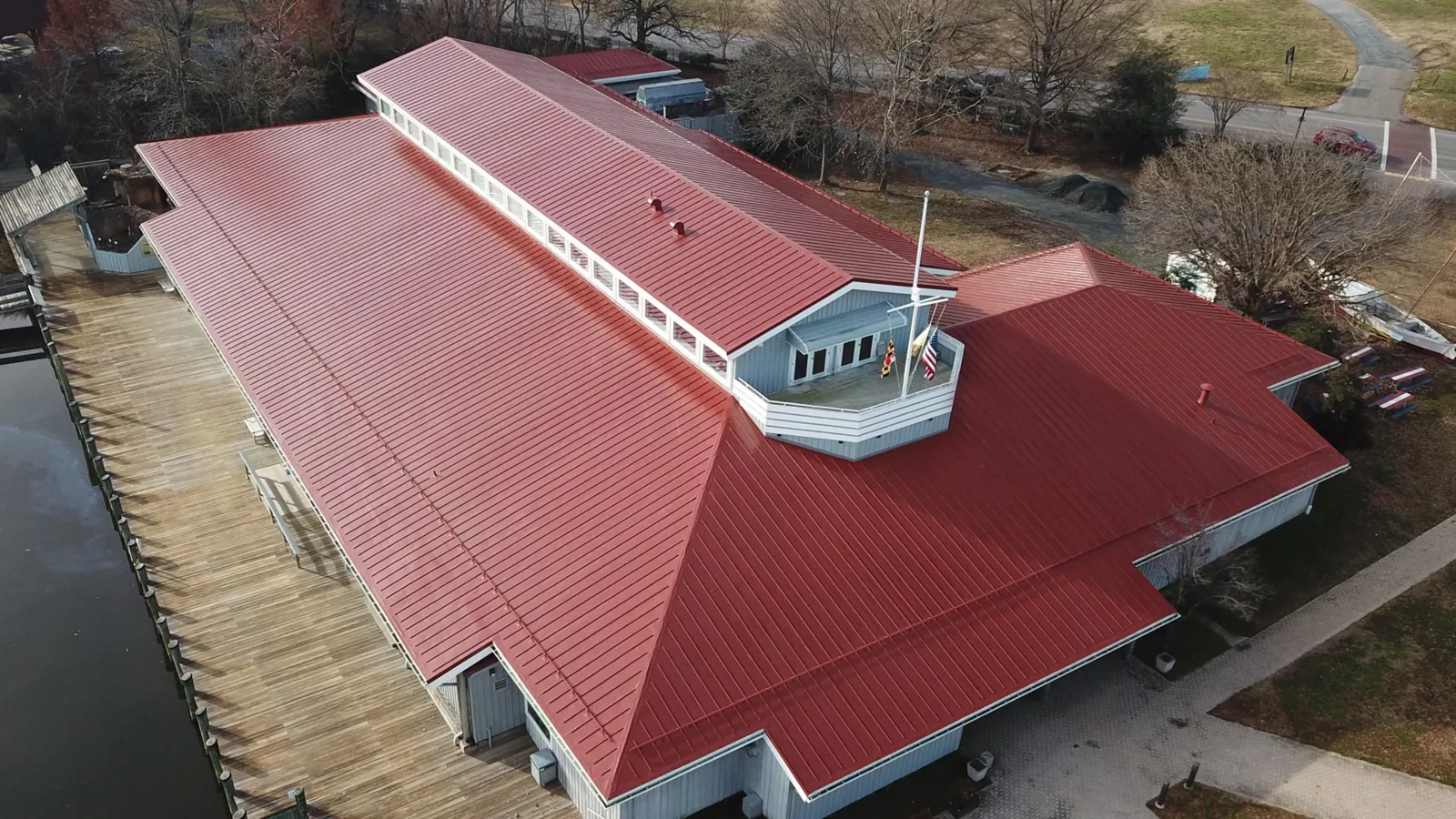
Older JM roofs may carry built-up layers of felts and bitumen, or modified bitumen sheets installed in plies. These roofs fail at flashings first, then at laps, then at the surface. Blisters, ridging and splits show where moisture or movement has worked through. A built-up roofing repair looks for the extent of wet felts before it patches anything.
We cut a test opening to count plies and see their condition. A repair then follows the system: hot or cold applied patches for built-up, compatible SBS or APP sheet for modified bitumen. Where an open flame is a concern for the building or its occupants, torch work is replaced by a cold-applied method, and the record states which was used and why.
Surfacing matters on these older roofs. Gravel, mineral granules, coatings and reflective surfacing each protect the asphalt below in a different way, and each wears. A bald spot on a gravel-surfaced roof or a worn coating over a cap sheet is a place where sun reaches the asphalt, and the record lists those spots so they can be restored before the layers below begin to crack.
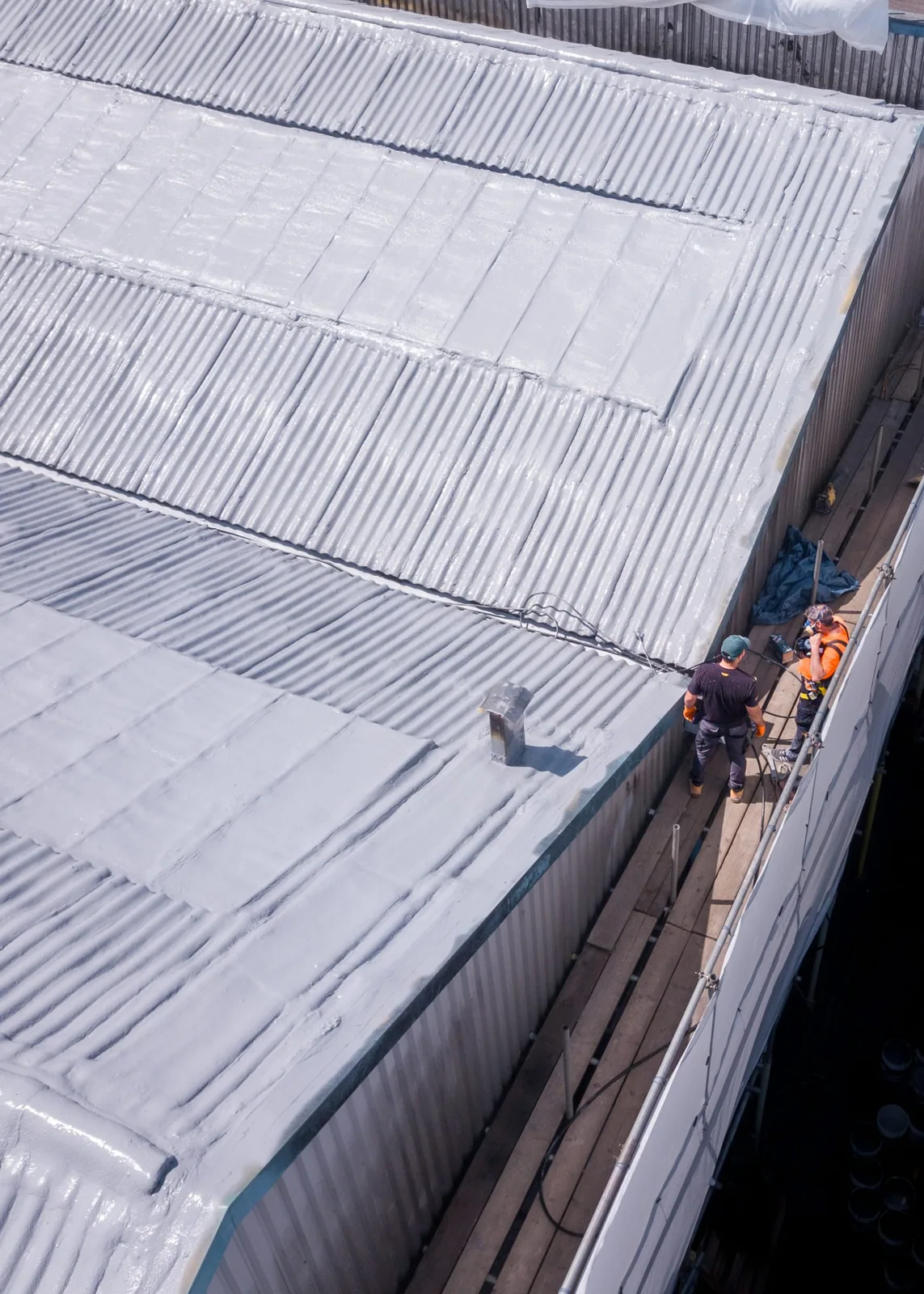
Over a normal year the Cary station averages 59.6°F, reaches a mean July high of 88.2°F, counts 32.9 days at or above 90°F and receives 48.80 inches of precipitation. Heat ages the sheet and the adhesives, and the moisture load means any opening in the membrane has a chance to wet the insulation beneath.
Storm entries belong in the roof's history because the Raleigh forecast office's 31-county records include hail, tornado and damaging-wind reports. After an event, we check the edges, penetrations and drains first and then look for bruises in the field.
Condensation can mimic a leak under insulated roofs. Warm interior air meeting a cold deck in a mild winter morning can drip from a duct or a fastener without any hole in the sheet. We look at dew conditions, the vapor control layer if one exists and the interior ductwork before concluding that water came from above.
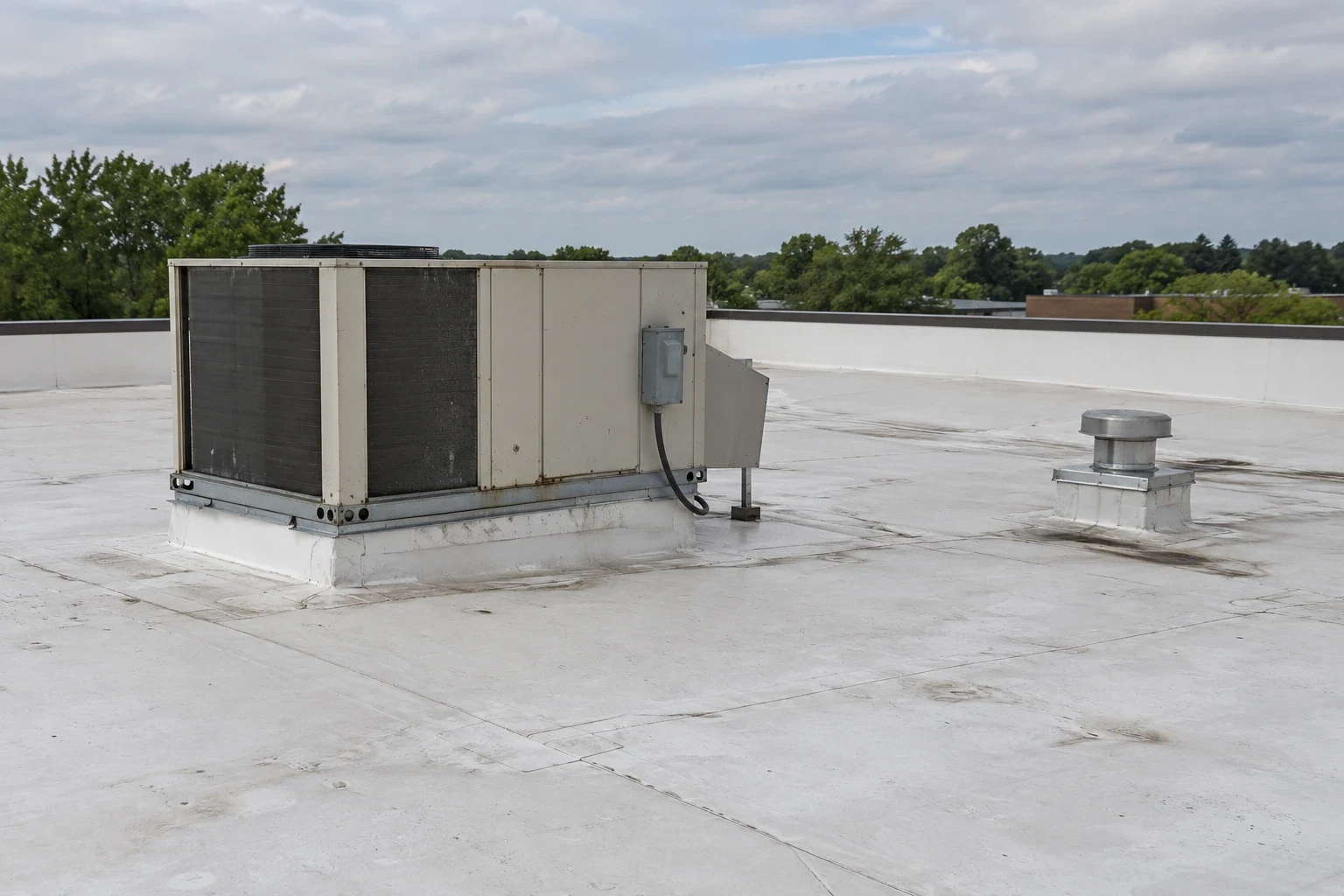
Industrial and flex uses make drainage over loading areas a standing question. We trace each roof drain and scupper to its outlet, check overflow routes and note where water stands after rain. A roof insulation and cover board review follows if wet material is found.
Access may be by ladder or roof hatch depending on the building, but the equipment path matters more. A crane or lift reaches these parks over the main US and interstate routes and then follows the park's own drives to the building. We confirm the staging area and the delivery window with the property manager, so the roof schedule fits the lot.
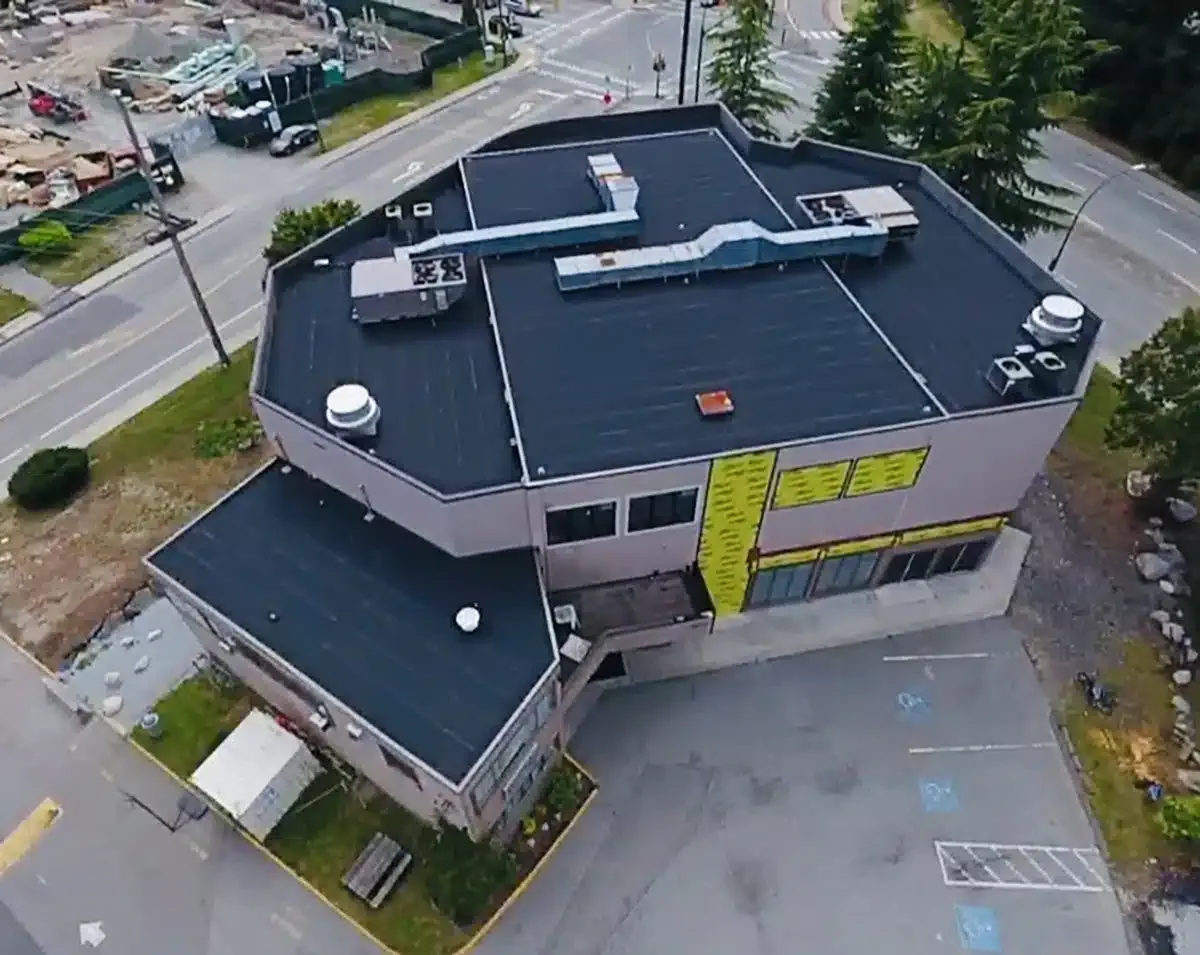
We file the section plan, the layer description, the photographs, the moisture findings, the products used and the tie-in widths. If a warranty applies, the terms are read before work begins and the file notes notice and repair rules. The paperwork is kept with the roof in the warranty file.
Neighboring systems from Sika Sarnafil and Soprema follow their own details, and we apply each manufacturer's own rules to the roof in front of us. A repair that fits one system can harm another, so identification always comes first.
Open items stay on the page. A seam that probes tight today but sits near a pond, a cover board corner that has lifted and a flashing that is dry but stiff are all listed with a location and a recheck date, so the next visit starts where the last one stopped.
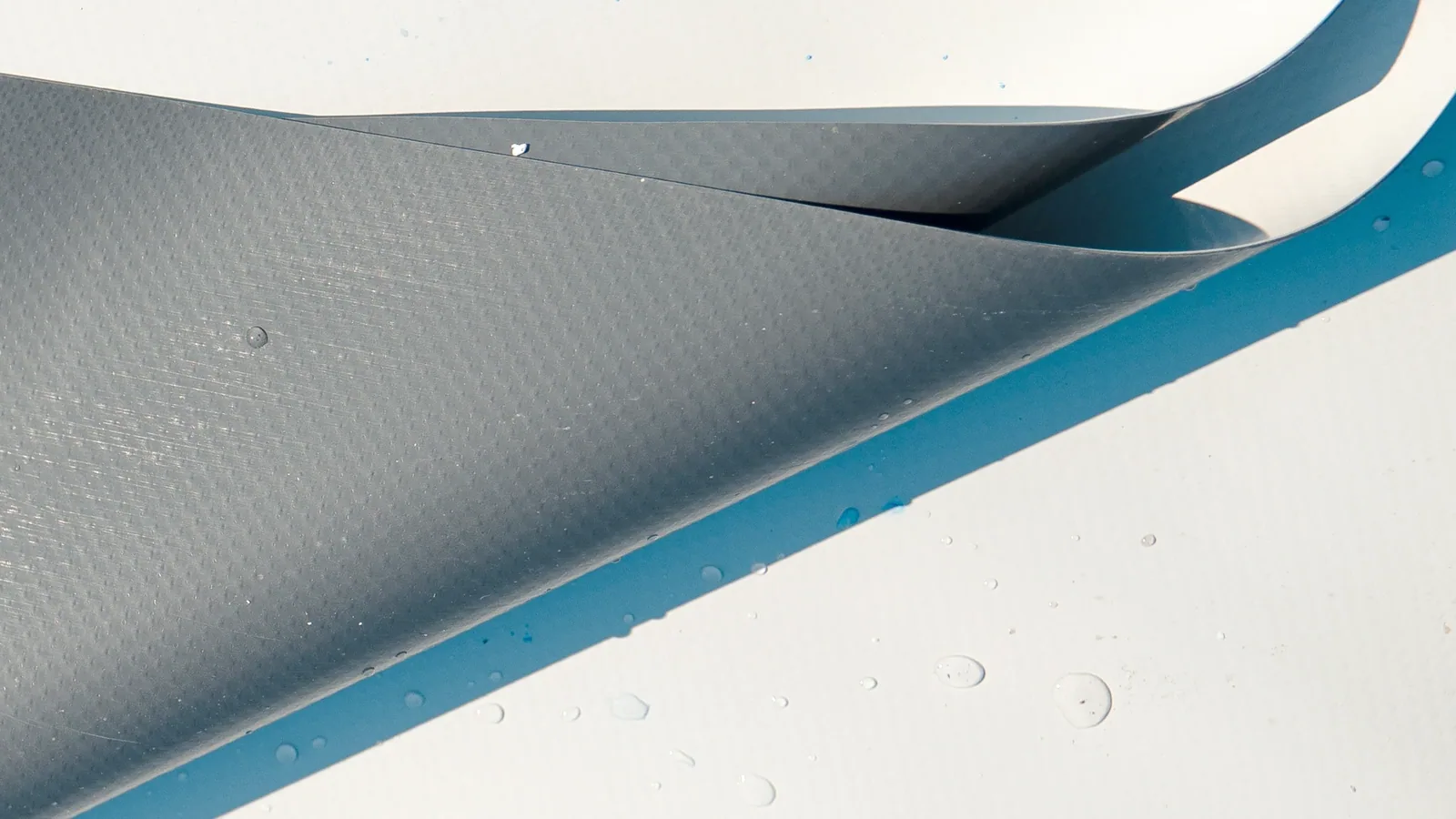
With a moisture scan and a core at the suspect spot. The core shows what the scan only suggests.
Only when the board is dry and firmly attached. The deciding factor is the core result and the deck condition.
Different sheets bond by different methods, and mismatched materials separate at the edge.
Not always. Cold-applied methods exist, and we choose the one that suits the building and the occupants.
Dated photos, the section number, the layers found, the products used and the tie-in width.
Arrange a roof walk with Commercial Roofing Cary. We will identify the system, check the layers and return a scoped next step for the building.
Roof leaking now? Call for emergency roof repair.
Or email [email protected].