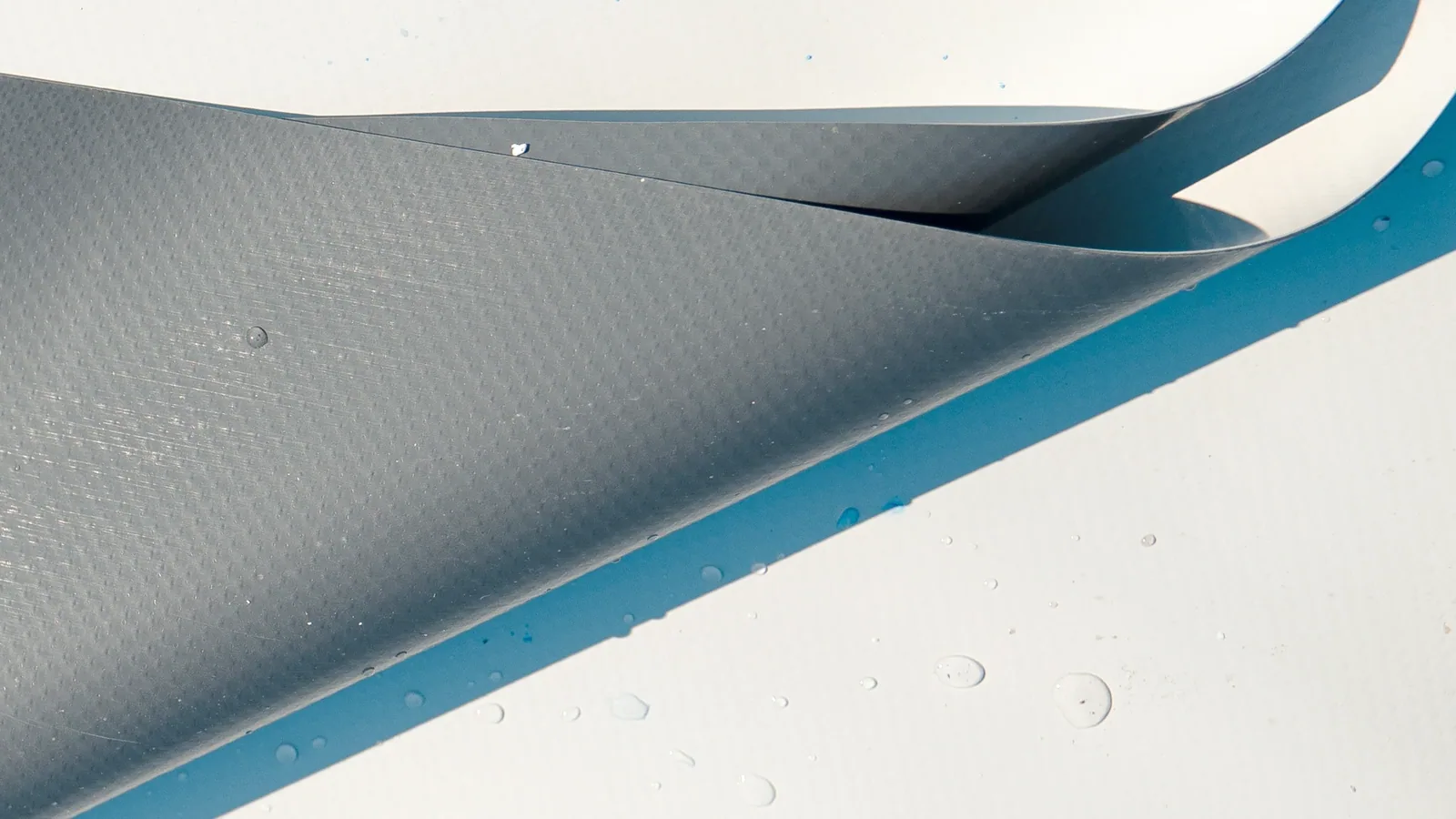
A Sarnafil roof is a PVC roof, and a PVC roof asks for a particular kind of patience at the weld. The membrane is a reinforced thermoplastic sheet whose laps are fused with hot air, which means the strength of the roof is the strength of the weld along each lap line and at each flashing. Sika Sarnafil is one of the long-established makers of PVC roofing, and the sheets come in backed and unbacked forms for different attachment methods. In Cary, NC, a Sarnafil sheet on a restaurant, hotel or office building has to cope with sun, rain and, in places, the grease and exhaust the building produces, so we study the weld first and the surface second.
A good weld shows a continuous, slightly raised bead of melted membrane at the edge of the lap, with no gaps, burn marks or channels. We probe the edge with a blunt tool along the whole length, because a weld can look finished and still be open. Intersections of three sheets, corners and cuts at penetrations are the places where welds are most often incomplete.
Probe results are recorded by section. A short gap can be patched; a pattern of open welds suggests a process or surface problem during installation. The report separates the two, because the cure for one is a local repair and for the other a closer look at the whole lap system.
Before any repair weld, a test strip on scrap or on a clean spot shows the heat and speed that give a good bead that day. Air temperature, sun and humidity change the settings, and a welder who skips the test strip is guessing. We record the settings in the notes, probe the finished weld after it cools and pull a small test where the position allows.
PVC resists many fats, oils and chemicals better than other single-ply sheets, which is part of why it appears on buildings with kitchen exhaust. Resistance has limits. Sustained contact, heat and solvents can still affect a membrane, and grease that is allowed to build up hides defects and attracts dirt.
We check the roof around exhaust fans and make-up air units for staining, film and softened areas, and we inspect the grease containment on fans. A cleaning routine is part of the maintenance plan for such roofs, and the record notes which units discharge onto the surface. A preventive maintenance visit includes degreasing and a close look at the weld lines nearby.
Cleaning is its own scope line. Degreasing a roof around exhaust fans takes time and runoff control, since wash water carries grease toward drains. We use methods that capture or limit runoff, protect drains while we work and flush the outlets afterward. The owner sees the work as a visit line item with before and after photographs, not as something folded into a repair.
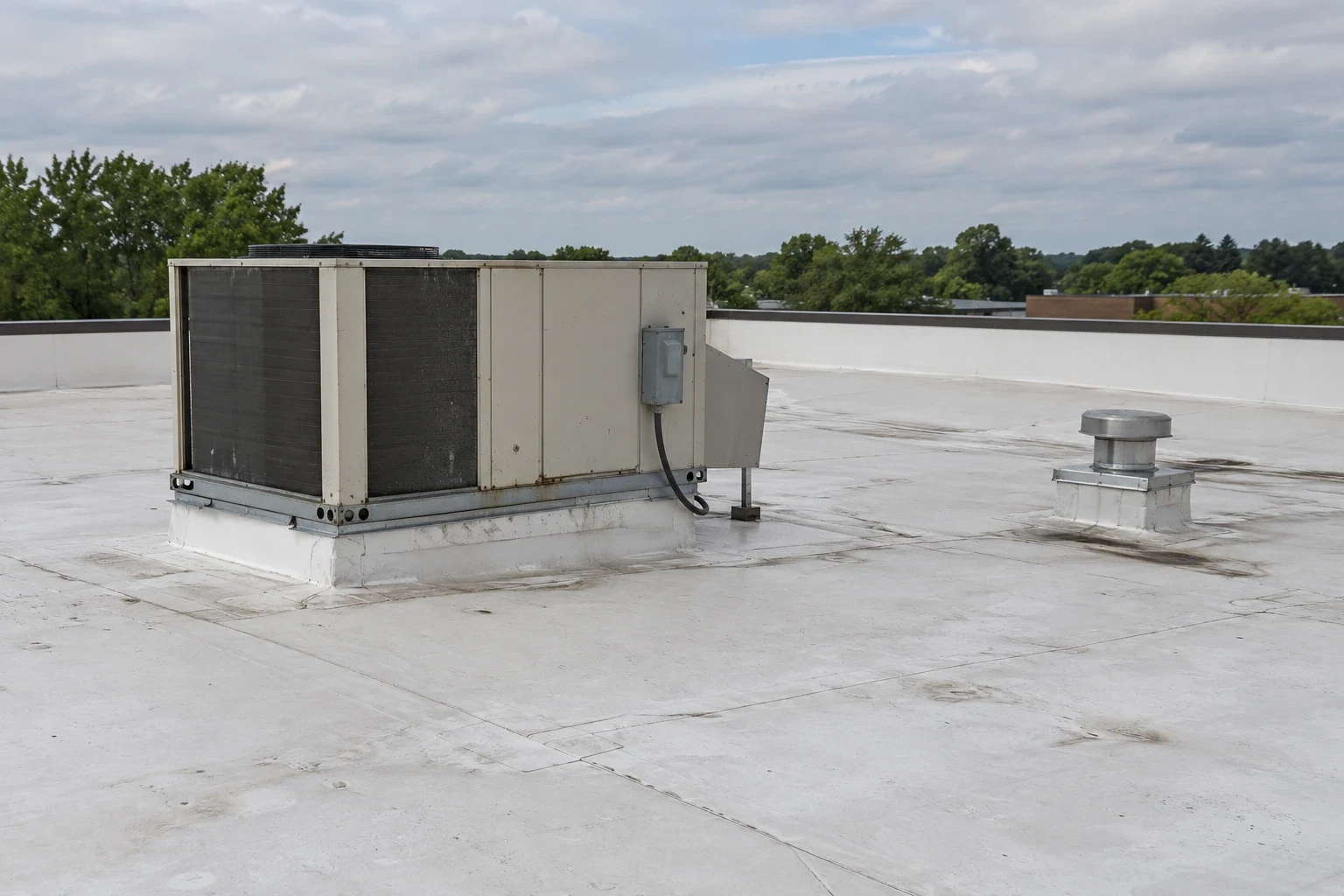
Flashings are separate pieces of membrane, formed around curbs, pipes and corners and welded to the field sheet. Shrinkage at corners, cracked welds, open seams at the top of a wall flashing and sealant that has dried at a termination edge are the usual defects. PVC-coated metal accessories are often used at edges and need their own check for fastener condition and sealed joints.
We probe each flashing weld, inspect the termination bar, look for gaps at penetrations and note pipe boots that have loosened. A PVC roofing repair rewelds or replaces the flashing with matching material, and the new weld is probed after it cools. The tie-in width and the date go into the notes.
Penetrations added after installation cause many of the flashing defects. A conduit run, a new vent or a satellite mount cut through the sheet by another trade may have been sealed with whatever was in the truck. We locate each, check the material, and replace improvised seals with welded boots or flashing details. The list of added penetrations goes into the roof file so later trades know the roof has been touched.
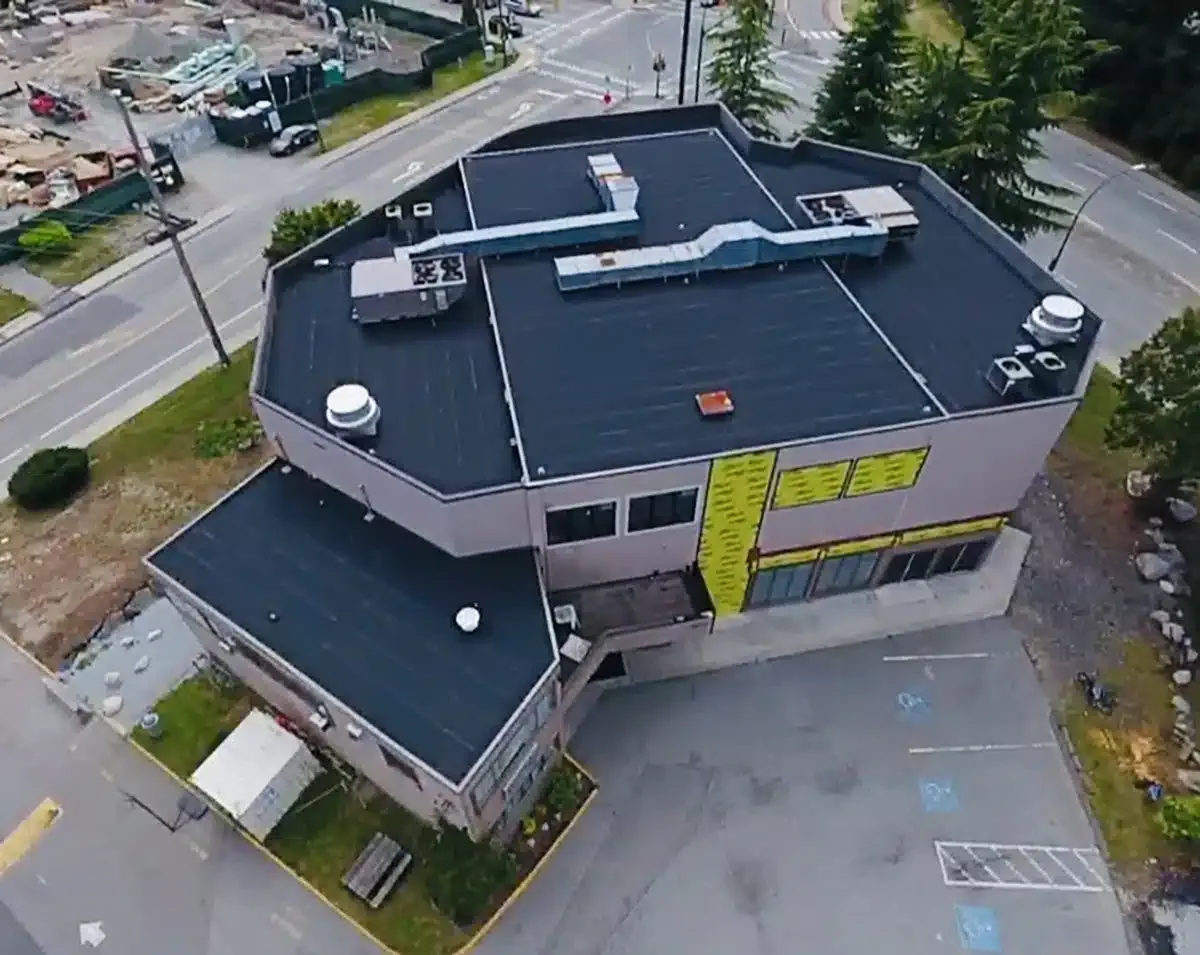
Sun on a hot roof makes membrane condition and drainage worth rechecking each season. Raleigh's forecast office lists hail, tornado and damaging-wind reports for 31 counties, which says nothing about any particular roof. After a storm we check the edge, the drains and the field for punctures, then record sheet thickness, since it affects how a membrane takes impact.
Light-colored sheets show dirt, and dirt hides defects and absorbs heat. A routine wash with the cleaner the sheet calls for restores reflectivity and shows seams more clearly on the next walk. We note the cleaning dates in the record, so the file shows both the condition of the sheet and the care it received.
Fenton is a walkable mixed-use district with offices, shops, dining, entertainment and residential uses, and Crescent has retail, hotels, restaurants and offices around it. Roofs in Fenton and Crescent have to be worked with active tenants and customers below, so access and noise rules shape the plan as much as the membrane does.
For a restaurant roof, grease management leads. For a hotel roof, quiet hours and room protection lead. For an office roof, curb checks over finished space lead. We match the checklist to the use, and we confirm the actual membrane before assuming any park or district carries a particular system.
Hot work and fire safety add rules in food and lodging buildings. We prefer hot-air welding to open flame, keep fire extinguishers on the roof, hold a fire watch after heat work and confirm with the building's manager which exhaust fans must be off during welding. These steps cost minutes and protect the tenants beneath, and they are written into the work order.
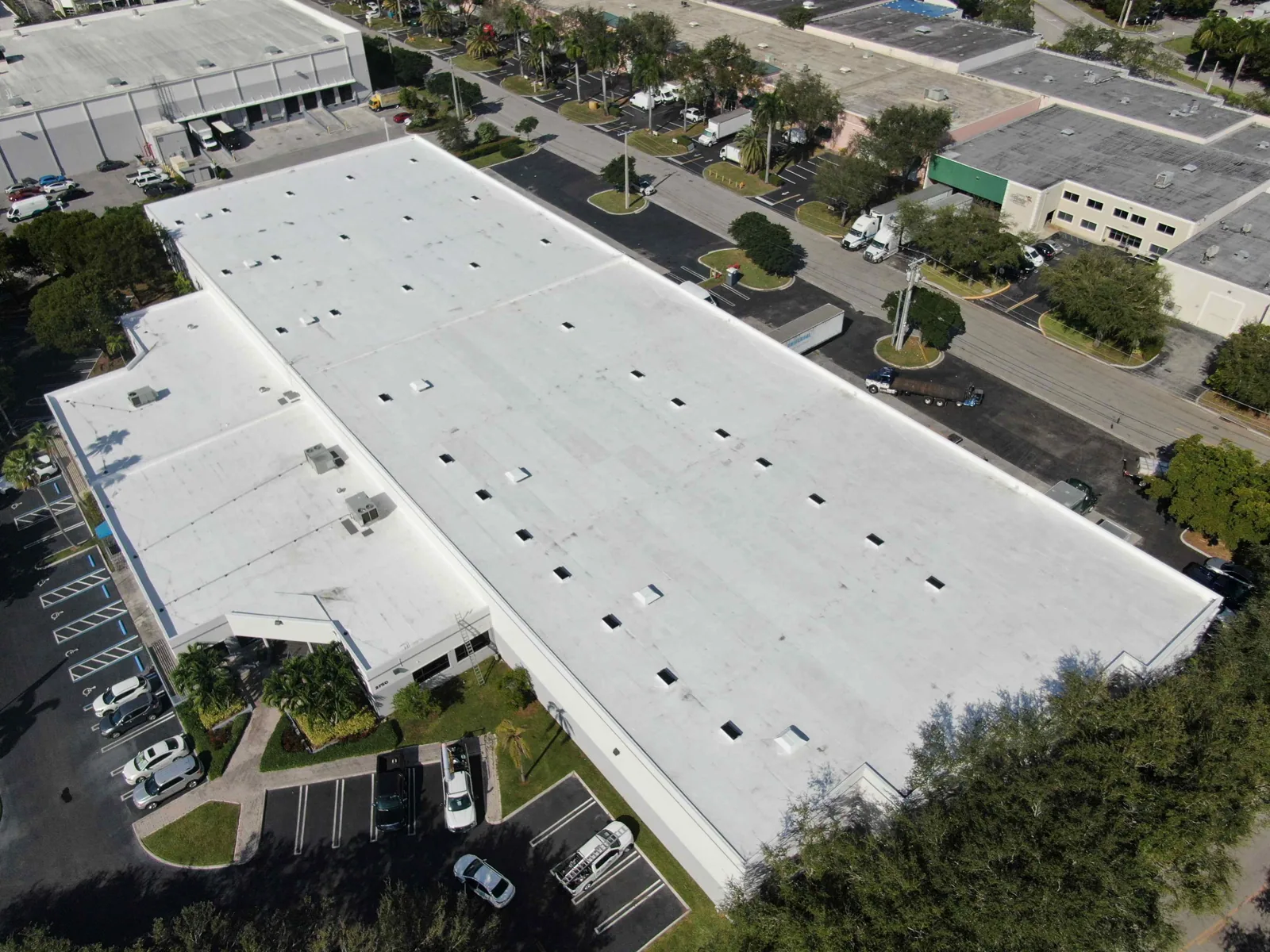
The file holds the section plan, photographs, probe results, products used, tie-in widths and the date. We read any warranty first and note its notice and repair rules; the warranty file keeps those papers with the roof.
If the owner is weighing a larger step, the report lays out repair, recover and replacement scenarios with the conditions that decide among them. Roofs built with Duro-Last or Johns Manville materials have their own detail rules, and each gets its own record.
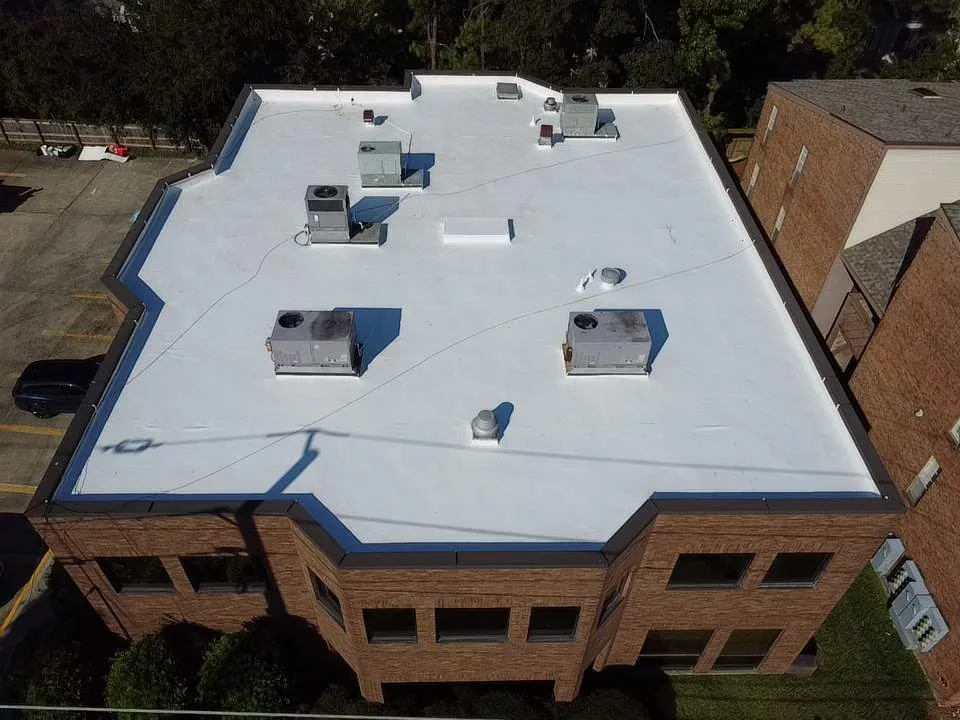
A probe along the lap edge. A continuous bead with no gaps passes; an opening at any point is recorded.
No. It resists many fats and oils, but buildup and heat still matter, so exhaust areas get regular cleaning and checks.
Rewelding an open stretch or a flashing, with matching material and a probed tie-in beyond the defect.
No. The materials do not fuse together, so a patch must match the sheet.
When welds fail across large areas, the sheet turns brittle or insulation beneath tests wet. A core settles it.
Arrange a roof walk with Commercial Roofing Cary. We will probe the lap lines, check the flashings and exhaust areas, and return a scoped next step for the building.
Roof leaking now? Call for emergency roof repair.
Or email [email protected].