
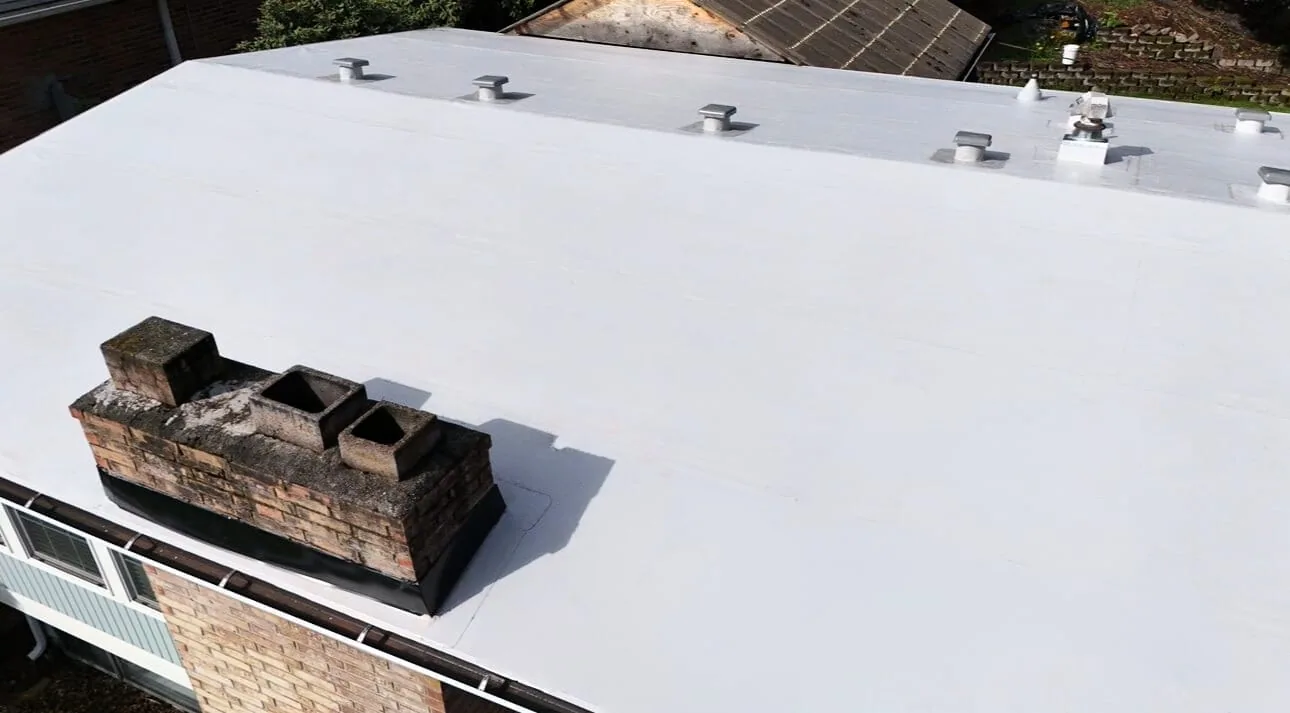
Granules collecting in a downspout, a membrane that has gone chalky under the hand, a sealant bead that has turned hard and cracked at the edge: a roof reports heat and sunlight in small ways long before it leaks. Commercial Roofing Cary repairs heat and ultraviolet damage on commercial roofs in Cary, NC, where summers run long and the sun works on the same surface year after year. We walk the roof for the early signs, test whether the membrane and its details can still take a repair, and give the owner the choice among a targeted fix, a restoration layer or a replacement, each with the evidence behind it.
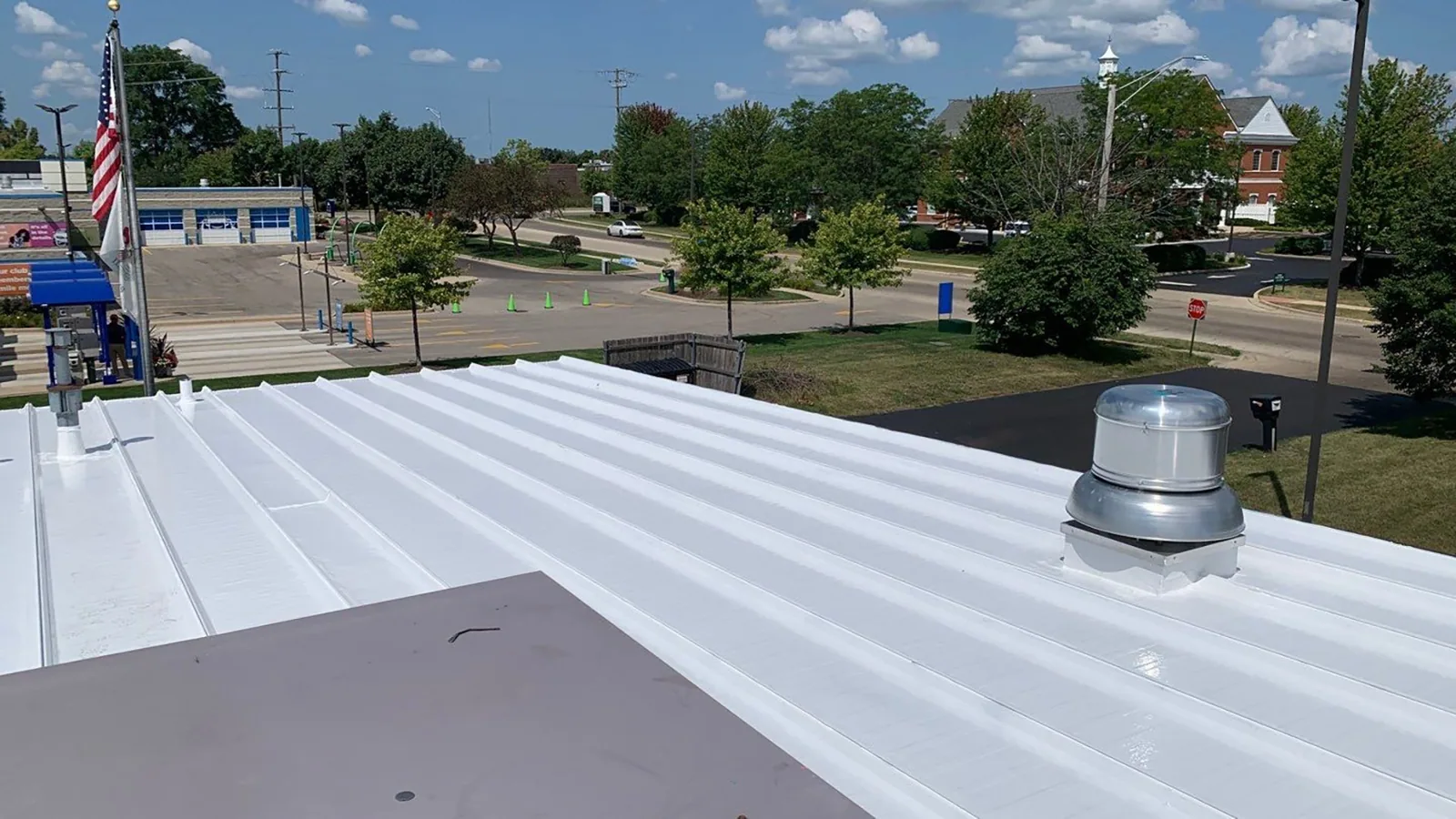
Each material ages in its own way. Single-ply membranes can lose plasticizer, shrink and become brittle, and welded seams can open as the sheet pulls. EPDM can chalk, crack at folds and shrink away from flashing. Modified bitumen and built-up roofs lose granules or gravel, expose asphalt to sunlight and craze at the surface. Metal panels fade and can lose their coating, and sealants harden, crack and pull from their joints. Polyurethane foam loses the protective coating that shields it from ultraviolet light and then erodes.
Heat adds movement. The roof expands in the afternoon and contracts overnight, and each cycle works at the seams, fasteners and flashing. A Cary roof carries long hot summers every year, and its surface runs hotter than the air above it. No air-temperature record explains one building's wear, so the walk supplies the evidence.
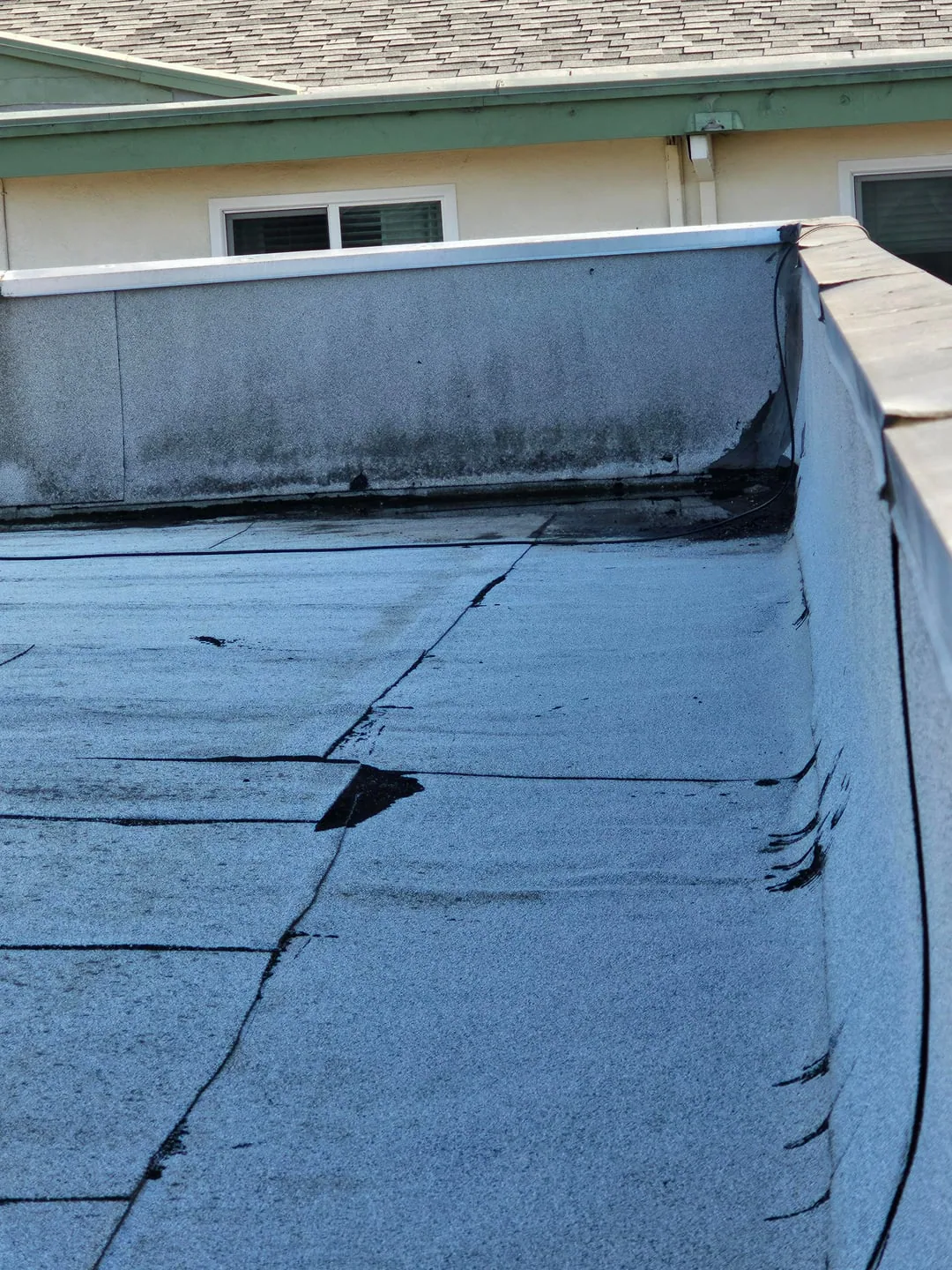
The small details show it before the field does. Sealant at curbs, pipe boots and termination bars cracks and pulls away. Flashing membrane shrinks at corners and lifts at the top edge. Pitch pockets dry and open. Seams at T-joints and corners separate. Edge metal moves at its joints, and the sealant between sections fails. Rooftop equipment covers and gaskets can also deteriorate. We probe and press each of these, because a bead that looks intact may have lost its grip, and we photograph the pattern across the roof.
A map of heat-aged details shows which parts of the roof have taken the most exposure. South and west-facing areas, dark surfaces and the areas around rooftop heat sources often age first. The map lets us decide where to spend repair effort and where to watch, and it gives the owner a baseline against which next season's walk can be compared. Photographs from fixed positions make the pace of change visible without any instrument, which is enough for a budget conversation.
Ventilation and equipment exhaust deserve a special look. Warm air venting onto a membrane near a fan, or a sunlit wall that reflects heat back onto the roof edge, creates local hot spots that age the surface faster than the field. We mark those spots on the plan, check the membrane near them for softening or shrinkage and recommend protection where an exhaust discharges straight onto the roof, such as a deflector or a walk pad that takes the wear.
A repair is only as good as the material it bonds to. We test flexibility by gently flexing the membrane at a fold, check for surface crazing and cracks under magnification, try a small weld or adhesive patch where the system allows and probe seams to see whether they hold. A membrane that has shrunk or hardened may not take a patch, and a failed trial patch is evidence we show to the owner. Moisture tests, using a meter or infrared scan, tell us whether the heat damage has already let water into the insulation.
The result is a clear answer to a practical question: can this roof be patched and maintained for years, restored with a coating or does it need replacement? Where the membrane passes the tests, repairs are straightforward. Where it fails them, the report says so and shows the tests.
Where the owner needs a number for budgeting, we describe condition in plain bands: sound with routine maintenance, repairable with defined work, or approaching the end of repairable life. Each band is tied to the tests that support it and to the photographs from the walk, so finance can plan without needing the technical argument.
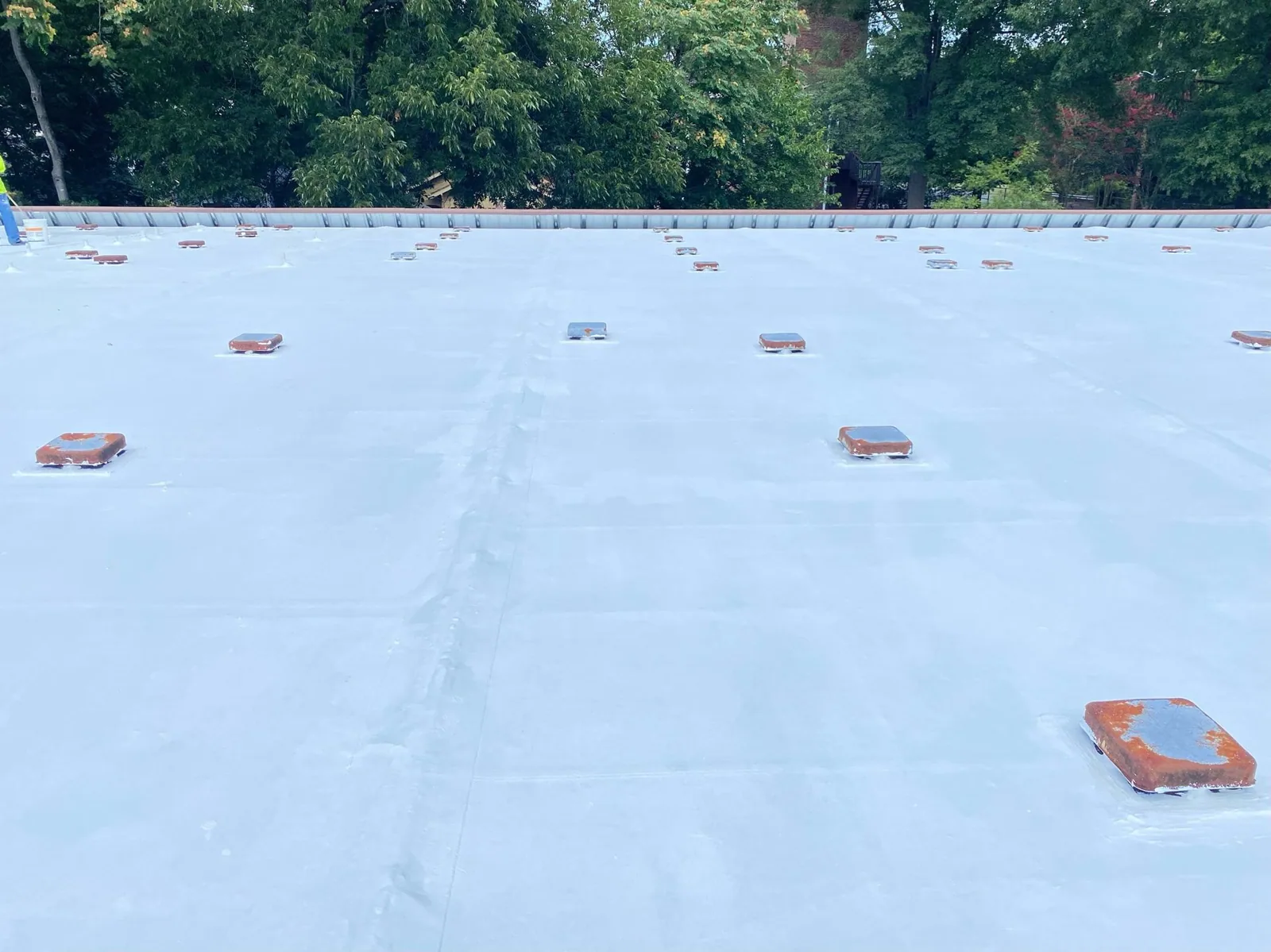
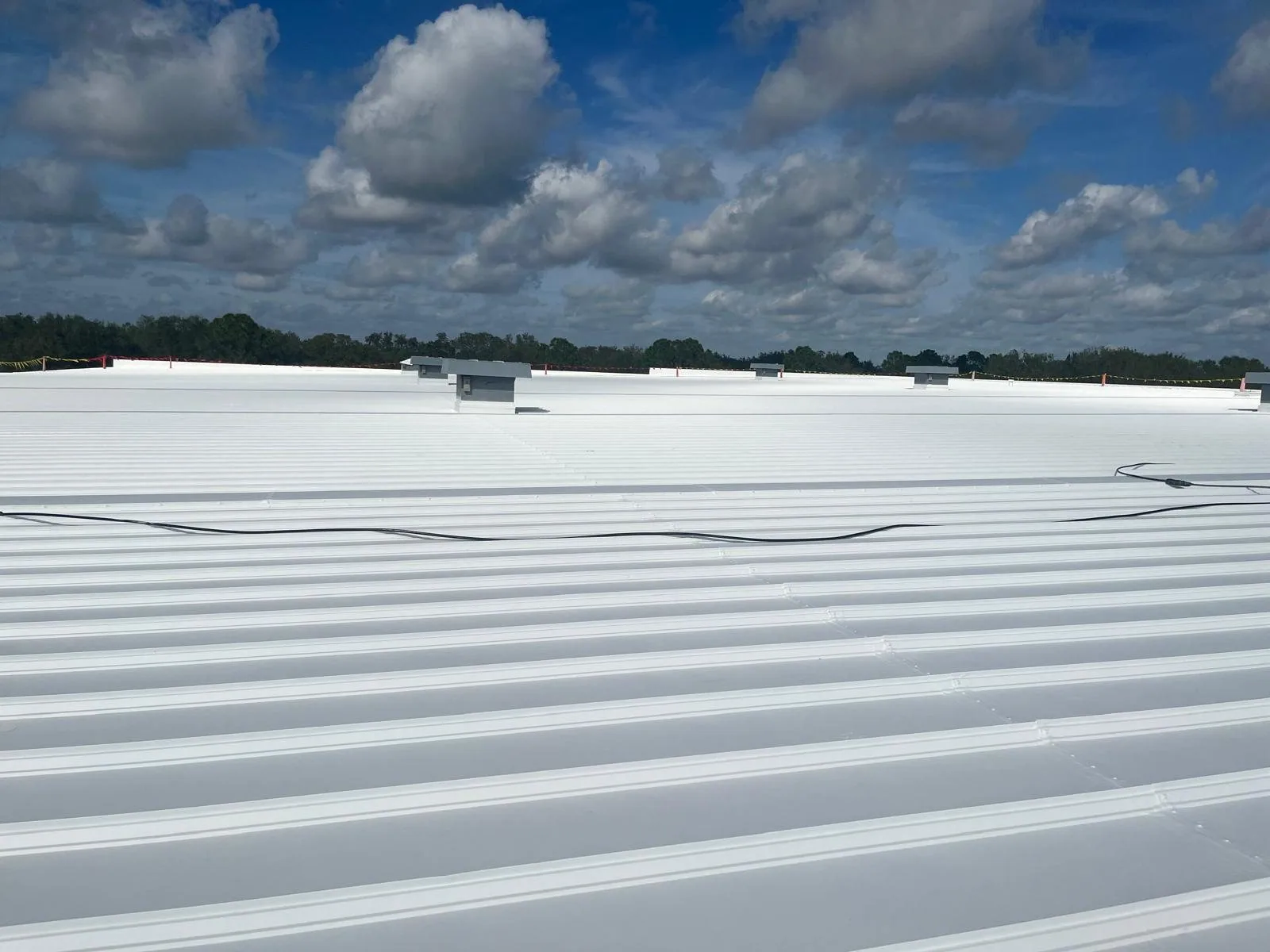
A coating can slow further aging and lower surface temperature when the roof beneath is dry, attached and repaired. Silicone and acrylic systems differ in how they handle ponding and substrates, and the choice depends on drainage, surface and budget. We repair seams, flashing and punctures first, clean the surface, apply primer if the product requires it and install the coating at the specified thickness, recording the coverage by zone. A coating is not a repair for a failed membrane, and it is not a substitute for drainage correction. Our roof coating restoration scope states what must be true before a coating goes on, and the cool roof installation option is considered where reflectance is a goal.
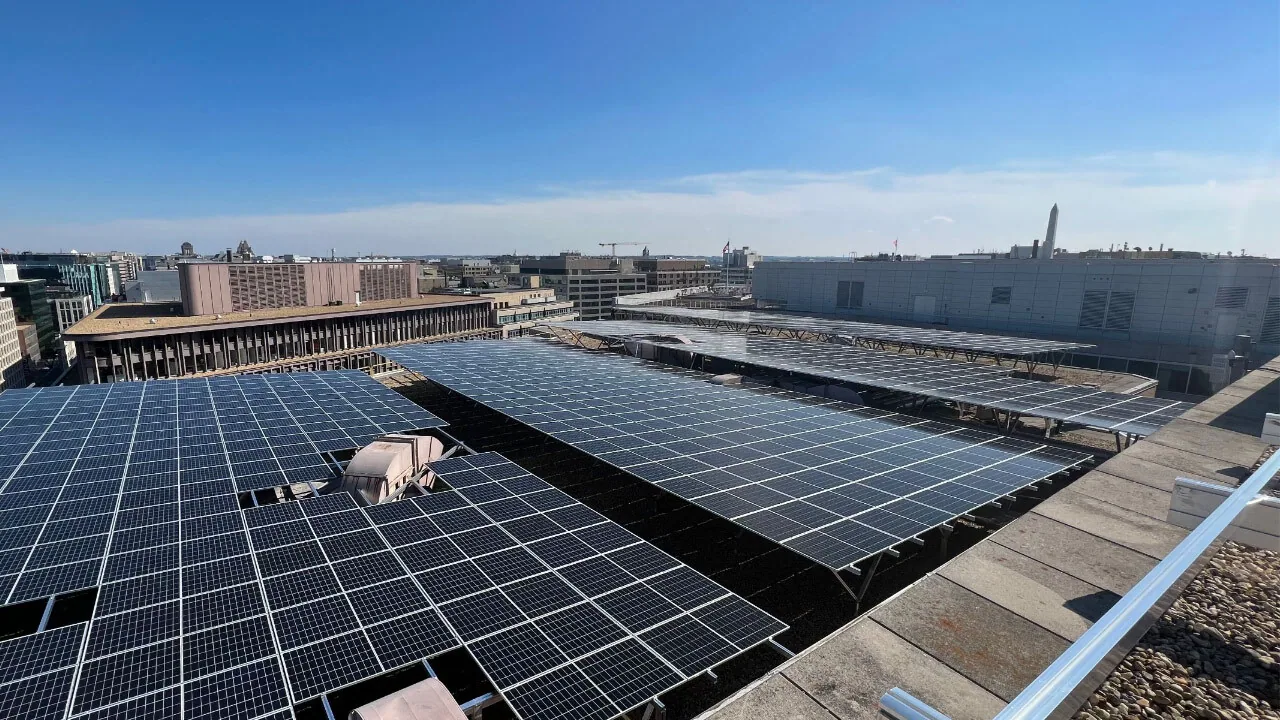
Hot surfaces cause problems for installers. Adhesives can skin early, welds can overheat, and workers face heat stress. We start early, work in shaded or cooler periods when possible, and pause when conditions are unsafe. Coatings have their own temperature and humidity limits, and a roof that is too hot to touch may be too hot to coat. In a heavy rain year, the work window is narrower still, since 48.80 inches of annual precipitation leaves fewer clean days. We build weather allowances into the proposal and tell the manager early when a section must wait.
Business parks like MacGregor and Crossroads Corporate Park hold buildings with varied roof ages, and we judge each on its own. Inspection after the hottest weeks and before the first cold nights finds the damage while it is still a repair.
The record includes the roof plan, a map of heat-aged details, photographs, test results, repairs made, coating coverage where used and open items. Larger work follows the state building code's permit path. Owners compare it from year to year, and it supports decisions about seam failure repair and flashing repair as aging progresses.
Dated photographs from the same positions each season make the pace of aging visible. A bead of sealant that was soft in one year and cracked in the next, or a seam that showed a hairline gap and later a full opening, becomes a trend line instead of an impression, and the trend informs when a repair should move from the maintenance list to the capital plan.
Look for granules in downspouts, chalky or cracked surfaces, hardened sealant and open seams. A walk with probes confirms the extent.
It slows further aging on a dry, repaired roof. It does not fix a failed membrane or a drainage problem.
A hardened or shrunken sheet may not bond. We trial a small patch first and show the result.
After the hottest weeks and before cold weather, so the damage is found while repairs are practical.
Over time, yes, through open seams and failed flashing. The early signs let us repair before water enters.
Contact Commercial Roofing Cary to arrange a roof walk. We will review the observed details and return a scoped next step with the repair boundary and test results.
Roof leaking now? Call for emergency roof repair.
Or email [email protected].